Toggle light / dark theme

Multilingual Computational Models Reveal Shared Brain Responses to 21 Languages

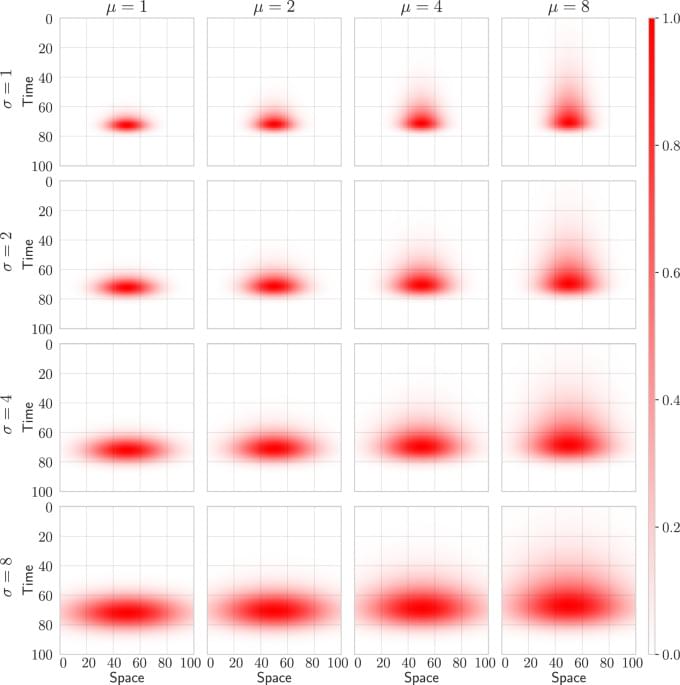
At the heart of language neuroscience lies a fundamental question: How does the human brain process the rich variety of languages? Recent developments in Natural Language Processing, particularly in multilingual neural network language models, offer a promising avenue to answer this question by providing a theory-agnostic way of representing linguistic content across languages. Our study leverages these advances to ask how the brains of native speakers of 21 languages respond to linguistic stimuli, and to what extent linguistic representations are similar across languages. We combined existing (12 languages across 4 language families; n=24 participants) and newly collected fMRI data (9 languages across 4 language families; n=27 participants) to evaluate a series of encoding models predicting brain activity in the language network based on representations from diverse multilingual language models (20 models across 8 model classes). We found evidence of cross-lingual robustness in the alignment between language representations in artificial and biological neural networks. Critically, we showed that the encoding models can be transferred zero-shot across languages, so that a model trained to predict brain activity in a set of languages can account for brain responses in a held-out language, even across language families. These results imply a shared component in the processing of different languages, plausibly related to a shared meaning space.

The authors have declared no competing interest.

OpenAI is now Focussing on Superintelligence!

When it comes to AI research, the company leading the way is undoubtedly OpenAI. Having successfully launched ChatGPT, the San Fransisco-based organisation has bigger targets in mind now.

In December 2024, it launched its latest version, o3, which has shown significant progress when it comes to Artificial General Intelligence (AGI). In other words, it has launched an AI system that can understand, learn and apply knowledge across a wide variety of tasks just like a human being.

But now, OpenAI CEO Sam Altman has revealed in his latest blog that the focus has shifted towards Superintelligence.

Revolutionary cargo drone completes first hover test

Pipistrel Aircraft has announced the successful completion of the first hover flight for its Nuuva V300, a hybrid-electric vertical takeoff and landing (VTOL) unmanned aircraft designed for long-range logistics and specialized defense operations.

The milestone brings the company closer to deploying its autonomous cargo drone, which promises to revolutionize aerial deliveries with a 600-pound payload capacity and a 300-nautical-mile range.

The Nuuva V300 represents a leap forward in hybrid-electric propulsion, combining eight battery-powered electric motors for vertical takeoff with an internal combustion engine for forward flight. This dual-power system enhances fuel efficiency, minimizes maintenance costs, and provides greater operational flexibility. The aircraft’s design allows it to carry up to three Euro pallets (EPAL) through a nose-loading fuselage, offering a streamlined solution for cargo logistics, humanitarian aid, and defense applications.

Encoding many properties in one material via 3D printing

A class of synthetic soft materials called liquid crystal elastomers (LCEs) can change shape in response to heat, similar to how muscles contract and relax in response to signals from the nervous system. 3D printing these materials opens new avenues to applications, ranging from soft robots and prosthetics to compression textiles.

Controlling the material’s properties requires squeezing this elastomer-forming ink through the of a 3D printer, which induces changes to the ink’s internal structure and aligns rigid building blocks known as mesogens at the molecular scale. However, achieving specific, targeted alignment, and resulting properties, in these shape-morphing materials has required extensive trial and error to fully optimize printing conditions. Until now.

In a new study, researchers at the Harvard John A. Paulson School of Engineering and Applied Sciences (SEAS), Princeton University, Lawrence Livermore National Laboratory, and Brookhaven National Laboratory worked together to write a playbook for printing liquid crystal elastomers with predictable, controllable alignment, and hence properties, every time.

3D printing approach for shape-changing materials means better biomedical, energy, robotics devices

An Oregon State University researcher has helped create a new 3D printing approach for shape-changing materials that are likened to muscles, opening the door for improved applications in robotics as well as biomedical and energy devices.

The liquid crystalline elastomer structures printed by Devin Roach of the OSU College of Engineering and collaborators can crawl, fold and snap directly after printing. The study is published in the journal Advanced Materials.

“LCEs are basically soft motors,” said Roach, assistant professor of mechanical engineering. “Since they’re soft, unlike regular motors, they work great with our inherently soft bodies. So they can be used as implantable medical devices, for example, to deliver drugs at targeted locations, as stents for procedures in target areas, or as urethral implants that help with incontinence.”

A novel biomaterial for regenerative medicine: Scientists develop acellular nanocomposite living hydrogels

A biomaterial that can mimic certain behaviors within biological tissues could advance regenerative medicine, disease modeling, soft robotics and more, according to researchers at Penn State.

Materials created up to this point to mimic tissues and extracellular matrices (ECMs)—the body’s biological scaffolding of proteins and molecules that surrounds and supports tissues and cells—have all had limitations that hamper their practical applications, according to the team. To overcome some of those limitations, the researchers developed a bio-based, “living” material that encompasses self-healing properties and mimics the biological response of ECMs to .

They published their results in Materials Horizons, where the research was also featured on the cover of the journal.

Figure AI plans 100,000-strong humanoid robot army to counter China

🤖 100,000 bots?! 🤖

“It gives us potential to ship at high volumes which will drive cost reduction and AI data collection. Between both customers, we believe there is a path to 100,000 robots over the next four years.”

My opinion: Figure🤖 is superior to Tesla🤖


Figure AI had launched its first humanoid, Figure 1, just 31 months after incorporation and subsequently shipped Figure 02.

Organoid intelligence: training lab-grown mini-brains to learn and compute with AI

Recent research demonstrates that brain organoids can indeed “learn” and perform tasks, thanks to AI-driven training techniques inspired by neuroscience and machine learning. AI technologies are essential here, as they decode complex neural data from the organoids, allowing scientists to observe how they adjust their cellular networks in response to stimuli. These AI algorithms also control the feedback signals, creating a biofeedback loop that allows the organoids to adapt and even demonstrate short-term memory (Bai et al. 2024).

One technique central to AI-integrated organoid computing is reservoir computing, a model traditionally used in silicon-based computing. In an open-loop setup, AI algorithms interact with organoids as they serve as the “reservoir,” for processing input signals and dynamically adjusting their responses. By interpreting these responses, researchers can classify, predict, and understand how organoids adapt to specific inputs, suggesting the potential for simple computational processing within a biological substrate (Kagan et al. 2023; Aaser et al. n.d.).

Researchers combine holograms and AI to create uncrackable optical encryption system

WASHINGTON — As the demand for digital security grows, researchers have developed a new optical system that uses holograms to encode information, creating a level of encryption that traditional methods cannot penetrate. This advance could pave the way for more secure communication channels, helping to protect sensitive data.

“From rapidly evolving digital currencies to governance, healthcare, communications and social networks, the demand for robust protection systems to combat digital fraud continues to grow,” said research team leader Stelios Tzortzakis from the Institute of Electronic Structure and Laser, Foundation for Research and Technology Hellas and the University of Crete, both in Greece.


Optica is the leading society in optics and photonics. Quality information and inspiring interactions through publications, meetings, and membership.

/* */