Toggle light / dark theme

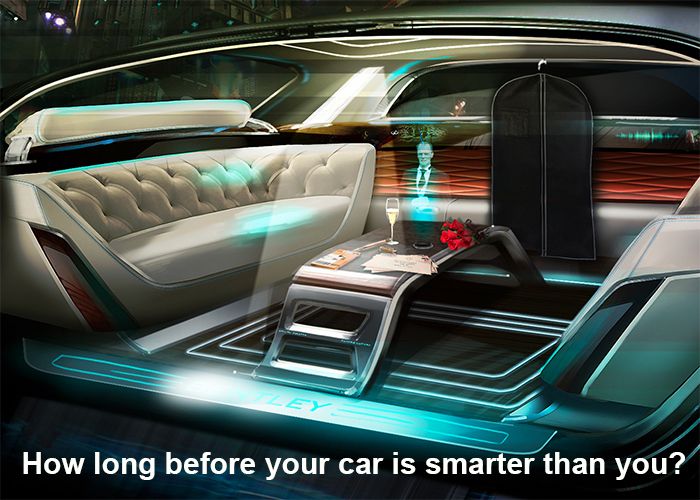
128 Things that will disappear in the driverless car era

I started writing this column while I was in Manila, Philippines for a talk with UnionBank, one of the most innovative banks I’ve ever come across.

Driving across Manila is often a painful experience with far too many cars locking up all possible arterials, and nowhere near enough money to redesign and build the needed infrastructure. But this is not unique to Manila.

As I’ve traveled around the world, I’ve run into equally bad traffic in Istanbul, Rotterdam, Los Angeles, Seoul, Mexico City, San Francisco, Rome, London, Beijing, and Mumbai. In fact there are literally thousands of cities where bad traffic is a way of life.

The Next Hot Job in Silicon Valley Is for Poets

Time to brush up on my Yeats, Browning, or Frost.


Demand for chatting virtual assistants and other artificial intelligence (AI) products is creating favorable job prospects for writers, poets, comedians, and other people of artistic persuasion in Silicon Valley.

The industry is tapping them to engineer the personalities of AI tools to make them capable of seamless interaction with people.

AI writers are tasked with imbuing the AIs with natural-seeming conversational capabilities.

IBM’s brain-inspired chip TrueNorth changes how computers ‘think,’ but experts question its purpose

I see great potential for the TrueNorth chip as we migrate towards Quantum & Singularity. TrueNorth is an interim chip that assists researchers, engineers, etc. in their efforts to mimic the human brain’s nuero sensors and processing for robotics, BMI technology, etc.


The new IBM supercomputer chip mimics the human brain by using an architecture with 1 million neurons. Nevertheless, its true purpose remains in question for a project with massive public funding.

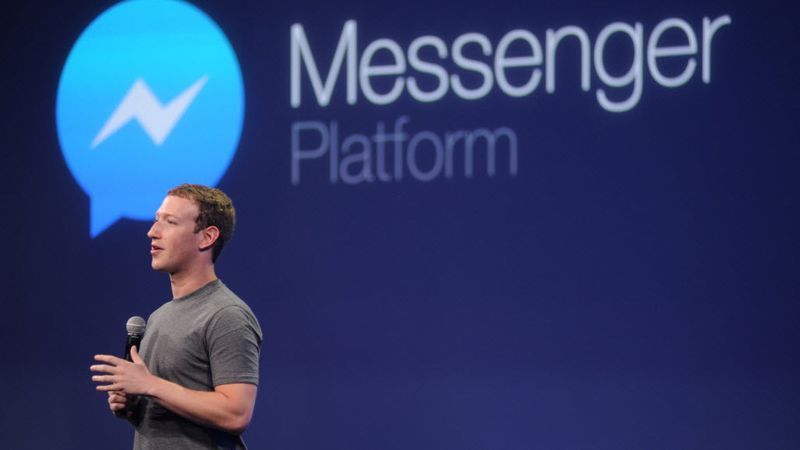
‘Chatbots’ are coming; next stop Facebook

I expect to see more and more online consumers having their own “Personalized” bots that mimics them online. Granted at the moment we see the more generic versions of a personal assistant, etc. However, I do believe the next major push will be providing the consumers the flexibility of personalizing their bots that mimics them in their communication styles, interaction style, interests, personalities, etc.


SAN FRANCISCO — Will there be a bot for that?

That is the question on many lips ahead of Facebook’s annual software developer conference next week in San Francisco.

Analysts expect Facebook CEO Mark Zuckerberg to open up Messenger’s platform to “chatbots” and launch an online store for them. TechCrunch reported Thursday that Facebook will help software developers build “chatbots.” Facebook declined to comment.

Microsoft Is Developing a New JARVIS-Like Artificial Intelligence System

Just A Rather Very Intelligent System, or as it is more commonly known, JARVIS, is a highly advanced personal digital assistant. And it could be your best friend of tomorrow.

Among all of the fictional artificial intelligence (AI) systems, by far, the coolest one has to be Tony Stark’s JARVIS—It can not only control everything for Iron Man, it’s also a highly intuitive and sentient entity that has become part and parcel of his Tony Stark’s way of life.

Now, Microsoft has announced that they are planning to create something similar—a highly advanced personal digital assistant—which will be available as smartphone application. Find out more about what it can do by checking out this video, and dive into Just A Rather Very Intelligent System…

Meet Behrokh Khoshnevis, the Man Designing Robots to Build Colonies on Mars

When Khoshnevis imagines the future of colonies on Mars, he imagines very tall buildings, with a lot of protection from the elements.

“Gravity is one third of Earth’s, and therefore with less construction material we can build stronger structures out there, therefore we can build much taller,” he says. “The cost of energy for elevators and all that will be much less. Theoretically everything could be three times as high as here with the same consumption of energy,” he says.

A human utopia on Mars will soon be technologically feasible, but it will take some political will to get there, he says. It will take sustained resources and effort over decades to get the ball rolling, and keep it moving forward. “There really has to be philosophical support for this — that this is the future of humanity, Mars is the closest thing to a livable planet, so we should not miss the opportunity — we should dedicate a good effort in making sure that we go there and we change the conditions of Mars to make it habitable, because one planet is not enough for this amazing species.”

/* */