A tool that connects everyday work into one space. It gives you and your teams AI tools—search, writing, note-taking—inside an all-in-one, flexible workspace.
Deep neural networks (DNNs), the machine learning algorithms underpinning the functioning of large language models (LLMs) and other artificial intelligence (AI) models, learn to make accurate predictions by analyzing large amounts of data. These networks are structured in layers, each of which transforms input data into ‘features’ that guide the analysis of the next layer.
The process through which DNNs learn features has been the topic of numerous research studies and is ultimately the key to these models’ good performance on a variety of tasks. Recently, some computer scientists have started exploring the possibility of modeling feature learning in DNNs using frameworks and approaches rooted in physics.
Researchers at the University of Basel and the University of Science and Technology of China discovered a phase diagram, a graph resembling those used in thermodynamics to delineate liquid, gaseous and solid phases of water, that represents how DNNs learn features under various conditions. Their paper, published in Physical Review Letters, models a DNN as a spring-block chain, a simple mechanical system that is often used to study interactions between linear (spring) and nonlinear (friction) forces.
The People’s Liberation Army has released rare footage showing its reconnaissance drones tracking a ‘hostile warship,’ highlighting China’s increasing integration of unmanned systems with intelligence operations.
The video, aired in Forging Ahead, the PLA’s latest military documentary, depicts a coordinated mission involving the WZ-7 and WZ-10 unmanned aerial vehicles. Both are high-altitude, long-endurance platforms built by the Aviation Industry Corp (AVIC) of China for surveillance missions.
The wargaming, which enhances human judgment, has long been a vital method for understanding human decision-making in complex, uncertain environments by harnessing the power of experiential learning.
While traditional wargames offer deep insights into how decisions play out under pressure, their dependence on expert facilitators and labor-intensive design limits their scalability and speed.
APL revealed that Generative Wargaming (GenWar) is a next-generation capability that integrates generative artificial intelligence, modeling and simulation (M&S), and human expertise. GenWar allows the institute to build and run wargames in days instead of months, analyze dozens of alternative futures at scale, and focus human attention on the scenarios that most demand thoughtful deliberation.
Persistent genomic instability compromises cellular viability while also triggers non-cell-autonomous responses that drive dysfunction across tissues, contributing to aging. Recent evidence suggests that DNA damage activates secretory programs, including the release of inflammatory cytokines, damage-associated molecular patterns, and extracellular vesicles, that reshape immune homeostasis, stem cell function, and metabolic balance. Although these responses may initially support tissue integrity and organismal survival, their chronic activation has been associated with tissue degenerative changes and systemic decline. Here, we discuss how nuclear DNA damage responses trigger the activation of cytoplasmic sensing pathways, promote secretory phenotypes, and affect organismal physiology. Targeting DNA damage-driven mechanisms may help buffer harmful systemic responses while preserving regeneration and immune surveillance, offering new ways to delay aging-related decline.
© 2025 The Author(s). BioEssays published by Wiley‐VCH GmbH.
Elon Musk added that for a limited time, Grok Imagine video generation is free to all users in the US region.
(You can access anything in any region with a VPN 🙄)
Generative Artificial Intelligence (gen AI) firm xAI, earlier this week, introduced the Imagine video generation feature in the Grok AI app for iPhones.
Now, the company has expanded the availability of the video generation feature to the Android version of the Grok AI app. Elon Musk confirmed the news on his social media platform X. Also, Musk added that for a limited time, Grok Imagine video generation is free for a limited time for US region users.
AI Innovation: xAI brings Imagine video generation to Grok AI Android app, now free for US users for a limited time.
SpaceX is making significant progress towards establishing a human presence on Mars, with a major contract, advancements in technology, and plans for infrastructure development, potentially giving them a lead over competitors and raising questions about the future of space exploration and ownership ##
## Questions to inspire discussion.
Mars Exploration and Infrastructure.
🚀 Q: What is SpaceX’s breakthrough in Mars exploration? A: SpaceX’s Starship secured its first paying customer for Mars payloads: the Italian Space Agency, in a deal worth hundreds of millions of dollars.
🔬 Q: What experiments will the Italian Space Agency conduct on Mars? A: The payload includes plant growth, radiation, and local climate monitoring experiments, collecting data during the 6-month flight and on Mars’ surface.
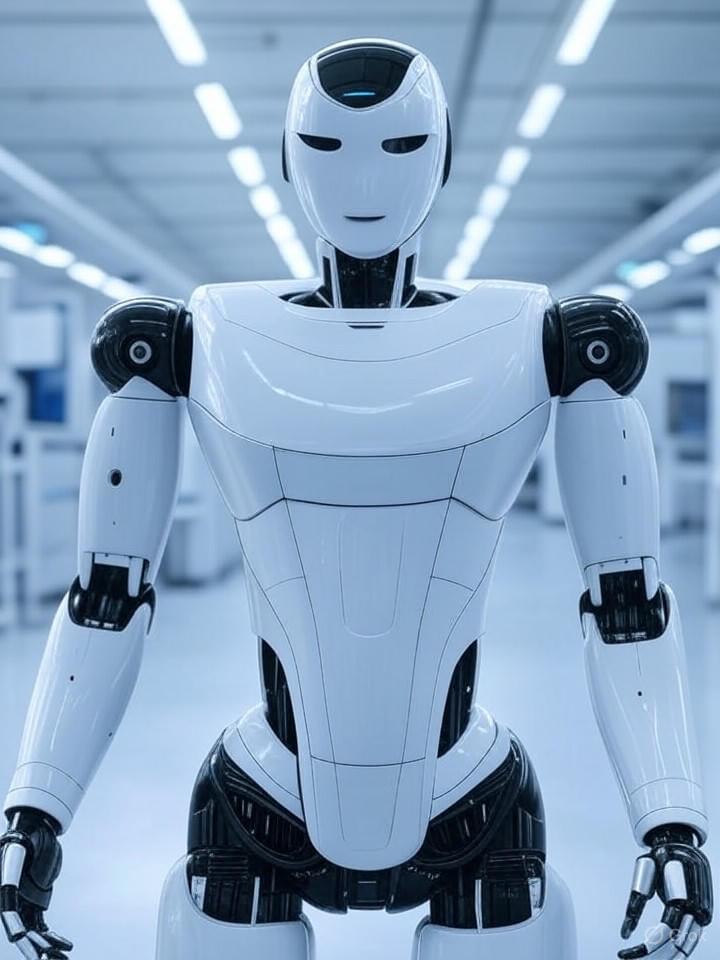
🤖 Q: How will robots assist in Mars exploration? A: SpaceX plans to send 1,000–2,000 Optimus robots to Mars to fix rovers, run experiments, maintain equipment, and scout locations for future missions.