It’s nothing to get too excited or alarmed about, but a robot has passed a modified version of the classic King’s Wise Men Test. It’s another classic case of simulation rather than emulation, but the experiment shows how artificial self-awareness can be programmed into our technology.
Category: robotics/AI – Page 3,012
Will AI Drive the Human Race Off a Cliff? — Sharon Gaudin | Computerworld
“‘The solution is to have people become better people and use technology for good,’ she said. ‘Texting is dangerous. People text while driving, which leads to accidents, but no one says, ‘Let’s remove texting from cell phones.’” Read more
Hotel ‘staffed’ entirely by robots unveiled in Japan
Businessman insists hotel, with no human workers, is not a gimmick and will cut operating costs.
Robots Can’t Kill You—and Claiming They Can is Dangerous — Ron Chrisley | Gizmodo
“Since robots don’t have responsibility, humans are the ones responsible for what robots do. However, as robots become more prevalent, it will increasingly appear as if they actually have their own autonomy and intentions, for which it will seem they can and should be held responsible.” Read more
Luna: Open Source Artificial Intelligence Demo
The worlds most advanced chatbot?
Google and NASA’s Quantum Artificial Intelligence Lab
A peek at the early days of the Quantum AI Lab: a partnership between NASA, Google, USRA, and a 512-qubit D-Wave Two quantum computer. Learn more at http://google.com/+QuantumAILab.
You’re Using Neural Networks Every Day Online — Here’s How They Work
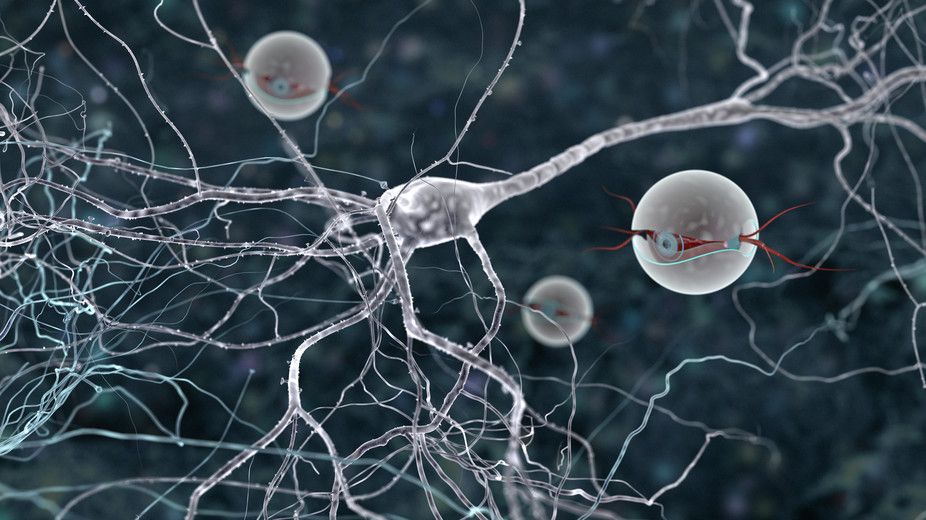
If you use Google’s new Photos app, Microsoft’s Cortana, or Skype’s new translation function, you’re using a form of AI on a daily basis. AI was first dreamed up in the 1950s, but has only recently become a practical reality — all thanks to software systems called neural networks. This is how they work.
IBM Watson CTO: Quantum computing could advance artificial intelligence
IBM Watson CTO: Quantum computing could advance artificial intelligence by orders of magnitude.
Quantum computers have already been used to test artificial intelligence by researchers in China, albeit in a very limited capacity. Earlier in 2015, a team from the country’s University of Science and Technology developed a quantum system capable of recognising handwritten characters in a demonstration they dubbed quantum artificial intelligence.
This demonstration was on a quantum computer using only four qubits, leading to speculation of what a system using hundreds – or even thousands – of qubits would be capable of. Such machines do not yet exist, at least not commercially, but Canada-based quantum computing firm D-Wave systems recently claimed it has built a 1,000 qubit quantum computer.
According to Seth Lloyd, a professor of mechanical engineering at the Massachusetts Institute of Technology (MIT), a machine of just 300 qubits could be used to “map the whole universe”, processing all the information that has existed since the Big Bang.
Is consciousness an engineering problem? – Michael Graziano – Aeon
We could build an artificial brain that believes itself to be conscious. Does that mean we have solved the hard problem?
3-D-printed robot is hard inside, soft outside, and capable of jumping without hurting itself
Left: the rigid top fractures on landing, while the top made of nine layers going from rigid to flexible remains intact (credit: Jacobs School of Engineering/UC San Diego, Harvard University)