What deep learning algorithms can tell us about the visual narratives of the world’s news imagery, from depictions of violence to the importance of people to visual context – a look inside what we see about the world around us.
Imagine this car requiring no wheels as it hovers across the roads/ streets and no more flat tires.


From digital currency to machine learning, the financial industry is being rocked by exponential technologies. Blockchain, artificial intelligence, big data, robotics, quantum computing, crowdfunding, and computing systems are allowing startups to solve consumer needs in new ways.
The downfall of the world’s largest institutions may not be imminent, but these new technologies are breaking up the previously rock solid foundation of finance, and allowing the fintech world to spring through the cracks. What’s happening now will rewrite the future of finance for years to come. By recognizing this reality and planning for it now, financial professionals can learn to thrive in an increasingly uncertain global economy.
Recently, I saw an article making big deal that a robot can now write. Ok, it only took us 253 years to enhance it a little. Meet the Automaton from Sweden that could write and was designed to look like a young boy. Made in 1774 and still writes today.
We had Automaton that did this since 1774. 1st one was from Sweden and made in 1775.
See more @ One of three surviving automata from the 18th century built by Jaquet Droz, this is ”The Writer” and is the most famou… The Writer Automaton A 240 year old doll that can write, a clockwork creation by Pierre Jaquet-Droz. Pierre Jaquet-Droz (1721−1790) was a Swiss-born watchmaker of the late eighteenth century. He lived in Paris, London, and… On you will find a DVD named ”The Jaquet-Droz androids”. This documentary tells the story of Pierre Jaquet-Droz a sw… From the bestselling children’s novel ”The Invention of Hugo Cabret” to the Oscar nominated film ”Hugo,” automatons — mechanical marvels from a time gone by… Jaquet Droz The Writer Automaton From 1774 In Action: Inspired Hugo Movie. Automato escrevendo no museu do automato e da caixinha de musica em Sainte-Croix, Suiça… identica ao automato visto no filme Hugo Automaton writing in the… A demonstration of the Maillardet’s Automaton at The Franklin Inst.
Wonder what Google thinks about this version of a robot playing Chess from 1769. The point is, we really have struggled in AI particularly robotics for over 250 years.
As you can hear I’m not a native speaker. Please execuse grammatical and pronunciation mistakes.
Music:
Kevin MacLeod — Evening Fall (Piano version)
Mikko on Loudr — Amnesia the dark descent.
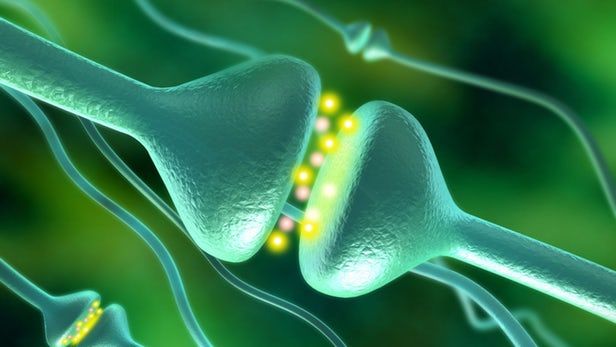
The human brain is nature’s most powerful processor, so it’s not surprising that developing computers that mimic it has been a long-term goal. Neural networks, the artificial intelligence systems that learn in a very human-like way, are the closest models we have, and now Stanford scientists have developed an organic artificial synapse, inching us closer to making computers more efficient learners.
In an organic brain, neuronal cells send electrical signals to each other to process and store information. Neurons are separated by small gaps called synapses, which allow the cells to pass the signals to each other, and every time that crossing is made, that connection gets stronger, requiring less energy each time after. That strengthening of a connection is how the brain learns, and the fact that processing the information also stores it is what makes the brain such a lean, mean, learning machine.
Neural networks model this on a software level. These AI systems are great for handling huge amounts of data, and like the human brain that inspired them, the more information they’re fed, the better they become at their job. Recognizing and sorting images and sounds are their main area of expertise at the moment, and these systems are driving autonomous cars, beating humanity’s best Go players, creating trippy works of art and even teaching each other. The problem is, these intelligent software systems are still running on traditional computer hardware, meaning they aren’t as energy efficient as they could be.
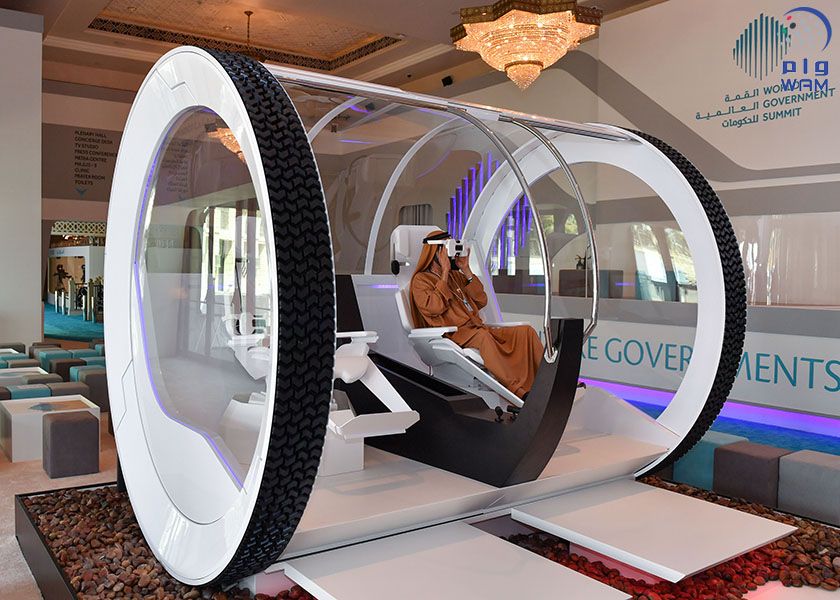
UAE will be a major player in technology innovation of the future as they like Israel, Africa, Eastern Europe, and various parts of Asia such as the current ones of China and India as well as Australia and Vietnam will be the new emerging leaders in tech innovation. We’re entering a period of radical change and a complete overhaul of science (including medical) and technology thanks to the realities and opportunities of Quantum. The following announcement shows US UAE’s own commitment to being a leader and I promise you there is much more to come from these amazing hotspots of innovation and invention.
Vice President and Prime Minister and Ruler of Dubai, His Highness Sheikh Mohammed bin Rashid Al Maktoum, issued directives to Mohammad Bin Rashid Space Centre, MBRSC, to lead the Mars 2117 project and prepare a 100-year plan for its implementation.
As per his directives, the centre’s plan will focus on preparing specialised national cadres and developing their capabilities in the fields of space science, research, artificial intelligence, robotics and advanced space technologies.
The centre will also put in place a detailed plan for the next five years that will deal with all technological, logistical and technical aspects of the project. This five-year plan will be carried out alongside a media plan that will keep pace with the project’s implementation programme. The media plan will ensure coverage at local, regional and international levels, taking into consideration how well the project was received when it was announced during the World Government Summit 2017.