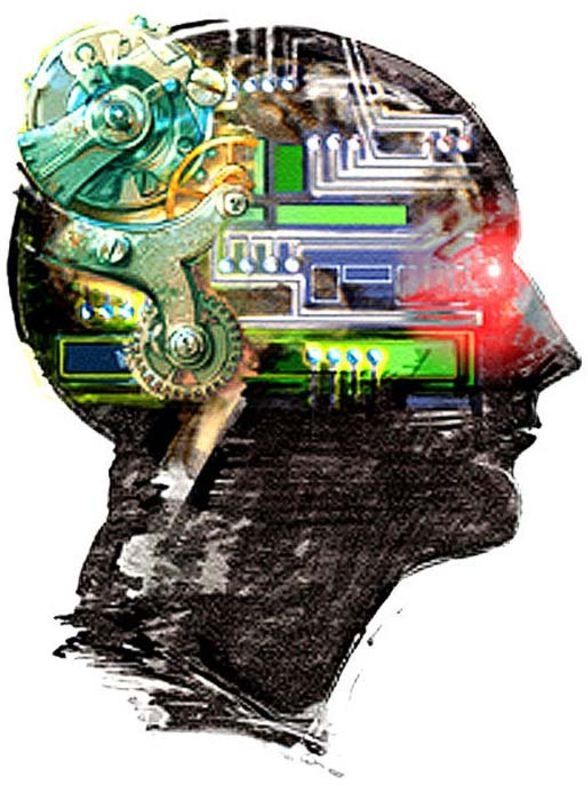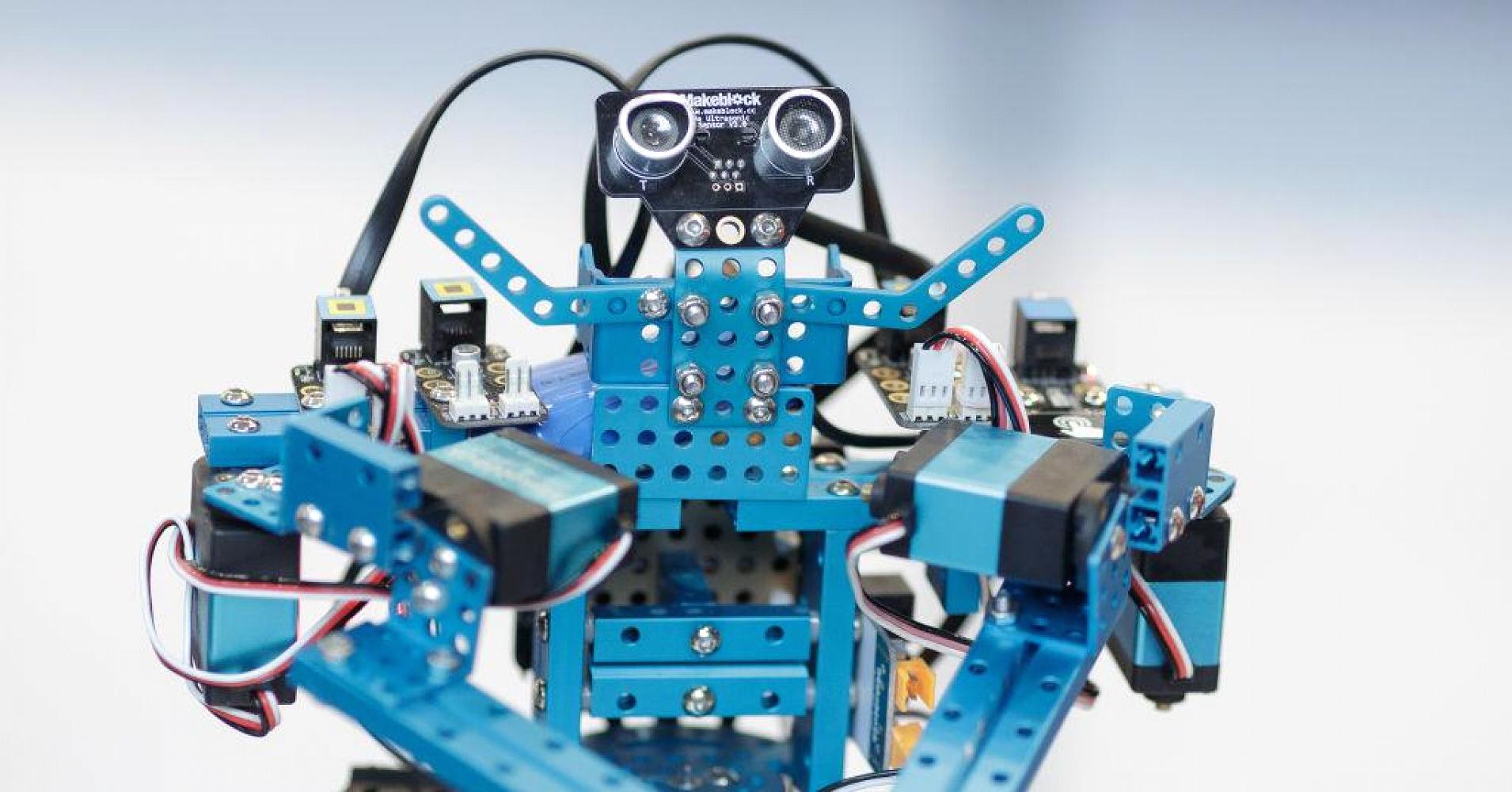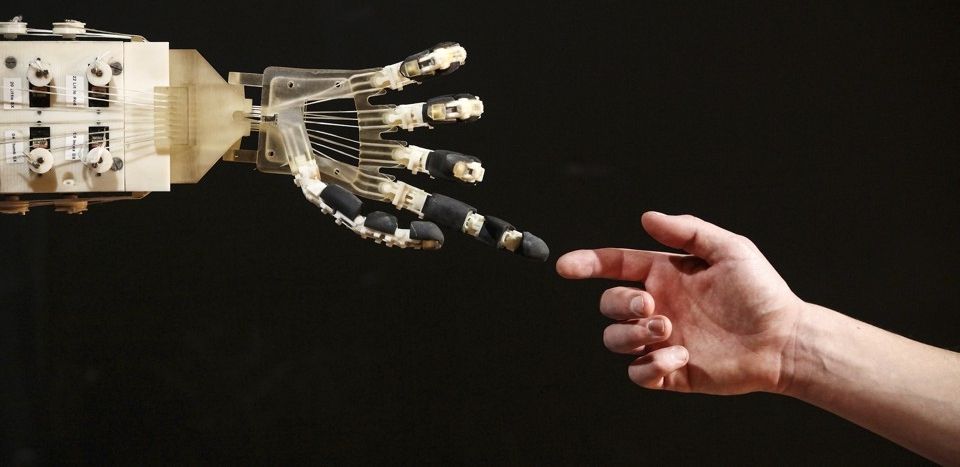
In fact, AI may be the greatest threat to Christian theology since Charles Darwin’s On the Origin of Species.
Are you there, God? It’s I, robot.
Andrew Ng (left), Chief Scientist at Baidu and Eric Horvitz (right), Managing Director at Microsoft Research.
If the internet was the birth of the digital revolution, then today’s artificial intelligence is its first baby steps toward maturity.
Today, A.I. researchers feed an algorithm data and painstakingly help it learn.
In Brief
IBM understands the unique nature of its artificial intelligence (AI) software assistant Watson, and so they are not taking the direct consumer approach of Siri, Cortana, Alexa, or Google’s Assistant.
In partnership with H&R Block, Watson is being trained “on the language of taxes,” according to IBM’s press release announcing Watson’s new role as the world’s first AI tax preparation assistant.
Zaptec has a new plasma drilling technology which could achieve practical, affordable, and reliable deep drilling on the Moon, asteroids, Mars, and its moons. The drilling system comprises a freely advancing drill head tethered by a power cable to a power source topside and high voltage generator downhole. The drill advances by generating a high-energy density plasma at the drill head which breaks down and pulverizes the target rock. A key enabling technology is the system’s ability to deliver high energy plasma discharges via low mass, small volume power transformers located in the drill head section. Powder cuttings may be removed by circulating compressed CO2.
Zaptec on the Moon
On the Moon, the subsurface in the polar regions may be a repository of volatiles of value to science and as a potential resource for future human exploration. A Zaptec drill could be deployed on a future robotic lunar lander mission, such as Moon Express, or in the context of human missions. The fine dust from drilling goes through the unit, is analysed, and then sprayed into a dust exhaust in contact with the surface vacuum. An alternative scenario is to expand the module with a processing unit which sorts out minerals from H2O/CO2 ice. The mineral dust can then be used as raw materials for local manufacturing.
Automation has even put poor old Dracula out of a job.
Find out why young blood from transfusions isnt likely to work and why Dracula is out of a job.
George Dvorsky from 2013. Intelligence Augmented vs Artificial Intelligence.
Elan Musk has been having the same idea.
Elon Musk could soon share more on his plan to help humans keep up with AI
While the USA has been extremely concerned about losing jobs (particularly manufacturing jobs to China), China performed a survey of businesses in the American Chamber of Commerce in Beijing and found that 25% had moved or were planning to move their businesses out of China. Half were going to other Asian countries and 40% to America, Canada or Mexico.
China’s worker wages are rising about 7–8% each year and they have a shrinking working age population as the people age.
China is making big moves in automation and large scale deployment of robotics. In 2014, President Xi Jinping talked about a robotics revolution. China has been the number one buyer of industrial robots since 2013. However, China lags other nations in terms of robots per worker.
The billionaire leaders and friends say increasing productivity is a good thing for humanity.
We will need a good dose of healthy stoicism if we are to survive in the world after work. Luxury items will be significantly reduced in the world we’re imagining. Stoics like Marcus Aurelius and Seneca recommended that we adjust our desires to simple, reliable pleasures, like fresh water, decent bread, modest clothing, and good friends. Luxury pleasures are rare and unreliable so we suffer more when they fail to materialize.
But chocolate cake is delicious and diamonds are beautiful. When Plato sketched a Spartan lifestyle in the Republic, his friends accused him of designing a city for pigs not humans — and they demanded that he add spices and luxury to the imagined utopia. While I’m sensitive to this worry, I hasten to point out that many Americans are currently, and by their own initiative, downsizing their sense of the good life. The contemporary “tiny house movement” — which builds elegant housing around 1/10th the size of average homes — is already the kind of stoic adjustment that Americans will need to make when we’re all unemployed.
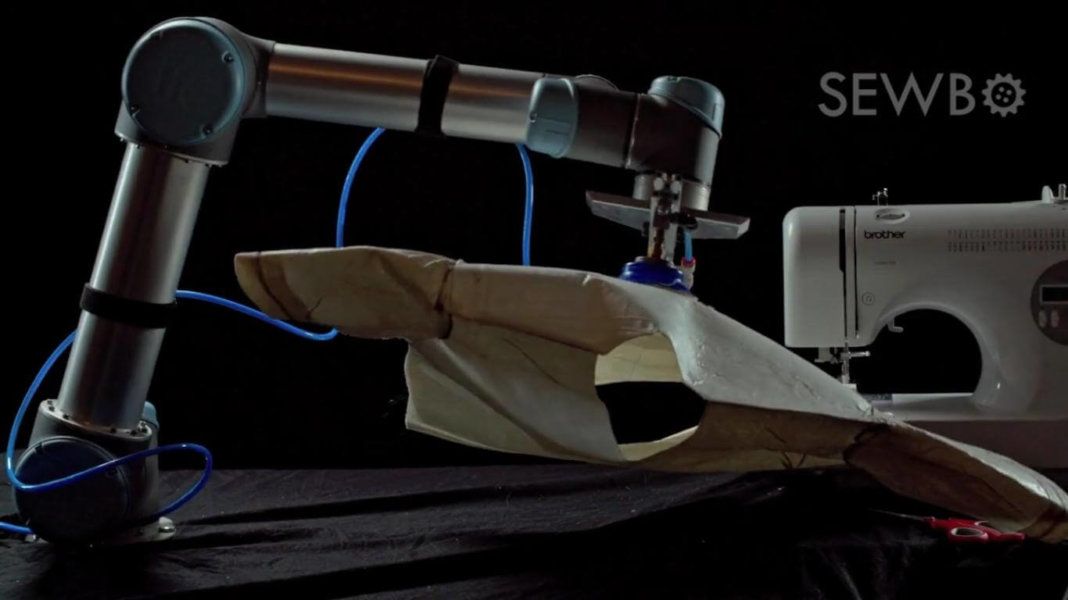
Today, sewing relies on the low-tech power of human hands, but soon that may not be the case. Human workers are still needed for the final steps of making clothes, in order to align fabrics and correctly feed them into sewing machines. If robots could do that instead, shock waves of change would surely ripple through global supply chains and disrupt the lives of millions of low-wage earners in the developing world.
For better or worse, plenty of technologists, researchers, and companies are working on the challenge—but so far, getting robots to navigate the imprecisions of flimsy textile materials that easily bend has proven elusive.
One promising solution, though, has come from an unlikely place: the sleepless brain of Jonathan Zornow, a young freelance web developer with no previous background in robotics, manufacturing, or the apparel business. His project, Sewbo, recently demonstrated the world’s first robotically sewn garment, and the inspiration came while watching a late-night Science Channel show called How It’s Made.