Toggle light / dark theme

Why The Future Of Technology Is All Too Human

The concept of artificial intelligence got it’s start at a conference at Dartmouth in 1956. Optimism ran high and it was believed that machines would be able to do the work of humans within 20 years. Alas, it was not to be. By the 1970’s, funding dried up and technology entered the period now known as the AI winter.

Slowly, however, progress was made. Computers became increasingly able to do human tasks, such as character recognition, making recommendations on Amazon and organizing itineraries on travel sites. We didn’t see the algorithms at work, but they were there, computing on our behalf.

So the answer to our technological dilemma is, in fact, all too human. While the past favored those who could retain and process information efficiently, the future belongs to those who can imagine a better world and work with others to make it happen.

Read more

This mind-controlled prosthetic robot arm lets you actually feel what it touches

The US government said today (Sept. 11) that it’s successfully made a Luke Skywalker-like prosthetic arm that allows the wearer to actually feel things.

At a conference in July, the US Defense Advanced Research Projects Agency (DARPA) presented the achievements it’d had to date in building a robot arm that can be controlled by a human brain. A little over two months later, the agency has announced at another conference that it’s managed to update the technology to give the wearer the feeling of actually being able to sense things with the arm.

The robotic arm is connected by wires that link up to the wearer’s motor cortex—the part of the brain that controls muscle movement—and sensory cortex, which identifies tactile sensations when you touch things. The wires from the motor cortex allow the wearer to control the motion of the robot arm, and pressure sensors in the arm that connect back into the sensory cortex give the wearer the sensation that they are touching something.

Read more

Humans Will Have Cloud-Connected Hybrid Brains

So, you think you’ve seen it all? You haven’t seen anything yet. By the year 2030, advancements will excel anything we’ve seen before concerning human intelligence. In fact, predictions offer glimpses of something truly amazing – the development of a human hybrid, a mind that thinks in artificial intelligence.

Ray Kurzweil, director of engineering at Google, spoke openly about this idea at the Exponential Finance Conference in New York. He predicts that humans will have hybrid brains able to connect to the cloud, just as with computers. In this cloud, there will be thousands of computers which will update human intelligence. The larger the cloud, the more complicated the thinking. This will all be connected using DNA strands called Nanobots. Sounds like a Sci-Fi movie, doesn’t it?

Kurzweil says:

Read more

Ras Labs Is Testing Futuristic Muscle Material That Could Make Robots Feel More Human

Synthetics startup Ras Labs is working with the International Space Station to test “smart materials” that contract like living tissue. These “electroactive” materials can expand, contract and conform to our limbs just like human muscles when a current moves through them – and they could be used to make robots move and feel more human to the touch.

Ras Labs co-founder Lenore Rasmussen accidentally stumbled upon the synthetic muscle material years ago while mixing chemicals in the lab at Virginia Tech. The experiment turned out to be with the wrong amount of ingredients, but it produced a blob of wobbly jelly that Rasmussen noticed contracted and expanded like muscles when she applied an electrical current.

It would be years later when Rasmussen’s cousin nearly lost his foot in a farming accident that she would start to employ that discovery to robotic limbs and space travel. The co-founder thought her cousin might lose his foot and started researching prosthetics.

Read more

Quantum Computing – Artificial Intelligence Is Here

Geordie Rose, Founder of D-Wave (recent clients are Google and NASA) believes that the power of quantum computing is that we can ‘exploit parallel universes’ to solve problems that we have no other means of confirming. Simply put, quantum computers can think exponentially faster and simultaneously such that as they mature they will out pace us. Listen to his talk now!

Read more

When robots start acting like humans you can expect the worst

Corporations aren’t inherently evil, they’re only as greedy as the humans behind them. It’s the same thing with robots. Robots have no emotions—they’re just a pile of metal, screws and circuits—but they will be as mean, selfish, and avaricious as the people programming them.

Wire Cutters is a brilliantly crafted student film directed and animated by Jack Anderson. It tells the story of two robots from rival mining companies that meet by chance in a desolate planet.

Read more

Blockchain & Artificial Intelligence

A piece I wrote recently about blockchain & AI, and how I see the Lifeboat Foundation as a crucial component in a bright future.


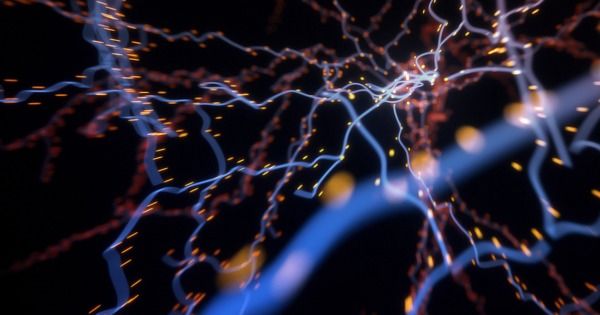
Blockchain technology could lead to an AI truly reminiscent of the human brain, with less of its frailties, and more of its strengths. Just as a brain is not inherently dictated by a single neuron, neither is the technology behind bitcoin. The advantage (and opportunity) in this sense, is the advent of an amalgamation of many nodes bridged together to form an overall, singular function. This very much resembles the human brain (just as billions of neurons and synapses work in unison). If we set our sights on the grander vision of things, humans could accomplish great things if we utilize this technology to create a truly life-like Artificial Intelligence. At the same time, we need to keep in mind the dangers of such an intelligence being built upon a faultless system that has no single point of failure.

Just as any technology has upsides and corresponding downsides, this is no exception. The advantages of this technology are seemingly endless. In the relevant sense, it has the ability to create internet services without the same downfalls exploited in the TV show ‘Mr. Robot,’ where a hacker group named “fsociety” breached numerous data centers and effectively destroyed every piece of data the company held, causing worldwide ramifications across all of society. Because blockchain technology ensures no centralized data storage (by using all network users as nodes to spread information), it can essentially be rendered impossible to take down. Without a single targeted weak point, this means a service that, in the right hands, doesn’t go offline from heavy loads, which speeds up as more people use it, has inherent privacy/security safeguards, and unique features that couldn’t be achieved with conventional technology. In the wrong hands, however, this could be outright devastation. Going forward, we must tread lightly and not forget to keep tabs on this technology, as it could run rampant and destroy society as we know it.

Throughout the ages, society has always experienced mass change; the difference here being the ability for it to wipe us out. Therefore, it arises from a survival imperative that we strive for the former rather than the latter. We can evolve without destroying ourselves, but it won’t be a cakewalk. With our modern-day luxuries, we, as a species think ourselves invincible, while, in reality, we’re just dressed-up monkeys operating shiny doomsday technology. Just as it was a challenge to cross the seas, to invent tools and harness electricity, the grandest stakes posed by the future (and the ones defining our survival) are the most difficult to accomplish.

Read more

/* */