Toggle light / dark theme

Sex robots should be banned because they will harm humanity, say campaigners

The Campaign Against Sex Robots


Companies should be stopped from developing sex robots with artificial intelligence for fear of harming humanity, according to campaigners.

Many engineers are looking to add artificial intelligence to sex toys and dolls in an attempt to make them more like humans, and therefore more attractive to customers. But such moves are unethical and will harm humanity, according to a new campaign.

The Campaign Against Sex Robots, launched this week, says that the “increasing effort” that has gone into producing sex robots — “machines in the form of women or children for use as sex objects, substitutes for human partners or prostitutes” — is harmful and makes society more unequal.

Read more

DARPA demonstrates robotic landing gear for helicopters

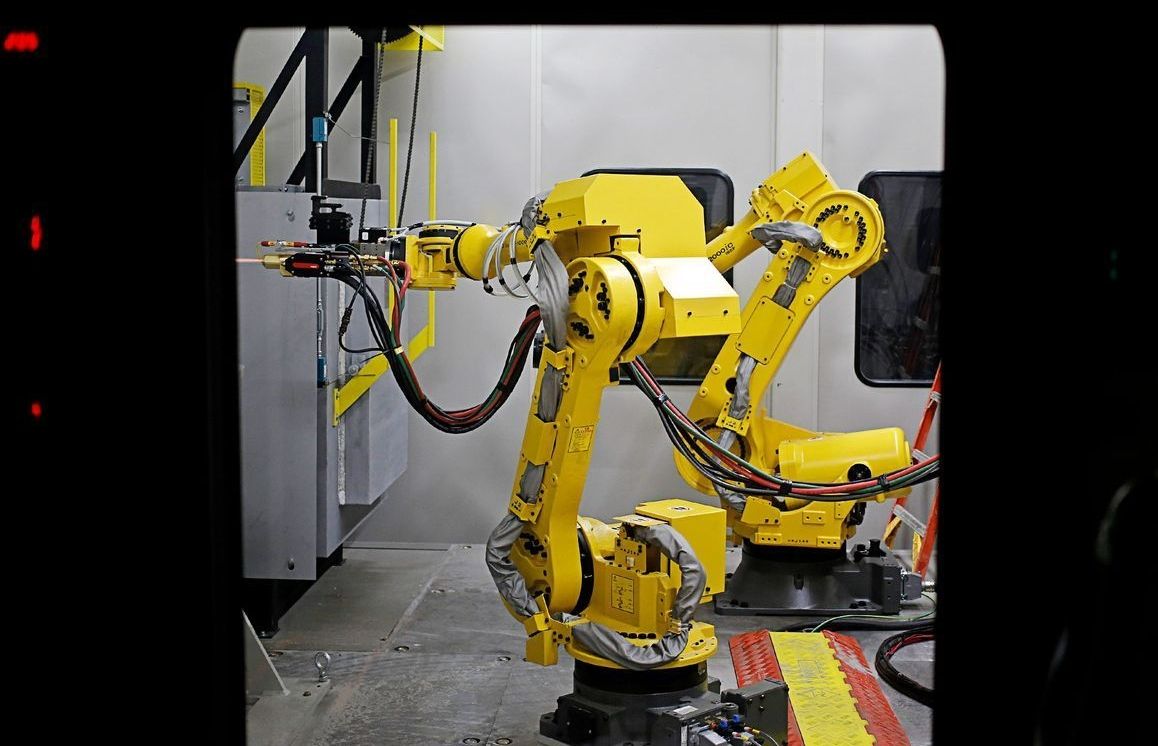
Helicopters are versatile machines capable of all manner of maneuvers in the air, but when it comes to takeoffs and landings they are very fussy creatures, preferring flat, level pads, which are scarce in combat and rescue missions. DARPA recently demonstrated a new robotic landing gear system in an unmanned flight near Atlanta, Georgia, that’s designed to overcome these limitations by enabling landings on broken or uneven terrain with a high degree of safety.

Read more

System learns to distinguish words’ phonetic components, without human annotation of training data

Every language has its own collection of phonemes, or the basic phonetic units from which spoken words are composed. Depending on how you count, English has somewhere between 35 and 45. Knowing a language’s phonemes can make it much easier for automated systems to learn to interpret speech.

In the 2015 volume of Transactions of the Association for Computational Linguistics, MIT researchers describe a new machine-learning system that, like several systems before it, can learn to distinguish . But unlike its predecessors, it can also learn to distinguish lower-level phonetic units, such as syllables and phonemes.

As such, it could aid in the development of speech-processing systems for languages that are not widely spoken and don’t have the benefit of decades of linguistic research on their phonetic systems. It could also help make speech-processing systems more portable, since information about lower-level phonetic units could help iron out distinctions between different speakers’ pronunciations.

Read more

1st Space Development Network Conference 2016

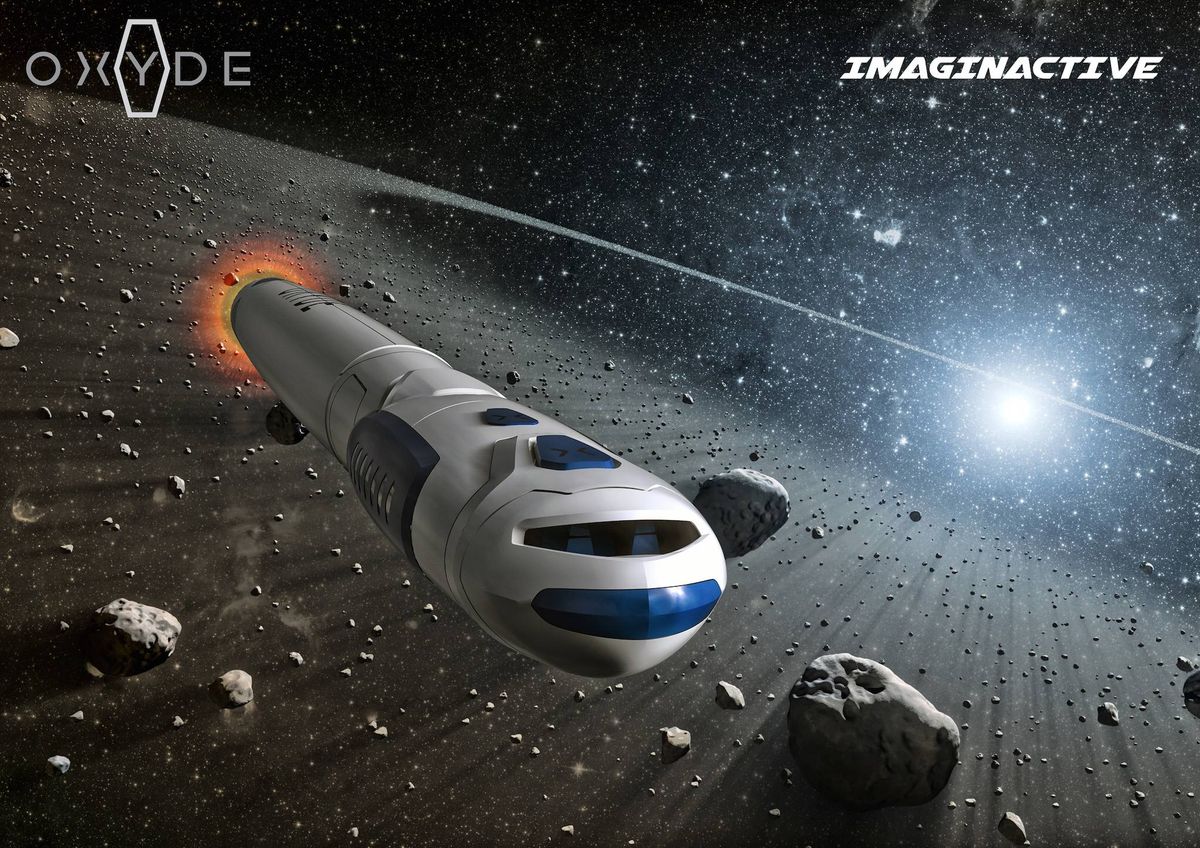
The 1st Space Development Network Conference will be held in Bangalore in January, 2016. The motivation of the conference is to invite researchers, eminent scientists, faculty from reputed colleges and students working in the area of Space development and technology to present their research and get valuable feedback from the people attending the conference. The topics of space development network conference are given below:

•Asteroid Mining.

•Space Colonization.

•Space Debris.

•Satellites and Cubesats payload.

•Rocket Launch Technology.

•AI & Space Mining Robotics.

Why The Future Of Technology Is All Too Human

The concept of artificial intelligence got it’s start at a conference at Dartmouth in 1956. Optimism ran high and it was believed that machines would be able to do the work of humans within 20 years. Alas, it was not to be. By the 1970’s, funding dried up and technology entered the period now known as the AI winter.

Slowly, however, progress was made. Computers became increasingly able to do human tasks, such as character recognition, making recommendations on Amazon and organizing itineraries on travel sites. We didn’t see the algorithms at work, but they were there, computing on our behalf.

So the answer to our technological dilemma is, in fact, all too human. While the past favored those who could retain and process information efficiently, the future belongs to those who can imagine a better world and work with others to make it happen.

Read more

This mind-controlled prosthetic robot arm lets you actually feel what it touches

The US government said today (Sept. 11) that it’s successfully made a Luke Skywalker-like prosthetic arm that allows the wearer to actually feel things.

At a conference in July, the US Defense Advanced Research Projects Agency (DARPA) presented the achievements it’d had to date in building a robot arm that can be controlled by a human brain. A little over two months later, the agency has announced at another conference that it’s managed to update the technology to give the wearer the feeling of actually being able to sense things with the arm.

The robotic arm is connected by wires that link up to the wearer’s motor cortex—the part of the brain that controls muscle movement—and sensory cortex, which identifies tactile sensations when you touch things. The wires from the motor cortex allow the wearer to control the motion of the robot arm, and pressure sensors in the arm that connect back into the sensory cortex give the wearer the sensation that they are touching something.

Read more

Humans Will Have Cloud-Connected Hybrid Brains

So, you think you’ve seen it all? You haven’t seen anything yet. By the year 2030, advancements will excel anything we’ve seen before concerning human intelligence. In fact, predictions offer glimpses of something truly amazing – the development of a human hybrid, a mind that thinks in artificial intelligence.

Ray Kurzweil, director of engineering at Google, spoke openly about this idea at the Exponential Finance Conference in New York. He predicts that humans will have hybrid brains able to connect to the cloud, just as with computers. In this cloud, there will be thousands of computers which will update human intelligence. The larger the cloud, the more complicated the thinking. This will all be connected using DNA strands called Nanobots. Sounds like a Sci-Fi movie, doesn’t it?

Kurzweil says:

Read more

/* */