How about smiling with some comics on Artificial Intelligence and Robots?
Blade Runner: 2049’s upcoming release is quickly approaching us. We will have to hold out two more months to learn what those mysteries may be.

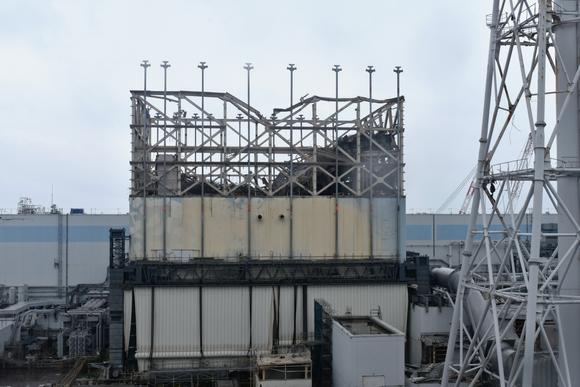
TOKYO — A joint venture between Japanese and American high-technology power houses Hitachi and General Electric is developing special robots for removing nuclear debris from the Fukushima Daiichi nuclear power plant, the most difficult task in decommissioning the plant’s six reactors, three of which suffered core meltdowns in the March 2011 accident.
The machines under development by Hitachi-GE Nuclear Energy are called “muscle robots,” as their hydraulic springs operate like human muscles. The company, based in Hitachi, Ibaraki Prefecture, is stepping up efforts to complete the development project in time for the start of debris removal in 2021.
Hitachi-GE is testing the arms of the robots at a plant of Chugai Technos, a Hiroshima-based engineering service company, located a 30-minute drive from the center of the city. The testing is taking place in a structure with a life-size model of the primary containment vessel of the No. 1 reactor at the Fukushima plant. The robots awkwardly move about, picking up concrete lumps standing in for fuel debris.
Scott Ott spearheads the questioning of human-computer interaction and its effect on society in this Right Angle. Steve Green and Bill Whittle are talking on this topic.
Scott Ott I’ll insert here a trigger warning… You may want to turn off all artificial intelligence devices before watching this episode. We are not responsible for what they say or do or order for you.
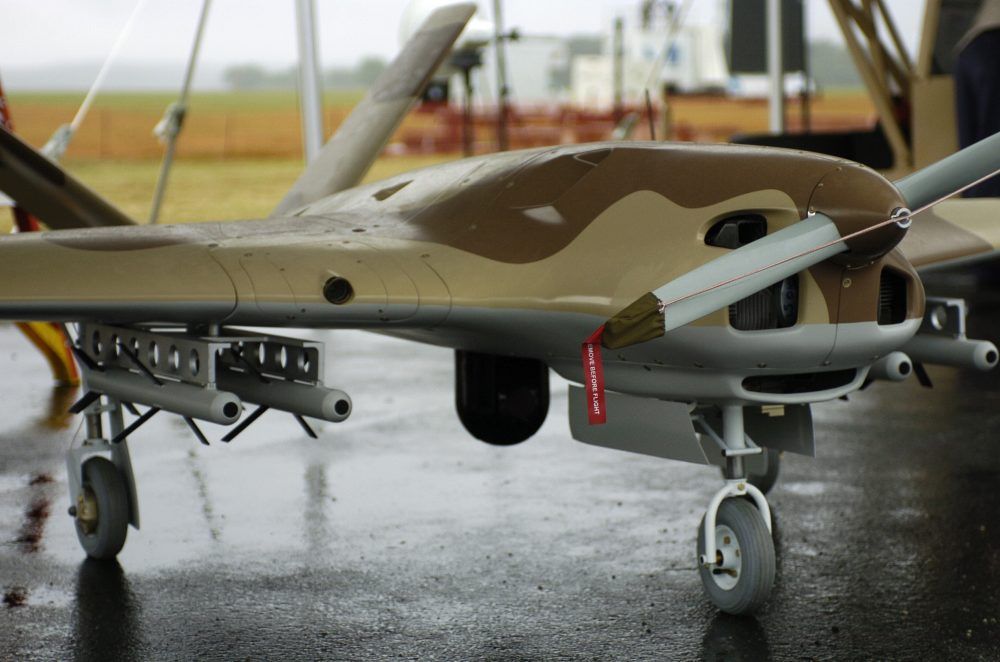
Duke Robotics Inc. announces, TIKAD, a dramatic step forward in protecting our troops by developing the resources needed to fight terrorism effectively today.
Governments are spending more than ever before on Defense budgets today, which provides an enormous incentive to solve problems that troops currently face.
TIKAD, the Future Soldier, saves lives by replacing boots on the ground.
Duke Robotics will work with select government clients around the globe with the goal to reduce the number of deployed troops as well as empower troops with immediate air-power deployment, improving prospects of mission success, minimizing battlefield injuries, loss of life to friendly troops and saving innocent civilians.
Connect with Duke Robotics on Social Media:
Facebook: https://www.facebook.com/Duke-Robotics-Inc-306954363074637
This post is also available in:  עברית ( Hebrew )
In a few months, the U.S Air Force and SOFWERX will pit UAV s against each other in a rumble-style experiment to gather data on drone operations, the Air Force’s secretary, Heather Wilson, said. The competition, called the ThunderDrone Rapid Prototyping Event will “investigate forms, platforms, effects and data science for small unmanned aerial vehicles,” said Wilson.
According to nationaldefensemagazine.org, SOFWERX, an initiative that facilitates rapid prototyping and technology experimentation between U.S. Special Operations Command and members of non-traditional industry and academia, is planning events related to ThunderDrone beginning in early September with a technology exposition. The event is meant to help “completely change the face of drone warfare,” and will be “a living test bed” for creating a drone marketplace, according to SOFWERX. Additionally, it will enable experimentation along with rapid prototyping.
Rob McInerney, the founder & CEO of Intelligent Layer and co-founder of IntelligentX Brewing Company, explains the use of artificial intelligence in improving everyday products.
“We wanted to see if in the future the most effective brands are the ones that talk to their customers not to make better advertising but to share ideas. We thought that they’d use artificial intelligence to help real people and brands talk to each other and we wanted to prove this in an industry which people have very strong views on and that which we had a pretty significant interest in as well… Beer… So we created intelligent X the world’s first beer brewed by artificial intelligence.”
A researchers at the University of Oxford explains how a group of robots may behave differently to just one individual robot on its own, and it may lead to unpredictable behaviors.
Neuralink is working to link the human brain with a machine interface by creating micron-sized devices.
He said creating a brain-machine interface will be vital to help humans compete with the ‘godlike’ robots of the future.
Neuralink was registered in California as a ‘medical research’ company last July, and he plans on funding the company mostly by himself.