The multitalented Dot Power Platform could raise crop yields 70 percent by 2050.


Everyone is worried about robots stealing manufacturing jobs, but the real value (and threat) in robots may lie in whether they can become smart enough to actually think on their own.
One of the major milestones in creating human level intelligence is for machines to attain self-awareness. And Columbia University’s Creative Machines Lab may have already done it. “These robots learn overtime, to stimulate themselves in a future situation they haven’t actually experienced.” said Dr. Hod Lipson, the mechanical engineering professor leading the lab’s push to create self-aware robots.
“In other words, they don’t have to learn by doing,” Lipson told VICE News. “They can learn by thinking.”
The robotics department at UC Berkley has made similar advancements with their self-teaching robot BRETT. Using trial and error, BRETT can learn how to fold laundry, assemble LEGO blocks and fit pegs into a hole.
From a technological standpoint, these advancements are exciting, but they raise an important philosophical question: If humans create machines whose intelligence surpasses our own, will we be able to control them?
VICE’s Hamilton Morris explores how robotics and the computers that power them are poised for an extraordinary leap forward with the emergence of artificial intelligence, and how humanity can reconcile the huge risks and possibilities that will follow.
We are making good progress in identifying neural circuits in our brain, small areas responsible for the execution of specific tasks. It is not always the case, actually several tasks are involving many areas in different regions of the brain. Also in this case, however, specific regions host neural circuits whose activity spread around influencing other neural networks. The malfunctioning of these “networks” results in disabilities and the good news is that researchers are starting to find ways to restore (in some cases) the correct working of these neural circuits using drugs.
The problem, however, is that these drugs cannot be delivered through the blood vessels since they would reach “the whole brain” and what is good for a “faulty” circuit may be bad for a “good” circuit. Besides, many drugs cannot flow across the membrane separating the arteries and veins from the brain (the so called blood-brain barrier). This obstacle is exploited by new technologies based on ultrasound beams that can be focussed in a specific place of the brain resulting in the opening of the blood vessels membrane in that area thus letting the drug reach the neurones. This is great but in mot cases it is not enough because the area “flooded” by the drug is still quite large (on a neuronal scale).
Here comes the result from researchers at MIT that have created a way to deliver nanoliter of drugs to areas as small as a cubic millimetre. Again, on the neural scale a cubic millimetre is … well, huge: it contains some 50,000 neurones and 300 million synapses! It is anyhow so much smaller than the area that would be affected by a drug delivered through a blood vessel (even the one that creates a breach into the blood brain barrier), hence it can target much better the faulty circuit without too much effects on other nearby circuits.
The vast majority of Americans expect artificial intelligence to lead to job losses in the coming decade, but few see it coming for their own position.
The other findings, released in January, show that more than three in four Americans believe that artificial intelligence will fundamentally change how the public works and lives in the coming decade.
A new study reveals how widely Americans use and welcome technologies featuring artificial intelligence.

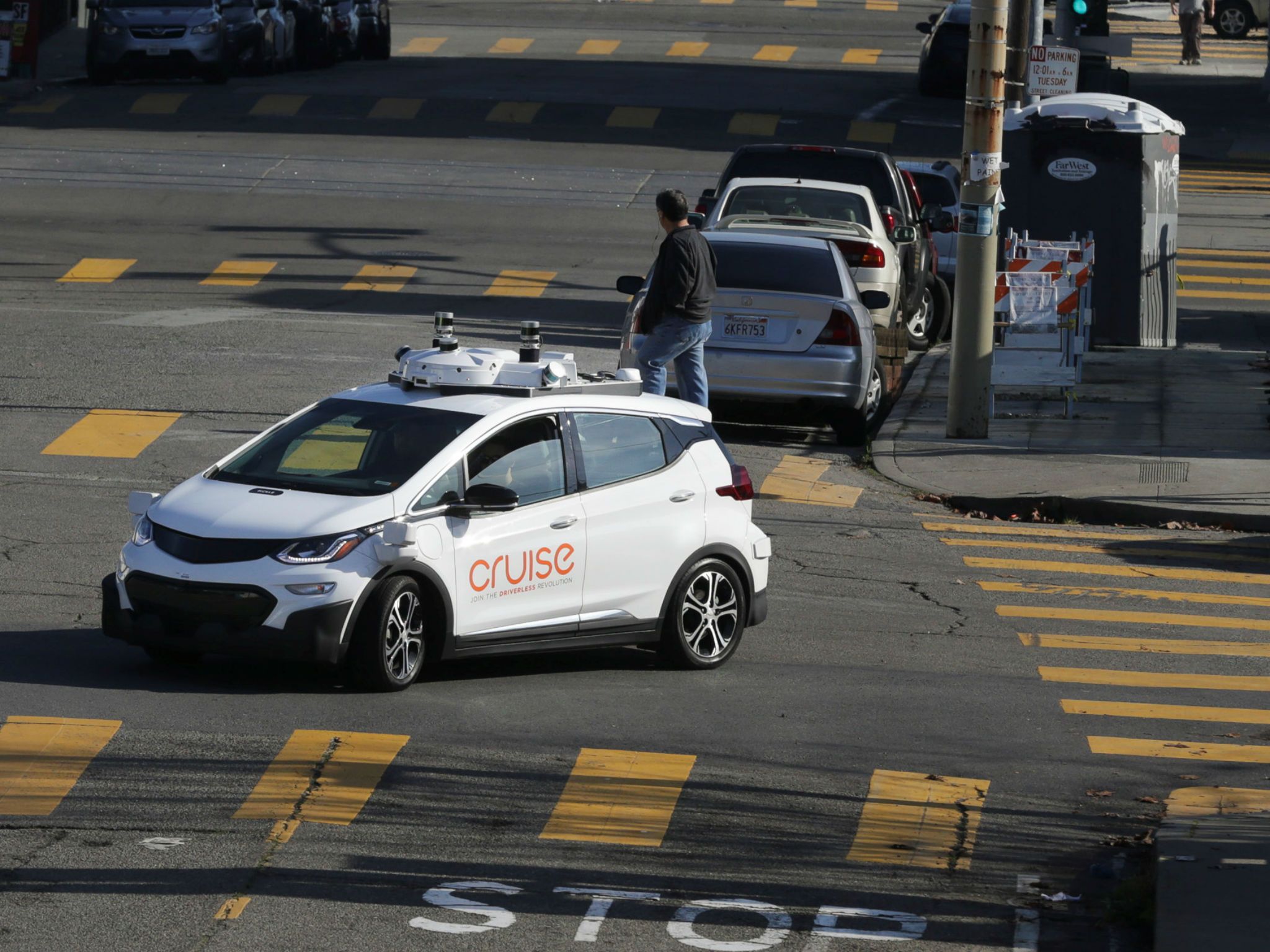
Kind of funny, but probably a sign of what will come in the mid 2020’s.
Technology and automotive companies touting self-driving cars as the future of transportation may have some work to convince San Franciscans, who keep attacking the vehicles.
A third of traffic collisions involving autonomous vehicles in 2018 so far featured humans physically confronting the cars, according to data released by California.
In one case, a taxi driver exited his cab and slapped the front passenger window of a General Motors Cruise parked behind him. No one was hurt, though the car sustained a scratch.

Yet several defense contractors are developing these engineering concepts for the U.S. military, hoping to get a piece of what is surely going to be a lucrative and lengthy contract.
Speaking to reporters at Lockheed Martin’s media day on Monday, CEO Marillyn Hewson touted investments in hypersonics, laser weapons, electronic warfare and artificial intelligence.
“Lockheed Martin has taken a leadership role in these four technology areas, and many others, to build an enterprise that can successfully support our customers’ rapidly evolving technology needs well into the future,” Hewson said.
In a recent interview, Microsoft co-founder and billionaire philanthropist Bill Gates told The Wall Street Journal he disagrees with Elon Musk’s assertions that artificial intelligence is a significant threat to humanity.
Artificial intelligence (AI) is one of today’s hottest topics. In fact, it’s so hot that many of the tech industry’s heavyweights — Apple, Google, Amazon, Microsoft, etc. — have been investing huge sums of money to improve their machine-learning technologies.
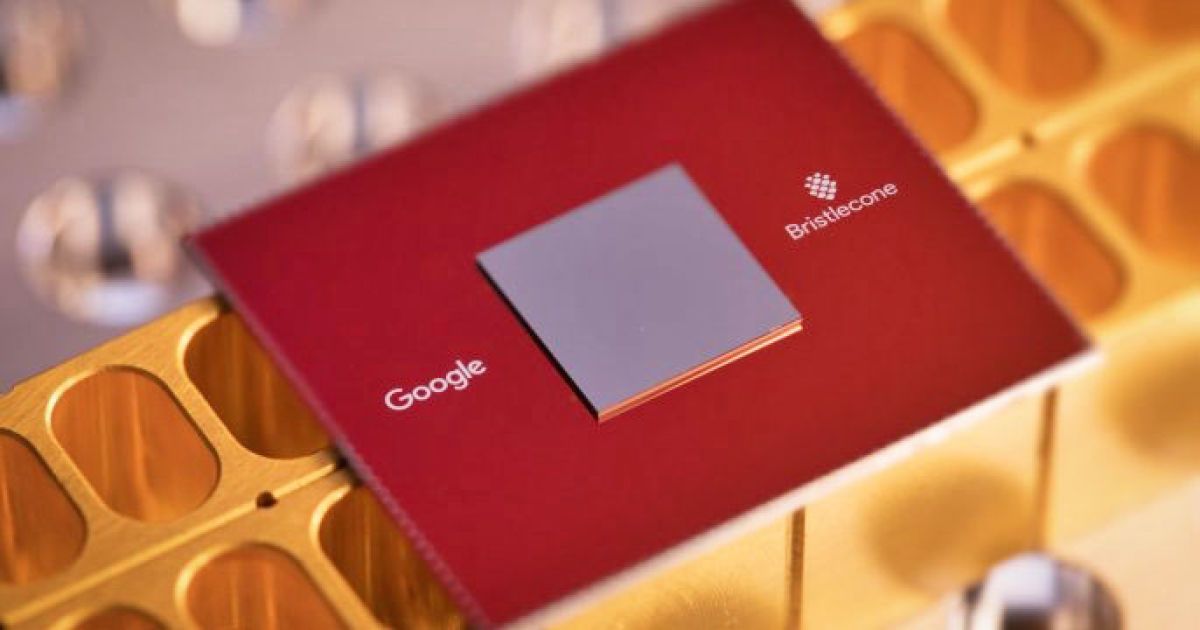
Like every other major tech company, Google has designs on being the first to achieve quantum supremacy — the point where a quantum computer could run particular algorithms faster than a classical computer. Today it’s announced that it believes its latest research, Bristlecone, is going to be the processor to help it achieve that. According to the Google Quantum AI Lab, it could provide “a compelling proof-of-principle for building larger scale quantum computers.”
One of the biggest obstacles to quantum supremacy is error rates and subsequent scalability. Qubits (the quantum version of traditional bits) are very unstable and can be adversely affected by noise, and most of these systems can only hold a state for less than 100 microseconds. Google believes that quantum supremacy can be “comfortably demonstrated” with 49 qubits and a two-qubit error below 0.5 percent. Previous quantum systems by Google have given two-qubit errors of 0.6 percent, which in theory sounds like a miniscule difference, but in the world of quantum computing remains significant.
However, each Bristlecone chip features 72 qubits, which may help mitigate some of this error, but as Google says, quantum computing isn’t just about qubits. “Operating a device such as Bristlecone at low system error requires harmony between a full stack of technology ranging from software and control electronics to the processor itself,” the team writes in a blog post. “Getting this right requires careful systems engineering over several iterations.”