Toggle light / dark theme

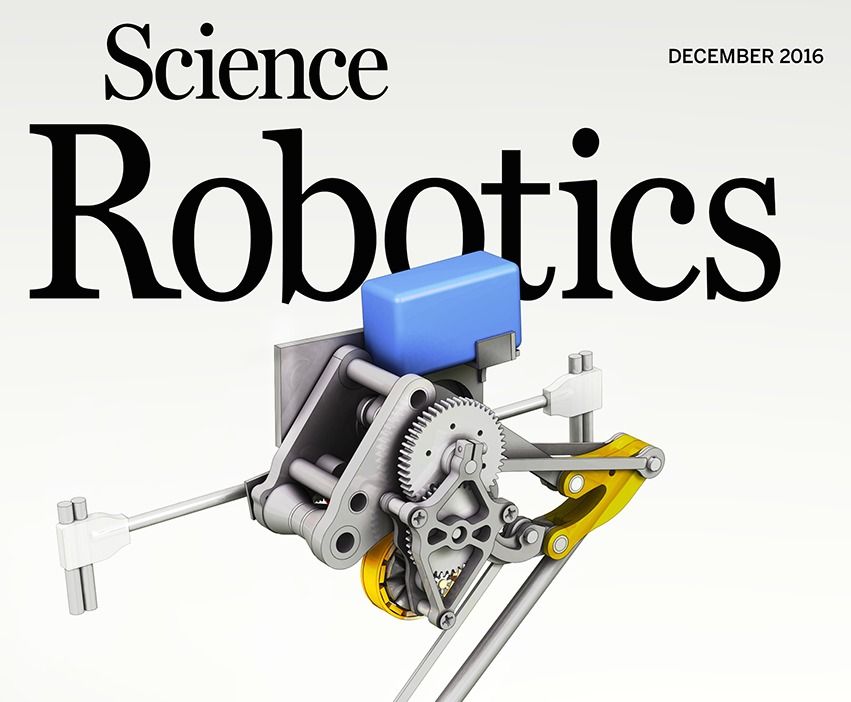
New journal Science Robotics is established to chronicle the rise of the robots

Robots have been a major focus in the technology world for decades and decades, but they and basic science, and for that matter everyday life, have largely been non-overlapping magisteria. That’s changed over the last few years, as robotics and every other field have come to inform and improve each other, and robots have begun to infiltrate and affect our lives in countless ways. So the only surprise in the news that the prestigious journal group Science has established a discrete Robotics imprint is that they didn’t do it earlier.

Editor Guang-Zhong Yang and president of the National Academy of Sciences Marcia McNutt introduce the journal:

In a mere 50 years, robots have gone from being a topic of science fiction to becoming an integral part of modern society. They now are ubiquitous on factory floors, build complex deep-sea installations, explore icy worlds beyond the reach of humans, and assist in precision surgeries… With this growth, the research community that is engaged in robotics has expanded globally. To help meet the need to communicate discoveries across all domains of robotics research, we are proud to announce that Science Robotics is open for submissions.


Artificial intelligence and the evolution of the fractal economy

Money makes the world go round, or so they say. Payments, investments, insurance and billions of transactions are the beating heart of a fractal economy, which echoes the messy complexity of natural systems, such as the growth of living organisms and the bouncing of atoms.

Financial systems are larger than the sum of their parts. The underlying rules that govern them might seem simple, but what surfaces is dynamic, chaotic and somehow self-organizing. And the blood that flows through this fractal heartbeat is data.

Today, 2.5 exabytes of data are being produced daily. That number is expected to grow to 44 zettabytes a day by 2020 (Source: GigaOm). This data, along with interconnectivity, correlation, predictive analytics and machine learning, provides the foundation for our AI-powered future.

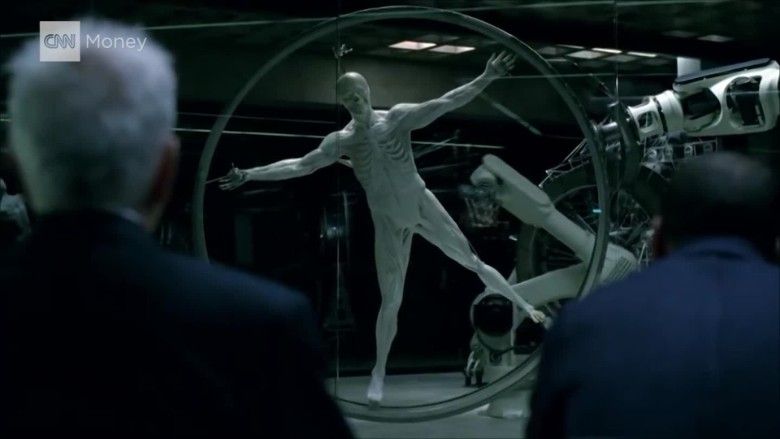
Westworld is raising some huge issues about our future

But Westworld is more than just entertainment. It raises problems that society will have to face head-on as technology gets more powerful. Here are a couple of the biggest.

1. Can we treat robots with respect?

Westworld raises a moral question — at what point do we have to treat machines in a responsible manner? We’re used to dropping our smartphones on the ground without remorse and throwing our broken gadgets in the trash. We may have to think differently as machines show more human traits.

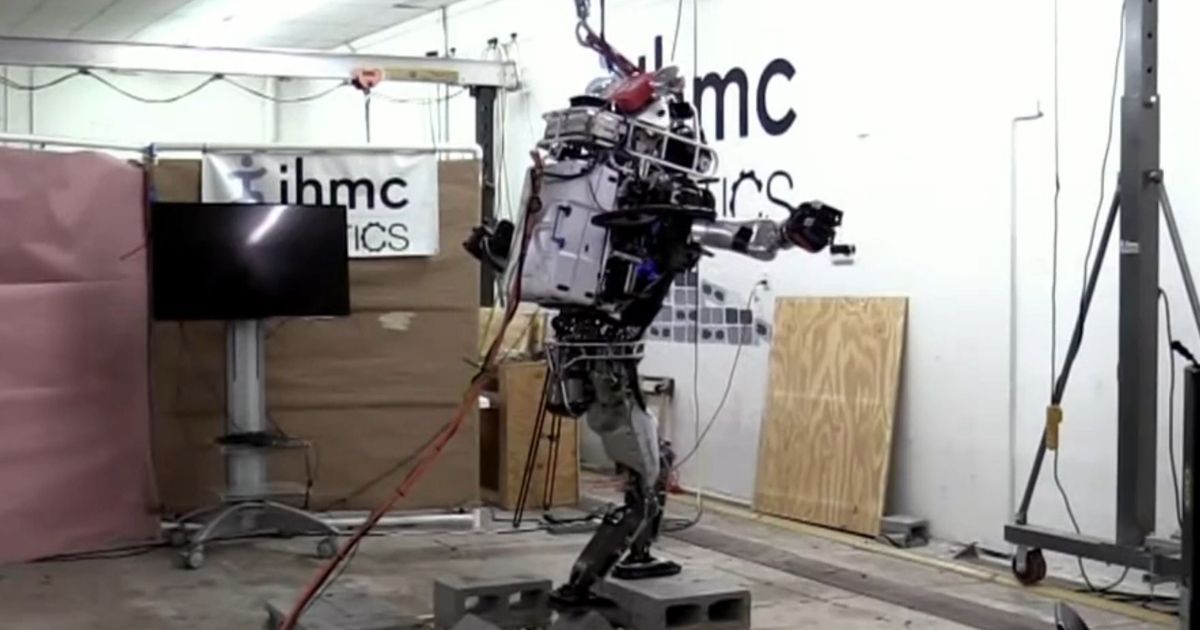
Terrifying life-size robot stalker can run faster than humans over rocky terrain

A 6ft robot is now able to walk and run over rocky terrain and balance itself just like a human.

Google’s Boston Dynamics’ Atlas robot has been upgraded so it is able to balance itself as it travels over stones and rocks.

In a video the Florida Institute for Human & Machine Cognition explains: “The Atlas Humanoid walking over small and partial footholds such as small stepping stones or line contacts.

Human Intelligence (HI)

Are you scared of Artificial Intelligence (AI)?

Do you believe the warnings from folks like Prof. Stephen Hawking, Elon Musk and others?

Is AI the greatest tool humanity will ever create, or are we “summoning the demon”?

To quote the head of AI at Singularity University, Neil Jacobstein, “It’s not artificial intelligence I’m worried about, it’s human stupidity.”

The 10 Algorithms Machine Learning Engineers Need to Know

Read this introductory list of contemporary machine learning algorithms of importance that every engineer should understand.

By James Le, New Story Charity.

Blackboard header

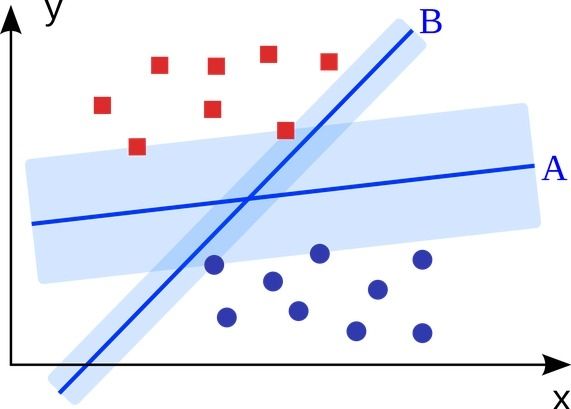
It is no doubt that the sub-field of machine learning / artificial intelligence has increasingly gained more popularity in the past couple of years. As Big Data is the hottest trend in the tech industry at the moment, machine learning is incredibly powerful to make predictions or calculated suggestions based on large amounts of data. Some of the most common examples of machine learning are Netflix’s algorithms to make movie suggestions based on movies you have watched in the past or Amazon’s algorithms that recommend books based on books you have bought before.

How the Brain Recognizes Faces

MIT researchers and their colleagues have developed a new computational model of the human brain’s face-recognition mechanism that seems to capture aspects of human neurology that previous models have missed.

The researchers designed a machine-learning system that implemented their model, and they trained it to recognize particular faces by feeding it a battery of sample images. They found that the trained system included an intermediate processing step that represented a face’s degree of rotation — say, 45 degrees from center — but not the direction — left or right.

This property wasn’t built into the system; it emerged spontaneously from the training process. But it duplicates an experimentally observed feature of the primate face-processing mechanism. The researchers consider this an indication that their system and the brain are doing something similar.

/* */