Toggle light / dark theme

How the Brain Recognizes Faces

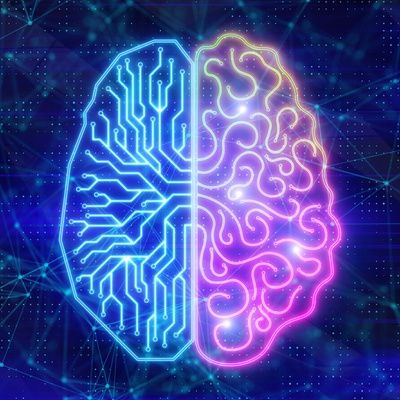
MIT researchers and their colleagues have developed a new computational model of the human brain’s face-recognition mechanism that seems to capture aspects of human neurology that previous models have missed.

The researchers designed a machine-learning system that implemented their model, and they trained it to recognize particular faces by feeding it a battery of sample images. They found that the trained system included an intermediate processing step that represented a face’s degree of rotation — say, 45 degrees from center — but not the direction — left or right.

This property wasn’t built into the system; it emerged spontaneously from the training process. But it duplicates an experimentally observed feature of the primate face-processing mechanism. The researchers consider this an indication that their system and the brain are doing something similar.

Computers with DNA? Brock team working to help make it happen

I know this is 2 days old; however, glad I came across it. As Gene Circuitry & Living systems in general are truly advancing more quickly in the recent year than I have seen over the past decade.

The real question is with AI, 3D/ 4D synbio printing, Gene/ Cell Circuitry; which areas of medicine will continue to existing in the next 15 years?


A Brock University research team has created a tool that can potentially be used in a future computer that will be made out of DNA.

Chemist Feng Li and graduate student Xiaolong Yang, formal postdoctoral fellow Yanan Tang and undergraduate student Sarah Traynor have devised a strategy that “helps simplify the design of DNA circuits that may eventually be used in a DNA computer,” says Li.

The team’s research was recently featured in the Journal of the American Chemical Society.

Robot Babies From Japan Raise Questions About How Parents Bond With AI

Driven by a declining population, a trend for developing robotic babies has emerged in Japan as a means of encouraging couples to become “parents”. The approaches taken vary widely and are driven by different philosophical approaches that also beg a number of questions, not least whether these robo-tots will achieve the aim of their creators.

To understand all of this it is worth exploring the reasons behind the need to promote population growth in Japan. The issue stems from the disproportionate number of older people. Predictions from the UN suggest that by 2050 there will be about double the number of people living in Japan in the 70-plus age range compared to those aged 15–30. This is blamed on a number of factors including so-called “parasite singles”, more unmarried women and a lack of immigration.

So, what are the different design approaches that are being taken to encourage more people to become parents? These have ranged from robots that mimic or represent the behavior of a baby to robots that look much more lifelike. Engineers at Toyota recently launched Kirobo Mini, for example, as a means of promoting an emotional response in humans. The robot does not look like a baby, but instead models “vulnerable” baby-like behaviors including recognising and responding to people in a high-pitched tone and being unstable in its movements.

Stephen Hawking: Automation and AI Are Going to Decimate Middle Class Jobs

Artificial intelligence and increasing automation is going to decimate middle class jobs, worsening inequality and risking significant political upheaval, Stephen Hawking has warned.

In a column in The Guardian, the world-famous physicist wrote that “the automation of factories has already decimated jobs in traditional manufacturing, and the rise of artificial intelligence is likely to extend this job destruction deep into the middle classes, with only the most caring, creative or supervisory roles remaining.”

He adds his voice to a growing chorus of experts concerned about the effects that technology will have on workforce in the coming years and decades. The fear is that while artificial intelligence will bring radical increases in efficiency in industry, for ordinary people this will translate into unemployment and uncertainty, as their human jobs are replaced by machines.

New AI Mental Health Tools Beat Human Doctors at Assessing Patients

That’s the bad news.

The good news is that mental health professionals have smarter tools than ever before, with artificial intelligence-related technology coming to the forefront to help diagnose patients, often with much greater accuracy than humans.

A new study published in the journal Suicide and Life-Threatening Behavior, for example, showed that machine learning is up to 93 percent accurate in identifying a suicidal person. The research, led by John Pestian, a professor at Cincinnati Children’s Hospital Medical Center, involved 379 teenage patients from three area hospitals.

The Dawn of AI: Congress Is Discussing What We’ll Do in a World Run by Robots

In Brief

  • Last week’s US Senate Subcommittee on Space, Science, and Competitiveness focused on the impact AI has in various sectors of US society.
  • Scientists predict that investments in AI will increase by more than 300 percent over the next few years, meaning AI will have a more prominent role in society.

Senator Ted Cruz opened up last Wednesday’s hearing by the US Senate Subcommittee on Space, Science, and Competitiveness with a description of the changing landscape of technology: “Whether we recognize it or not, artificial intelligence is already seeping into our daily lives.”

Senator Cruz explained that scientists are predicting how investments in AI will increase by more than 300 percent in the next few years, which means AI will have a more prominent role in society. With that in mind, the subcommittee’s hearing focused on the impact AI has in various sectors of US society, and how to best ensure US leadership in AI development.

/* */