Advocate Aurora ACL Laboratory will be utilizing APITO fully automated technology:
Category: robotics/AI – Page 2,623
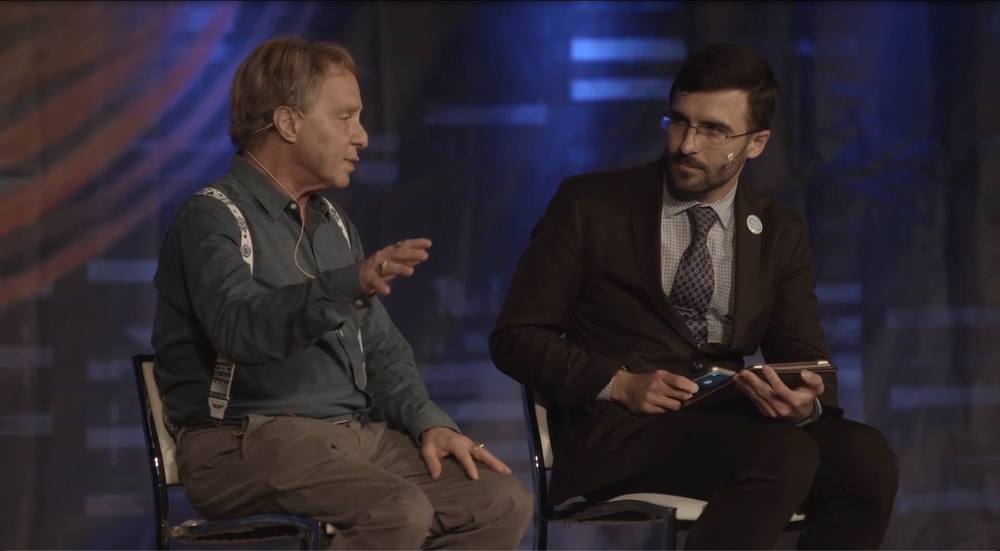
The Stolyarov-Kurzweil Interview has been released at last!
Watch it here: https://www.youtube.com/watch?v=10dFgrjdfqY
I posed a wide array of questions for inventor, futurist, and Singularitarian Dr. Ray Kurzweil on September 21, 2018, at RAAD Fest 2018 in San Diego, California. Topics discussed include advances in robotics and the potential for household robots, artificial intelligence and overcoming the pitfalls of AI bias, the importance of philosophy, culture, and politics in ensuring that humankind realizes the best possible future, how emerging technologies can protect privacy and verify the truthfulness of information being analyzed by algorithms, as well as insights that can assist in the attainment of longevity and the preservation of good health – including a brief foray into how Ray Kurzweil overcame his Type 2 Diabetes.

The Brain’s Autopilot Mechanism Steers Consciousness
Freud’s notion of a dark, libidinous unconscious is obsolete. A new theory holds that the brain produces a continuous stream of unconscious predictions.
- By Steve Ayan on December 19, 2018
The Weaponization Of Artificial Intelligence
Amidst these complex security challenges and the sea of unknowns coming our way, what remains fundamental for the safety and security of the human race is the role of programmers and programming along with the integrity of semiconductor chips. The reason behind this is programmers can define and determine the nature of AWS (at least in the beginning) until AI begins to program itself.
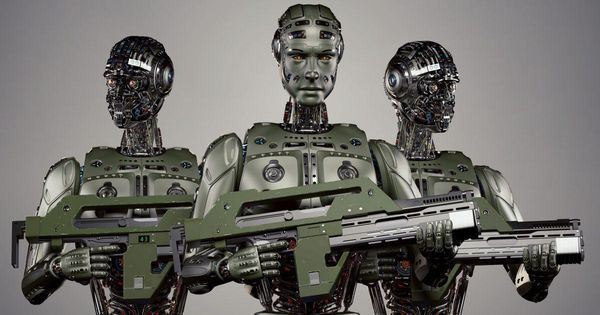
Weaponized artificial intelligence is almost here. As algorithms begin to change warfare, the rise of autonomous weapons systems is becoming a terrifying reality.
This AI teaches robots how to walk
Researchers at Google Brain and the University of California, Berkeley have developed an AI system that taught a quadrupedal robot how to walk from scratch.
What will people wear in the future? | The Economist
Innovation in fashion is sparking radical change. In the future clothes could be computers, made with materials designed and grown in a lab.
Click here to subscribe to The Economist on YouTube: https://econ.st/2xvTKdy
A new wave of innovation is fueling a radical change in fashion. Wearable technology, data, automation and lab-grown materials will have a major impact on what people will be wearing in the future.
Since the birth of sewing and weaving, technology has always led developments in fashion. The Industrial Revolution mechanized manufacturing enabling mass production. In the 1960s synthetic materials like polyester took off, creating new possibilities for fashion.
Now the convergence of new technologies is opening up previously unimaginable possibilities. Self-styled fashion scientist Dr Amanda Parkes is in the vanguard of the industry’s latest reinvention. She heads up innovation at FT labs, a venture capital firm that invests primarily in disruptive fashion tech startups. Among these startups the race is on to find the next generation of renewable materials that can be grown in a lab. Traditional silk is produced from insect larvae that form cocoons, most commonly silkworms. But rather than relying on these insects bolt threads is creating silk in test tubes. Bio fabricated materials remove the need for animals and insects and they are a more sustainable and efficient way of producing raw materials.
Other companies are creating leather alternatives. Rather than using animals scientists are creating bio fabricated materials from pineapple leaves and even mushrooms. The convergence of fashion and technology also provides opportunities to transform not just clothes but the people wearing them.
Nissan Reveals Invisible Tech for a Visible Future at CES
The future is just over the horizon and we’re accelerating towards it. And while the famous Dr. Emmett Brown from Back to the Future once said, “Where we’re going, we don’t need roads,” at this year’s Consumer Electronics Show (CES), Nissan revealed not only the future of road-based transportation but equally your future whip.
Driving in the future will not only be autonomous, but will also seamlessly integrate the virtual world into your physical domain using mixed reality, creating an all-around intelligent, connected, transportation ecosystem.