Toggle light / dark theme

The Surprisingly Simple Invention That Allows Robots to Make Clothes

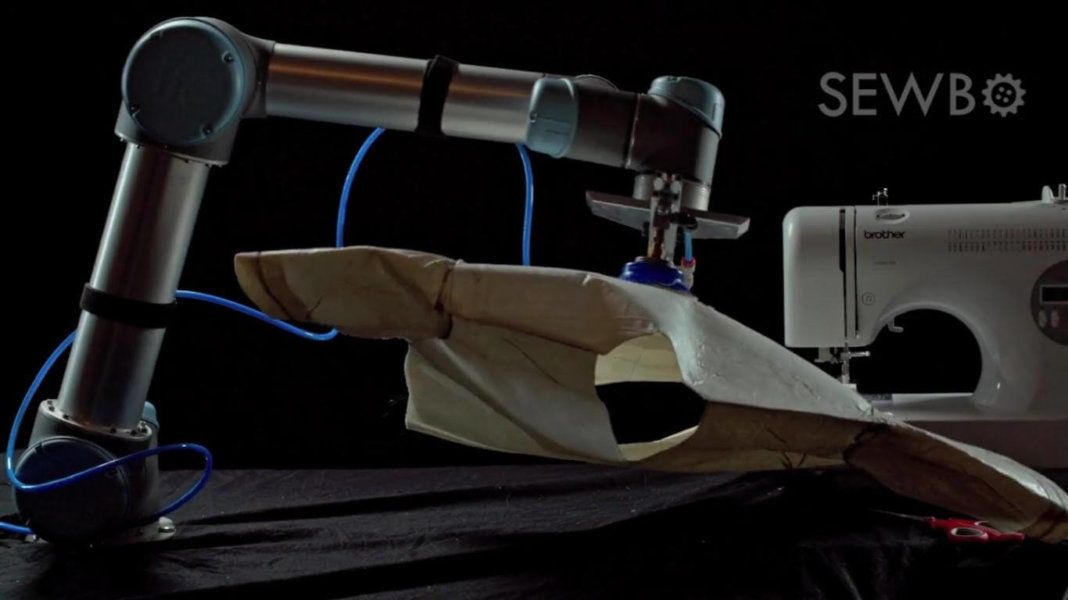
Today, sewing relies on the low-tech power of human hands, but soon that may not be the case. Human workers are still needed for the final steps of making clothes, in order to align fabrics and correctly feed them into sewing machines. If robots could do that instead, shock waves of change would surely ripple through global supply chains and disrupt the lives of millions of low-wage earners in the developing world.

For better or worse, plenty of technologists, researchers, and companies are working on the challenge—but so far, getting robots to navigate the imprecisions of flimsy textile materials that easily bend has proven elusive.

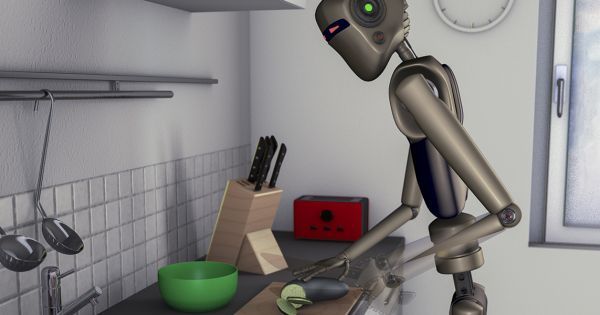
One promising solution, though, has come from an unlikely place: the sleepless brain of Jonathan Zornow, a young freelance web developer with no previous background in robotics, manufacturing, or the apparel business. His project, Sewbo, recently demonstrated the world’s first robotically sewn garment, and the inspiration came while watching a late-night Science Channel show called How It’s Made.

After Robots Take Our Jobs, What Will We Buy in a Society Without Money?

After labor, not all of us will want to explore inner consciousness. Abundant leisure will not turn everyone into the Buddha. Many of our tastes are in the gutter, and I have no objection to leaving them there. I’m not a fan of shopping per se, but buying stuff is deeply satisfying and motivating for many people. Is it possible to rethink the pleasure of conspicuous consumption in a way that decouples it from the competitive labor economy? The post-work world I’m imagining will have little surplus money for unnecessary shopping, even if robots and computers can dramatically lower the overhead of such production. So, a non-consummatory form of shopping will have to be cultivated.

Some people marshal all their evolved predatory skills to hunt down the perfect sweater, shoes, or watch. Could we redesign shopping as a system of “catch-and-release,” so that, like sport fishing, it’s the adventure and not the prize that becomes central? Maybe we will hunt for luxury items, but then instead of keeping them, simply photograph ourselves wearing the items (like a fisherman holding a giant pike). It’s an unlikely adjustment, I’ll grant you, but I never thought catch-and-release fishing would be fun until I did it, and it was. The way some people already buy and return items suggests to me that catch-and-release shopping is not impossible.

Scientists begin building supercomputer programmed to solve ultimate question of life

Oh, there will be many things come together for all of us when we begin further expanding and advancing our work on quantum especially in our work with Quantum parallel states, as well as the work on both AI and Synbio on QC. Next 3 to 5 yrs are truly going to change a lot of things in science and technology.


British scientists have taken the first step towards building a real-life version of Deep Thought, the supercomputer programmed to solve the “ultimate question of life, the universe, and everything” in Douglas Adams’s The Hitchhiker’s Guide To The Galaxy. The team has drawn up the first blueprint for a giant quantum computer, a device capable of rapidly solving problems that would take an ordinary computer billions of years to answer.

The ground-breaking modular design could theoretically pave the way to a machine as large as a football field with undreamed of levels of computing power.

University of Sussex researchers plan to unveil a proof-of-concept early prototype within two years.

DARPA: Spectrum Collaboration Challenge (SC2) is the first-of-its-kind collaborative machine-learning competition to overcome scarcity in the radio frequency (RF) spectrum

Today, spectrum is managed by dividing it into rigid, exclusively licensed bands. This human-driven process is not adaptive to the dynamics of supply and demand, and thus cannot exploit the full potential capacity of the spectrum. In SC2, competitors will reimagine a new, more efficient wireless paradigm in which radio networks autonomously collaborate to dynamically determine how the spectrum should be used moment to moment.

The team whose radio design most reliably achieves successful communication in the presence of other competing radios could win as much as $3,500,000. For more information, see the About Page.

awards_logo

Google’s self-driving cars just got way better at driving themselves

California’s Department of Motor Vehicles released its annual autonomous vehicle disengagement report today, in which all the companies that are actively testing self-driving cars on public roads in the Golden State disclose the number of times that human drivers were forced to take control of their driverless vehicles. The biggest news to come out of this report is from Waymo, Google’s new self-driving car company, which reported a huge drop in disengagements in 2016 despite an almost equally huge increase in the number of miles driven.

In other words, Waymo’s self-driving cars are failing at a much lower rate, even as they are driving a whole lot more miles. The company says that since 2015, its rate of safety-related disengages has fallen from 0.8 per thousand miles to 0.2 per thousand miles in 2016. So while Waymo increased its driving by 50 percent in the state — racking up a total of 635,868 miles — the company’s total number of reportable disengages fell from 341 in 2015 to 124.

New Study Predicts Nearly Half of All Work Will Be Automated

In Brief

  • A new report predicts that nearly 50% of all work could be automated by the year 2055, with machines already capable of taking over 30% of human tasks in about 60% of occupations.
  • Though this shift could take longer due to politics and public sentiment, we need to start preparing now for a future in which many workers are displaced by machines.

According to a new report from the McKinsey Global Institute, nearly half of all the work we do will be able to be automated by the year 2055. However, a variety of factors, including politics and public sentiment toward the technology, could push that back by as many as 20 years. An author of the report, Michael Chui, stressed that this doesn’t mean we will be inundated with mass unemployment over the next decades. “What we ought to be doing is trying to solve the problem of ‘mass redeployment,’” Chui tells Public Radio International (PRI). “How can we continue to have people working alongside the machines as we go forward?”

The report suggests that the move toward automation will also bring with it a global boost in productivity: “Based on our scenario modeling, we estimate automation could raise productivity growth globally by 0.8 to 1.4 percent annually.” Removing the capacity for human error and dips in speed due to illness, fatigue, or general malaise can help boost productivity in any task capable of being automated.

Transparent gel-based robots can catch and release live fish

A new technology for cleaning and maintaining your aquarium as well as useful for zoos, public aquariums, etc.

A new technology for fishing industry and hobbyists.1092647.htm


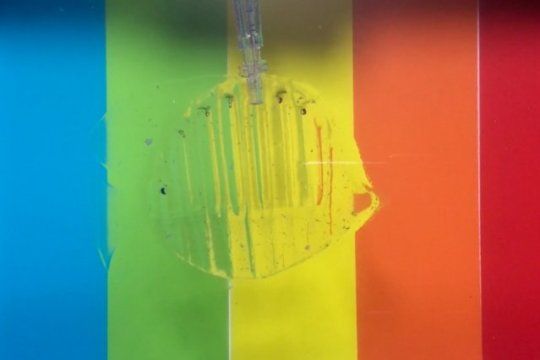
Engineers at MIT have fabricated transparent, gel-based robots that move when water is pumped in and out of them. The bots can perform a number of fast, forceful tasks, including kicking a ball underwater, and grabbing and releasing a live fish.

The robots are made entirely of hydrogel — a tough, rubbery, nearly transparent material that’s composed mostly of water. Each robot is an assemblage of hollow, precisely designed hydrogel structures, connected to rubbery tubes. When the researchers pump water into the hydrogel robots, the structures quickly inflate in orientations that enable the bots to curl up or stretch out.

The team fashioned several hydrogel robots, including a finlike structure that flaps back and forth, an articulated appendage that makes kicking motions, and a soft, hand-shaped robot that can squeeze and relax.

Who Has the Manufacturing Edge? May Countries With the Best Robots Win

I was just telling someone today this very message. Of course they believe borders keep things from happening. Maybe physically; but not in an online retail and consumer world. Who are the most advance and real time responsive in meeting the interests and demands of consumers; will be the winners.


From time to time, the Singularity Hub editorial team unearths a gem from the archives and wants to share it all over again. It’s usually a piece that was popular back then and we think is still relevant now. This is one of those articles. It was originally published October 7, 2015. We hope you enjoy it!

You’ve heard the chatter: Robots and AI want your job. One famous study predicted 47% of today’s jobs may be automated by 2034. And if you want to know how likely it is you’ll be replaced by a robot, check out this BBC tool. (Writer = 33%. Yay?)

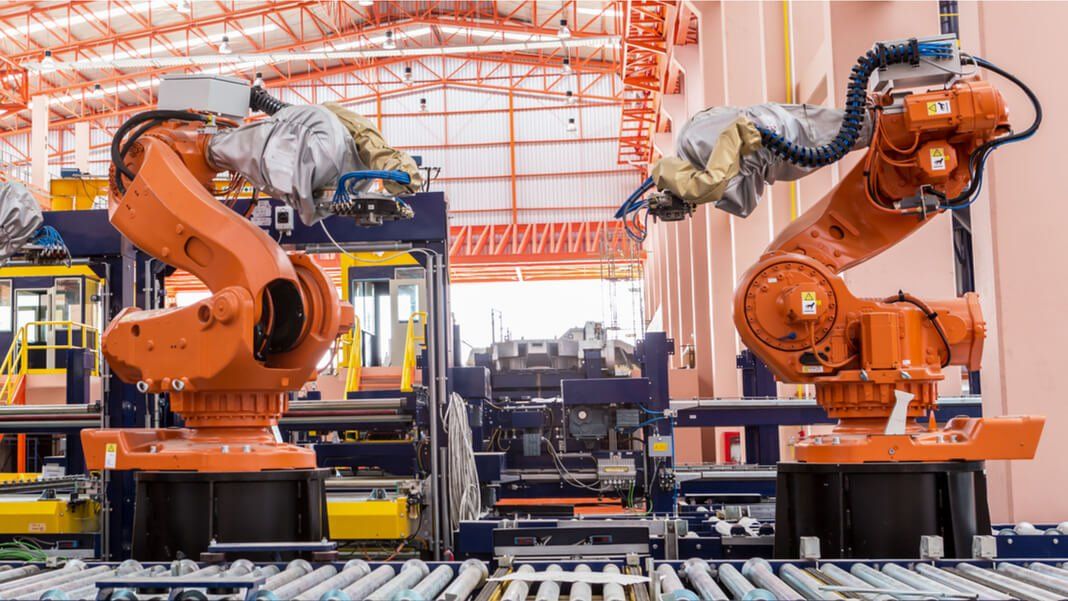
But nowhere is automation as immediately evident as it is in manufacturing. It’s been going on for decades, most obviously in automotive assembly and heavy machinery. Increasingly, however, more advanced robot factory workers are branching out.

/* */