Connor Leahy discusses the motivations of AGI corporations, how modern AI is “grown”, the need for a science of intelligence, the effects of AI on work, the radical implications of superintelligence, and what you might be able to do about all of this. https://www.thecompendium.ai 00:00 The AI Race 02:14 CEOs Lying 04:02 The Entente Strategy 06:12 AI is grown, not built 07:39 Jobs 10:47 Alignment 14:25 What should you do? Original Podcast: • Connor Leahy on Why Humanity Risks Extinct… Editing: https://zeino.tv/
Category: robotics/AI – Page 255
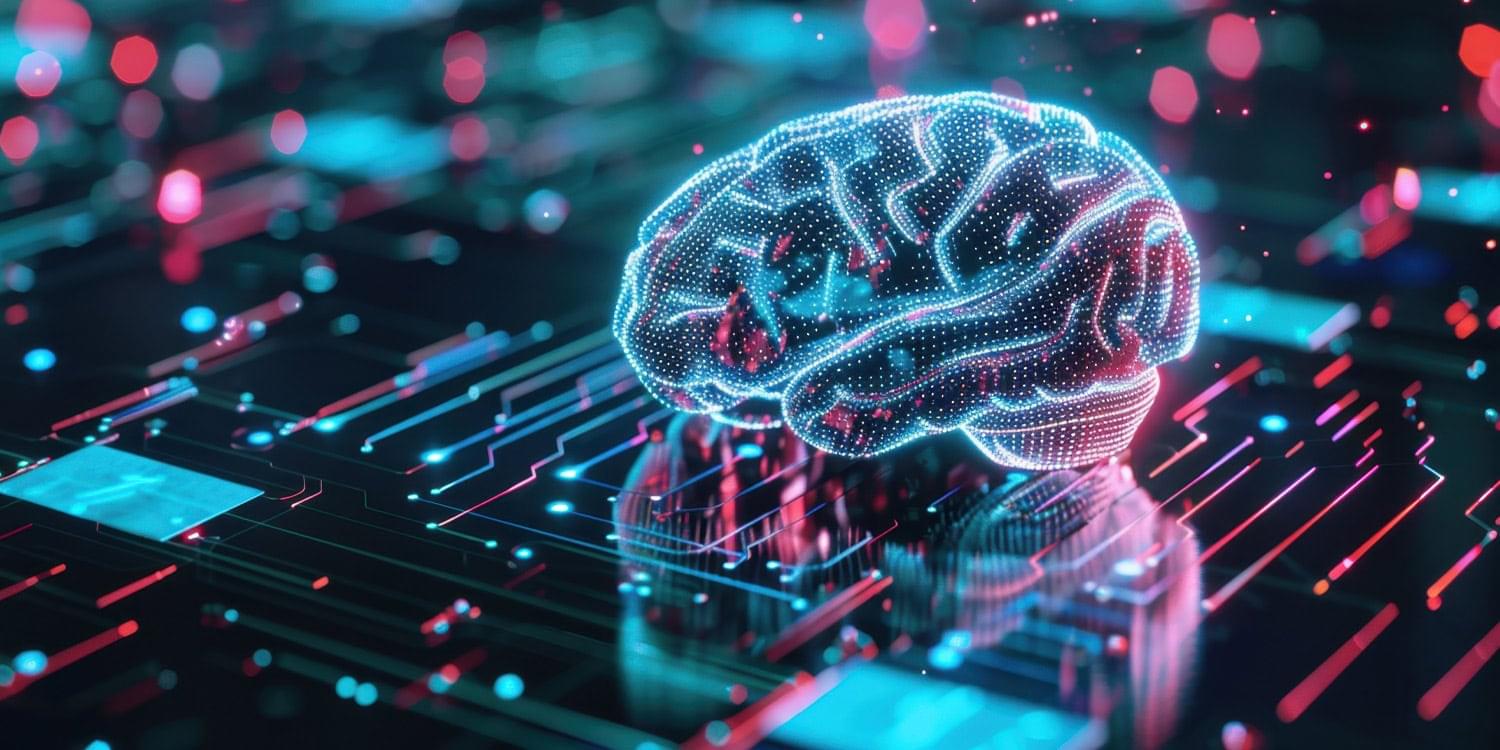
Scientists reveal the alien logic of AI: hyper-rational but stumped by simple concepts
A new study shows that AI approaches strategic games with a hyper-rationality humans lack. However, these models surprisingly fail to identify simple dominant strategies, highlighting a fundamental difference in cognition.
World Modeling Workshop — Day 1
A fundamental desideratum of AI is the ability to model environment dynamics and transitions in response to both their own actions and external control signals. This capability, commonly referred to as world modeling (WM), is essential for prediction, planning, and generalization. Learning world models using deep learning has been an active area of research for nearly a decade. In recent years, the field has witnessed significant breakthroughs driven by advances in deep neural architectures and scalable learning paradigms. Multiple subfields, including self-supervised learning (SSL), generative modeling, reinforcement learning (RL), robotics, and large language models (LLMs), have tackled aspects of world modeling, often with different tools and methodologies. While these communities address overlapping challenges, they frequently operate in isolation. As a result, insights and progress in one area may go unnoticed in another, limiting opportunities for synthesis and collaboration. This workshop aims to bridge this gap between subfields of world modeling by fostering open dialogue, critical discussion, and cross-disciplinary exchange. By bringing together researchers from diverse backgrounds, from early-career researchers to established experts, we hope to establish a shared vocabulary, identify common challenges, and surface synergies that can move the field of world modeling forward.
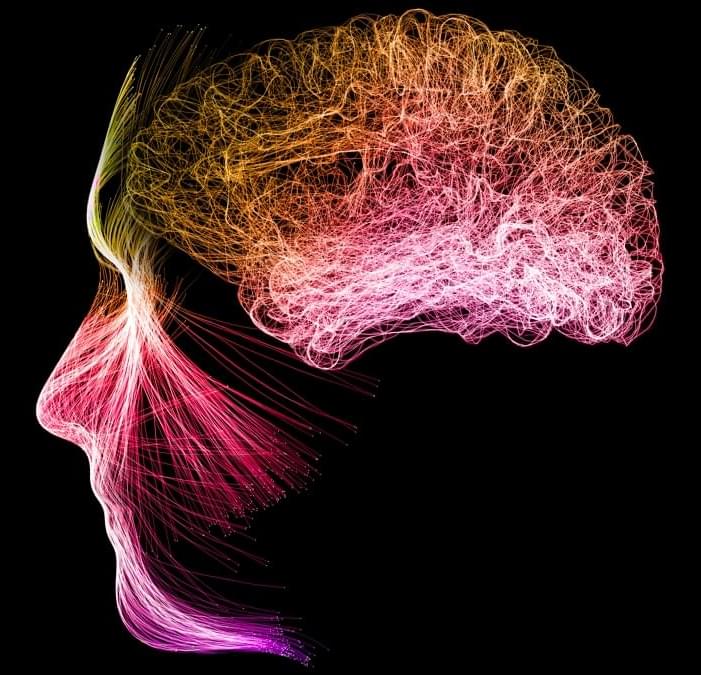
Meditation Can Reshape Your Brain Activity, Study Reveals
Meditation may calm the mind, but a recent study suggests it can also reshape brain activity by profoundly altering brain dynamics and increasing neural connections – somewhat similar to psychedelic substances.
As a result, meditation may help practitioners achieve a hypothesized state known as “brain criticality”, in which neural connections are neither too weak nor too strong, but at an optimal level for mental agility and function.
In the study, led by neurophysiologist Annalisa Pascarella of the Italian National Research Council, researchers used high-resolution brain scans and machine learning to examine how meditation can alter brain activity to achieve an equilibrium between neural chaos and order.

Satellite servicing startup Starfish taps Quindar for mission operations software
WASHINGTON — Quindar, a startup that provides mission management software for satellite operators, has been selected by satellite servicing company Starfish Space to support the first three missions of its Otter spacecraft.
Under an agreement announced Feb. 5, Quindar will provide software to manage and automate operations for Starfish’s initial Otter missions, which are expected to begin launching this year. Financial terms were not disclosed.
Based in Denver, Quindar offers a cloud-hosted platform that allows satellite operators to track spacecraft, send commands and automate routine ground operations. The company positions its software as an alternative to traditional, custom-built mission control systems that operators typically develop in-house and maintain over the life of a program.

Why comparisons between AI and human intelligence miss the point
AI systems, by contrast, do not cooperate, negotiate meaning, form social bonds or engage in shared moral reasoning. They process information in isolation, responding to prompts without awareness, intention or accountability.
Embodiment and social understanding matter
Human intelligence is also embodied. Our thinking is shaped by physical experience, emotion and social interaction. Developmental psychology shows that learning begins in infancy through touch, movement, imitation and shared attention with others. These embodied experiences ground abstract reasoning later in life.
OpenClaw Debate: AI Personhood, Proof of AGI, and the ‘Rights’ Framework
Peter H. Diamandis
RAI Institute
Welcome. At the Robotics and AI Institute (RAI Institute), our mission is to solve the most important and fundamental challenges in robotics and AI.

⏱️ The Brilliant Laziness of Being Human: Why Your Brain Refuses to Plan Ahead (And That’s Actually Perfect)
“Useless blocks” that you’d bump into 95% of the time but didn’t affect the outcome at all.
New MIT research reveals how humans navigate complex environments: not through exhaustive mental mapping, but through ‘just-in-time’ processing—building simplified models only as needed. This challenges decades of cognitive theory and has profound implications for AI, robotics, and understanding everyday human behaviour and memory.
AI has been under-hyped | Joscha Bach
#aihype #artificialintelligence #scalinghypothesis