Toggle light / dark theme

This Massive New Vertical Farm Can Produce 1,000 Tons of Produce a Year

Once running at full capacity by the end of next year, its creators say, the facility will be able to generate a ton of food. Produce can be harvested up to 15 times a year without needing any soil or daylight.

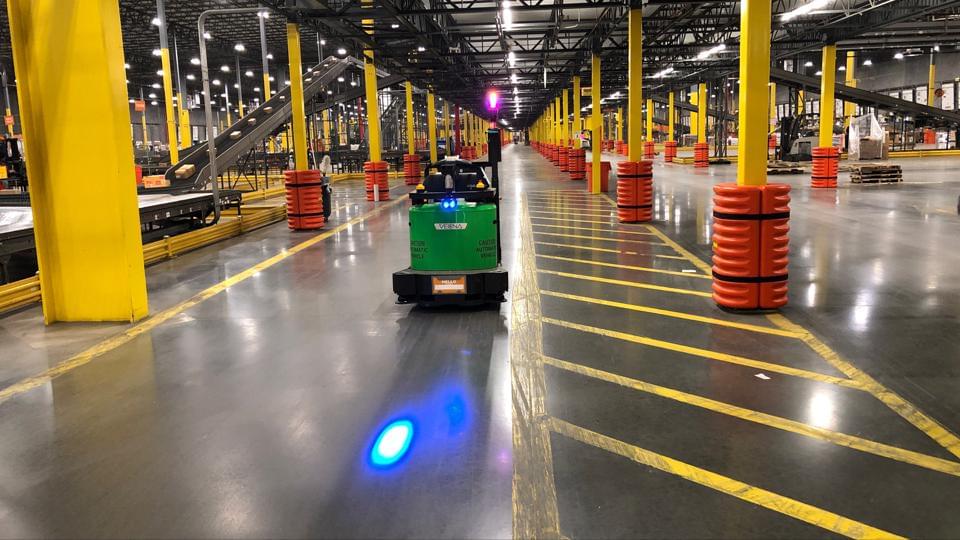
Automated robots will be used to both plant seeds and check in on them later as well.

Nordic Harvest envisions that other massive facilities like it could have a major impact on the global fresh food supply. In fact, vertical farms covering an area of 20 soccer fields could grow enough greens for the entirety of Denmark, the startup argues, as reported by Fast Company.

Artificial visual system of record-low energy consumption for the next generation of AI

A joint study led by City University of Hong Kong (CityU) has built an ultralow-power consumption artificial visual system to mimic the human brain, which successfully performed data-intensive cognitive tasks. Their experiment results could provide a promising device system for the next generation of artificial intelligence (AI) applications.

The research team is led by Professor Johnny Chung-yin Ho, Associate Head and Professor of the Department of Materials Science and Engineering (MSE) at CityU. Their findings have been published in the scientific journal Science Advances, titled “Artificial visual system enabled by quasi-two-dimensional electron gases in oxide superlattice .”

As the advances in semiconductor technologies used in digital computing are showing signs of stagnation, neuromorphic (brain-like) computing systems have been regarded as one alternative. Scientists have been trying to develop the next generation of advanced AI computers, which could be as lightweight, energy-efficient and adaptable as the human brain.

Stretchable sensor gives robots and VR a human touch

It’s not a stretch to say that stretchable sensors could change the way soft robots function and feel. In fact, they will be able to feel quite a lot.

Cornell researchers have created a fiber-optic sensor that combines low-cost LEDs and dyes, resulting in a stretchable “skin” that detects deformations such as pressure, bending and strain. This sensor could give soft robotic systems – and anyone using augmented reality technology – the ability to feel the same rich, tactile sensations that mammals depend on to navigate the natural world.

Artificial intelligence finds surprising patterns in Earth’s biological mass extinctions

Charles Darwin’s landmark opus “On the Origin of the Species” ends with a beautiful summary of his theory of evolution: “There is a grandeur in this view of life, with its several powers, having been originally breathed into a few forms or into one; and that, whilst this planet has gone cycling on according to the fixed law of gravity, from so simple a beginning endless forms most beautiful and most wonderful have been, and are being, evolved.” In fact, scientists now know that most species that have ever existed are extinct.

This has, on the whole, been roughly balanced by the origination of new ones over Earth’s history, with a few major temporary imbalances scientists call extinction events. Scientists have long believed that mass extinctions create productive periods of evolution, or “radiations,” a model called “creative destruction.” A new study led by scientists affiliated with the Earth-Life Science Institute (ELSI) at Tokyo Institute of Technology used machine learning to examine the co-occurrence of fossil species and found that radiations and extinctions are rarely connected, and thus mass extinctions likely rarely cause radiations of a comparable scale.

Creative destruction is central to classic concepts of evolution. It seems clear that there are periods in which many species suddenly disappear, and many new species suddenly appear. However, radiations of a comparable scale to the mass extinctions, which this study, therefore, calls the mass radiations, have received far less analysis than extinction events. This study compared the impacts of both extinction and radiation across the period for which fossils are available, the so-called Phanerozoic Eon. The Phanerozoic (from the Greek meaning “apparent life”), represents the most recent ~ 550-million-year period of Earth’s total ~4.5 billion-year history, and is significant to palaeontologists: Before this period, most of the organisms that existed were microbes that didn’t easily form fossils, so the prior evolutionary record is hard to observe.

‘Electronic amoeba’ finds approximate solution to traveling salesman problem in linear time

Researchers at Hokkaido University and Amoeba Energy in Japan have, inspired by the efficient foraging behavior of a single-celled amoeba, developed an analog computer for finding a reliable and swift solution to the traveling salesman problem—a representative combinatorial optimization problem.

Many real-world application tasks such as planning and scheduling in logistics and automation are mathematically formulated as combinatorial optimization problems. Conventional digital computers, including supercomputers, are inadequate to solve these in practically permissible time as the number of candidate solutions they need to evaluate increases exponentially with the problem size—also known as combinatorial explosion. Thus new computers called Ising machines, including quantum annealers, have been actively developed in recent years. These machines, however, require complicated pre-processing to convert each task to the form they can handle and have a risk of presenting illegal solutions that do not meet some constraints and requests, resulting in major obstacles to the practical applications.

These obstacles can be avoided using the newly developed ‘electronic amoeba,’ an inspired by a single-celled amoeboid organism. The amoeba is known to maximize nutrient acquisition efficiently by deforming its body. It has shown to find an approximate solution to the (TSP), i.e., given a map of a certain number of cities, the problem is to find the shortest route for visiting each exactly once and returning to the starting city. This finding inspired Professor Seiya Kasai at Hokkaido University to mimic the dynamics of the amoeba electronically using an analog circuit, as described in the journal Scientific Reports. “The amoeba core searches for a solution under the electronic environment where resistance values at intersections of crossbars represent constraints and requests of the TSP,” says Kasai. Using the crossbars, the city layout can be easily altered by updating the resistance values without complicated pre-processing.

China’s AI City to put computers in charge

“” As sunlight hits the houses, bedroom windows adjust their opacity to allow the natural light to wake sleepy residents,” Terminus said on its website, which also highlights tranquil green spaces like rooftop gardens. “Once the light has filled the room, an AI virtual housekeeper named Titan selects your breakfast, matches your outfit with the weather, and presents a full schedule of your day.” The city, which includes offices, homes, public spaces and self-driving cars that move around under the ever watchful eye of AI, is due for completion in about three years, according to Terminus.”


Web Summit conference hears plans by Danish architecture firm BIG and Chinese tech company Terminus to build an AI-run city in Chongqing.

/* */