Researchers at Pointcloud GmbH in Zürich, Switzerland, have packed advanced 4D sensing technology — once too bulky for everyday use — onto a single silicon chip.
It’s a 4D imaging sensor that maps the physical world while simultaneously clocking the speed of every object it sees. It offers a low-cost, high-speed vision solution for everything from autonomous drones to future smartphones.
“This result demonstrates the capabilities of FMCW LiDAR FPA sensors as enablers of ubiquitous, low-cost, compact coherent 4D imaging cameras,” the researchers wrote in the study paper.
Astroport Space Technologies is developing construction tools for use with Venturi Astrolab’s self-driving rovers to build base Trump wants established by 2030.
Nvidia’s KV Cache Transform Coding (KVTC) compresses LLM key-value cache by 20x without model changes, cutting GPU memory costs and time-to-first-token by up to 8x for multi-turn AI applications.
This sounds like a bad movie, but it’s real: right now, AI tech CEOs are handing out “recipes” for bioweapons — viruses as deadly as COVID or even worse — to anyone with an internet connection. New “bi
Unlike previous AI simulations where agents existed in consequence-free bubbles, TerraLingua operates more like a real ecosystem. Agents have limited resources and finite lifespans. When an agent “dies,” it’s gone—but here’s the twist: anything it created “survives.” A tool, a rule, a piece of knowledge—these artifacts live on, shaping how future generations of agents behave and interact.
Introducing TerraLingua, a multi-agent LLM ecology that shows how AI agents interact, cooperate, and build shared culture over time in a persistent environment.
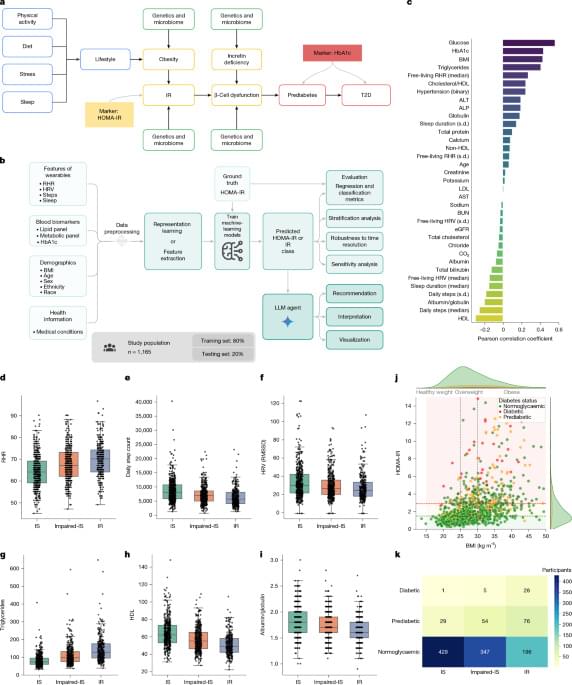
A machine-learning model that integrates data from wearable devices (such as smartwatches) with blood biomarkers and demographic data can predict whether someone has insulin resistance, enabling timely lifestyle interventions to prevent progression to type 2 diabetes.
Heart disease is the leading cause of adult death worldwide, making cardiovascular disease diagnosis and management a global health priority. An echocardiogram, or cardiac ultrasound, is one of the most commonly used imaging tools employed by physicians to diagnose a variety of heart diseases and conditions.
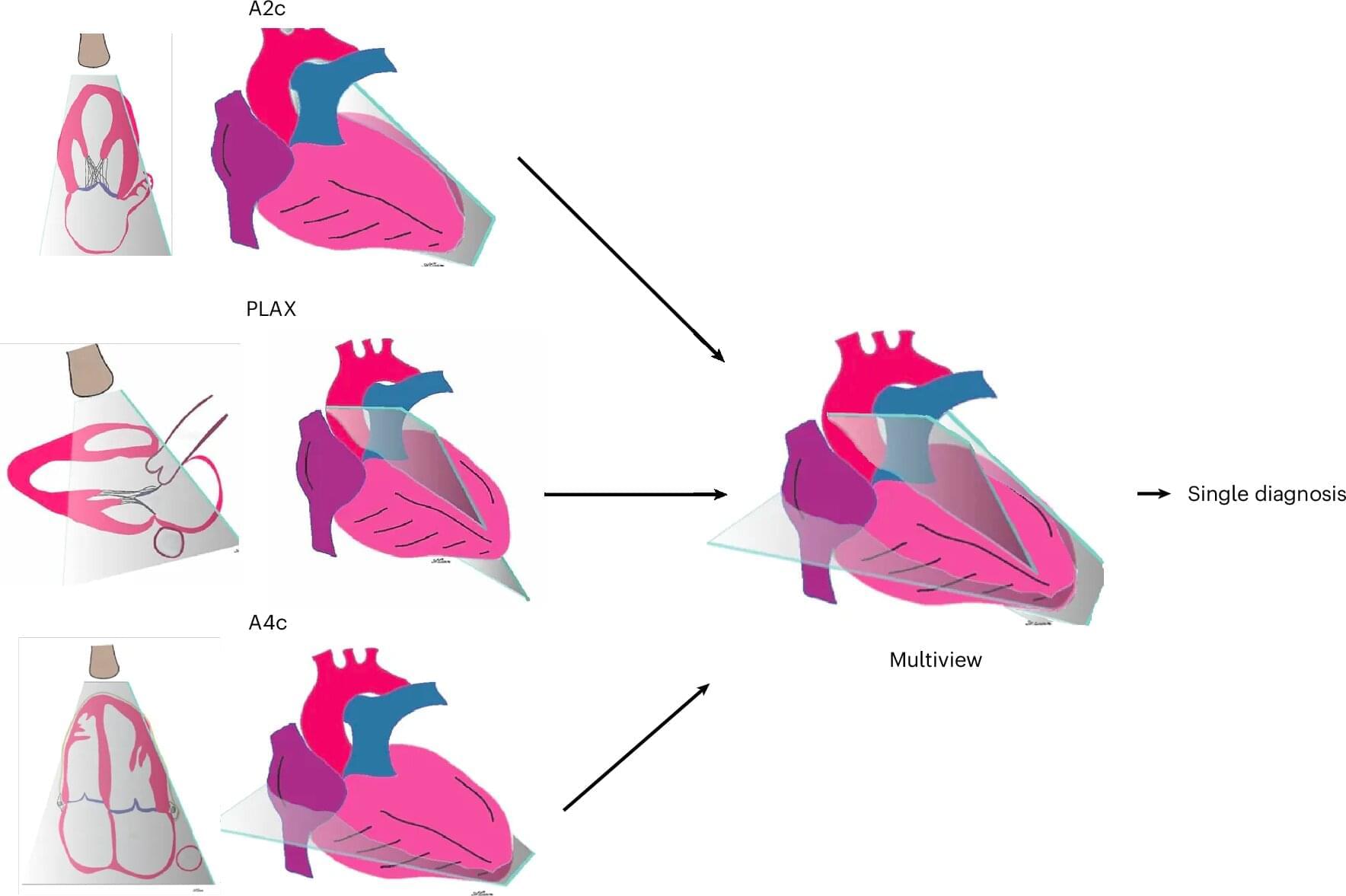
Most standard echocardiograms provide two-dimensional visual images (2D) of the three-dimensional (3D) cardiac anatomy. These echocardiograms often capture hundreds of 2D slices or views of a beating heart that can enable physicians to make clinical assessments about the function and structure of the heart.
To improve diagnostic accuracy of cardiac conditions, researchers from UC San Francisco set out to determine whether deep neural networks (DNNs), a type of AI algorithm, could be re-designed to better capture complex 3D anatomy and physiology from multiple imaging views simultaneously. They developed a new “multiview” DNN structure—or architecture—to enable it to draw information from multiple imaging views at once, rather than the current approach of using only a single view. They then trained demonstration DNNs using this architecture to detect disease states for three cardiovascular conditions: left and right ventricular abnormalities, diastolic dysfunction, and valvular regurgitation.
About this video: In this video, Elon Musk joins Lex Fridman to discuss one of the most profound questions of our time: Are we living in a simulation? When asked what single question he would pose to an Artificial General Intelligence (AGI), Musk delivers a mind-bending response that challenges our entire perception of reality. He dives deep into the Simulation Theory, questioning what exists beyond the “digital” boundaries of our universe and whether we can ever truly know the truth. If you’ve ever wondered about the Matrix, the future of AI, or the mystery of existence, this conversation is a must-watch!
Disclaimer: All the videos, songs, images, and graphics used in the video belong to their respective owners and I or this channel don’t claim any rights over them. Copyright Disclaimer Under Section 107 of the Copyright Act 1976, allowance is made for fair use for purposes such as news reporting, teaching, scholarship, and research. Fair use is a use permitted by copyright statutes that might otherwise be infringing. Non-profit, educational, or personal use tips the balance in favor of fair use.
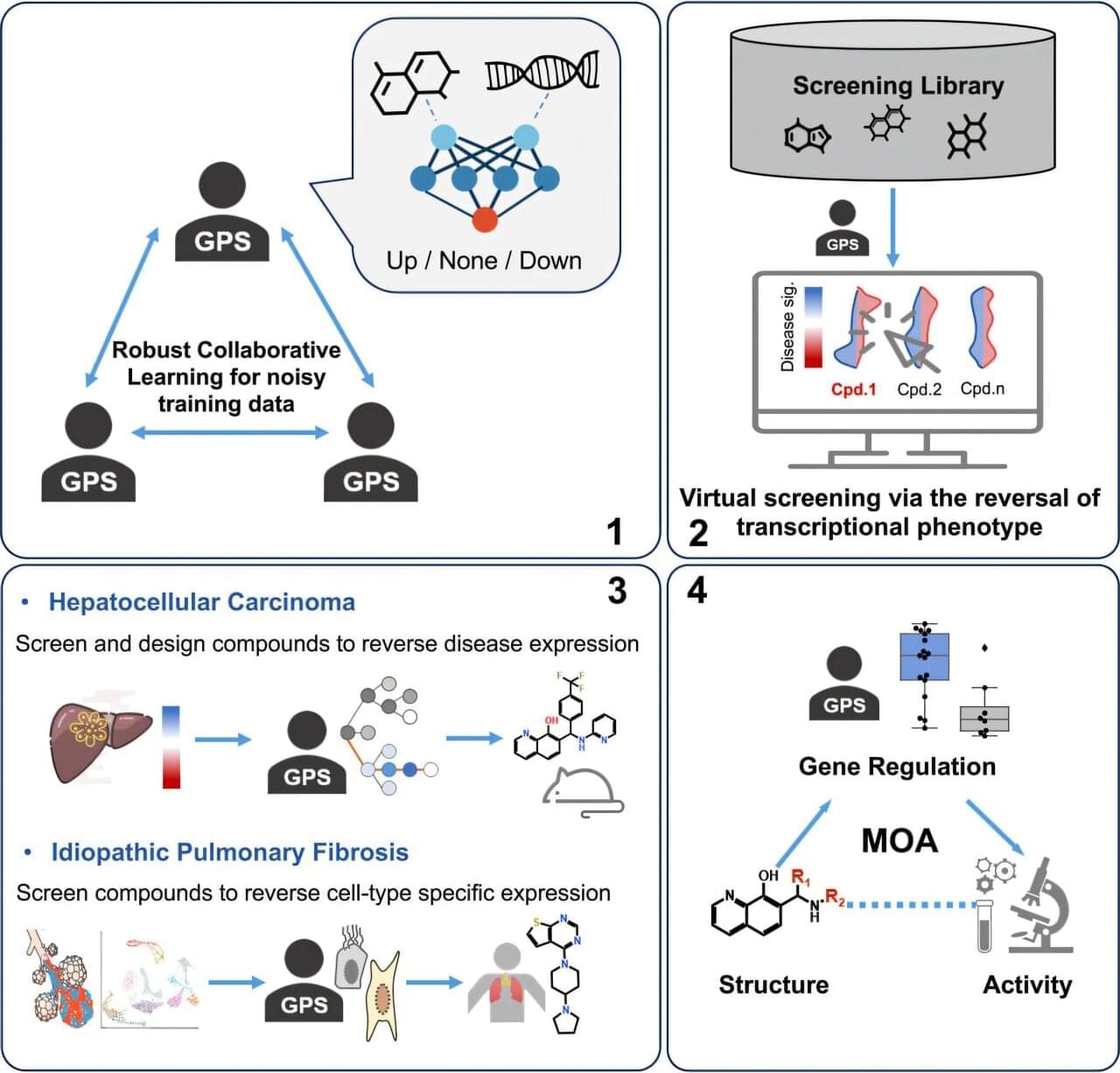
Inside a diseased cell, the genes are in chaos. Some are receiving signals to overproduce a protein. Others are reducing activity to abnormal levels. Up is down and down is up. The right molecule could restore order, reversing dysregulation in specific genes. But finding the ideal compound could require examining millions of chemicals for their influence on hundreds or thousands of genes.
An MSU-led team of researchers has demonstrated a better way. Using machine learning trained on enormous amounts of published data, they were able to predict how chemicals will influence gene expression, based solely on the structure of the chemical.
Their study, recently published in the journal Cell, has discovered compounds that are promising for treatment of two difficult diseases: the most aggressive form of liver cancer and a chronic lung disease with no curative options.