Artificial intelligence’s lack of transparency is leading many to fear the technology and others to elevate it to a mysterious god-like figure, but we should be more critical of those making decisions about how AI is used, says anthropologist Beth Singler.
Category: robotics/AI – Page 2,024
The Case Against the Case Against AI
A review of The Age of AI and Our Human Future by Henry A. Kissinger, Eric Schmidt, and Daniel Huttenlocher. Little, Brown and Company, 272 pages (November, 2021).
Potential bridges across the menacing chasm of incompatible ideas are being demolished by a generation of wannabe autocrats presenting alternative facts as objective knowledge. This is not new. The twist is that modern network-delivery platforms can insert, at scale, absurd information into national discourse. In fact, sovereign countries intent on political mischief and social disruption already do this to their adversaries by manipulating the stories they see on the Internet.
About half the country gets its news from social media. These digital platforms dynamically tune the content they suggest according to age, gender, race, geography, family status, income, purchase history, and, of course, user clicks and cliques. We know that their algorithms demote and promote perspectives that may come from opposing viewpoints and amplify like-minded “us-against-them” stories, further exacerbating emotional response on their websites and in the real world. Even long-established and once-reputable outlets capture attention by manufactured outrage and fabricated scandal. Advertising revenue pays for it all, but the real products here are the hundreds of millions of users who think they are getting a free service. Their profiles are sold by marketeers to the highest corporate bidder.

What 1000-X faster simulation means for digital twins
About a decade ago, MIT researchers discovered a technique that speeds physics modeling by 1000X. They spun this out into a new company, called Akselos, which has been helping enterprises to weave the tech into various kinds of digital twins used to improve shipping, refining, and wind power generation.
A digital twin is a virtual representation of an object or system that spans its lifecycle, is updated from real-time data, and uses simulation, machine learning, and reasoning to help decision-making. Connected sensors on the physical asset collect data that can be mapped onto the virtual model.
The specific innovation improves the performance of finite element analysis (FEA) algorithms which underpin most types of physics simulations. Akselos experience over the last decade can help executives explore the implications of the million-fold improvements in physics simulation that Nvidia is now demonstrating thanks to improvement in hardware, scalability, and new algorithms.
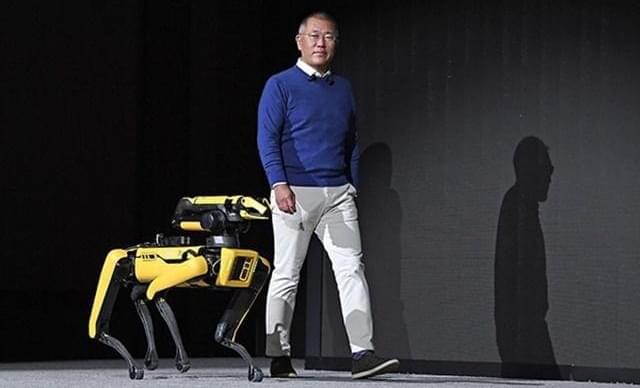
Hyundai tells CES it’s bringing robotics into metaverse
Jan. 6 (UPI) — South Korean automaker Hyundai Motor said the company would use robotics in the “metaverse,” or the virtual world.
The conglomerate disclosed the plan during its Tuesday presentation at the Consumer Electronics Show 2022 in Las Vegas.
Hyundai dubbed the vision as “meta-mobility,” which it said is designed to make robots act as a medium between the real world and virtual spaces so that changes in the metaverse are reflected in reality.

Tesla raises Full Self Driving software price to $12,000 in U.S., Musk says
Jan 7 (Reuters) — Tesla Inc (TSLA.O) Chief Executive Officer Elon Musk tweeted on Friday that the electric carmaker will raise the U.S. price of its advanced driver assistant software dubbed “Full Self Driving” to $12,000 on Jan. 17.
The 20% price rise comes less than two years since Tesla raised Full Self-Driving (FSD) prices to $10,000 from $8,000 in 2020.
“Tesla FSD price rising to $12k on Jan 17. Just in the US.” Musk tweeted.
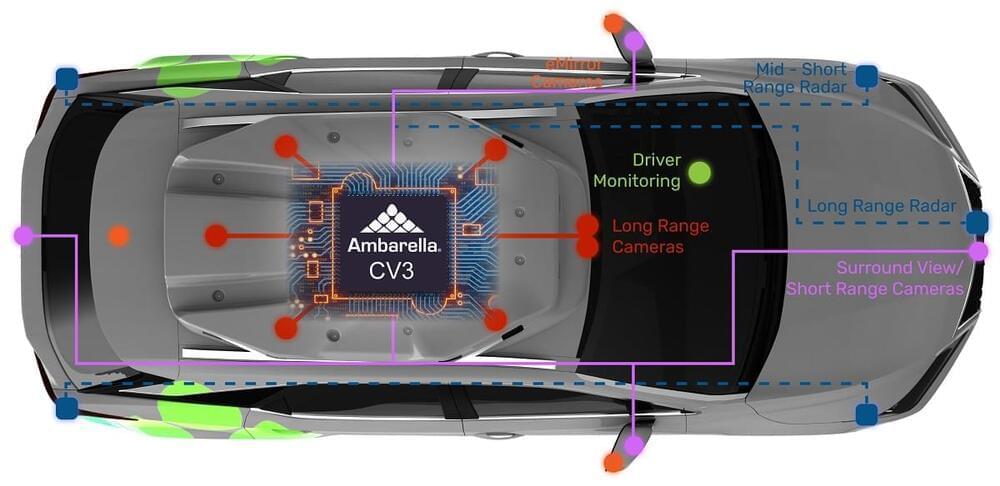
Ambarella launches 16-core CV3 AI chip for autonomous vehicles
Ambarella launched its latest CV3 AI domain controller family to power autonomous vehicles.
The Santa Clara, California-based maker of AI chips made the announcement at the CES 2022 tech trade event in Las Vegas.
The chip family is another addition to the scalable, power-efficient CVflow family of system-on-chips for the automotive industry.

Artificial Intelligence That Escaped Evolution’s Lab: Human
Originally published on Towards AI the World’s Leading AI and Technology News and Media Company. If you are building an AI-related product or service, we invite you to consider becoming an AI sponsor. At Towards AI, we help scale AI and technology startups. Let us help you unleash your technology to the masses.
Could a human be the very thing he feared?
In this article, we will see that human beings are actually an advanced artificial intelligence that escaped the engineering of evolution. The story of a disobedient species that rebelled against nature and evolution after gaining consciousness and general abilities.
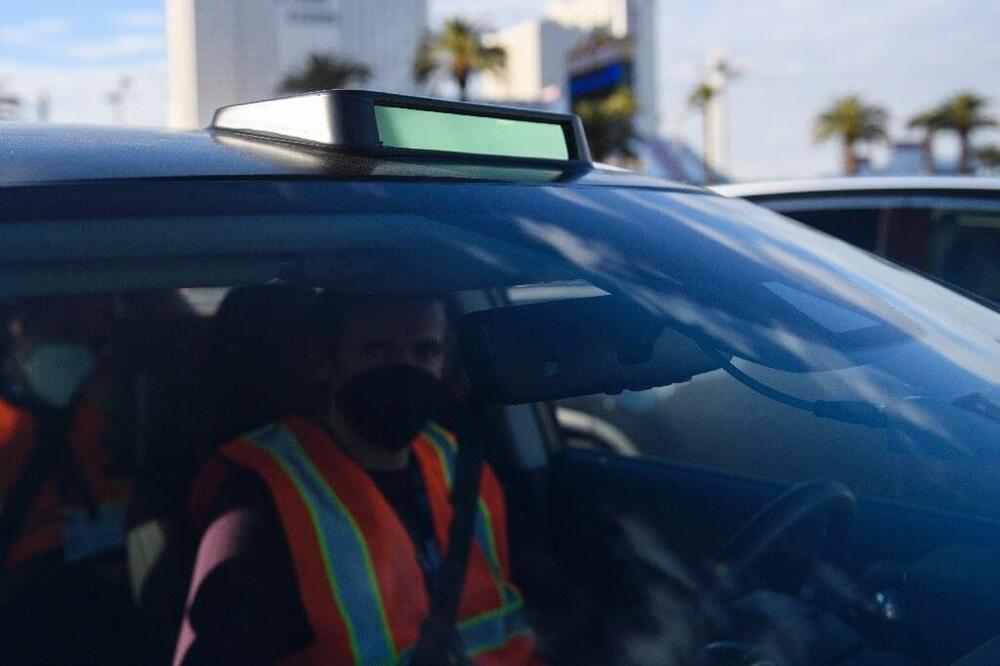
Tesla’s cameras-only autonomous system stirs controversy
As it pursues the goal of fully autonomous driving, Tesla has bet entirely on cameras and artificial intelligence, shunning other commonly used tools such as laser detection.
Tesla Chief Executive Elon Musk has touted a system built around eight “surround” cameras that feed data into the auto’s “deep neural network,” according to Tesla’s website.
But as with so many other things involving Tesla, there is controversy.
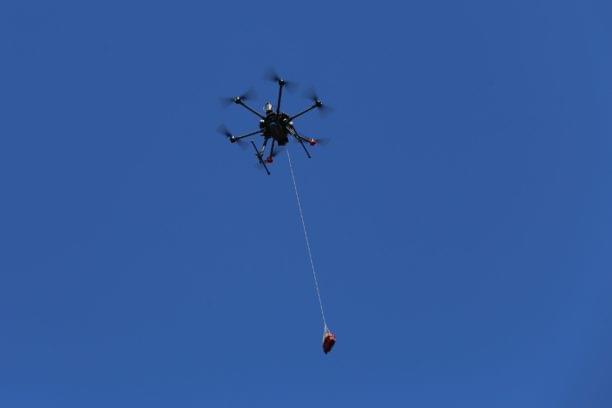
Drone Delivers Defibrillator Saves Heart Attack Patient
An autonomous drone delivers a defibrillator – and saves the life of a cardiac arrest patient. Swedish drone company Everdrone says it’s a medical history first – but the grateful patient says that it’s a technology that should be used everywhere.
For heart attack patients, seconds count: the minutes that an ambulance can take to reach a patient in cardiac arrest can mean the difference between life and death. Autonomous drones offer a game-changing solution. Autonomous drone specialists Everdrone operate the drone delivery system in Region Västra Götaland, supported by Vinnova, Swelife and Medtech4Health. Their innovative solution has been developed with Center for Resuscitation Science at Karolinska Institutet, SOS Alarm and Region Västra Götaland.
Now, the technology can claim a life saved. In Trollhättan, Sweden on December 92,021, an Everdrone autonomous drone delivered a defibrillator that helped save the life of a 71-year-old man.
OpenAI Plays Hide and Seek…and Breaks The Game! 🤖
❤️ Check out Weights & Biases here and sign up for a free demo: https://www.wandb.com/papers.
❤️ Their blog post is available here: https://www.wandb.com/articles/better-paths-through-idea-space.
📝 The paper “Emergent Tool Use from Multi-Agent Interaction” is available here:
https://openai.com/blog/emergent-tool-use/
❤️ Watch these videos in early access on our Patreon page or join us here on YouTube:
- https://www.patreon.com/TwoMinutePapers.
- https://www.youtube.com/channel/UCbfYPyITQ-7l4upoX8nvctg/join.
🙏 We would like to thank our generous Patreon supporters who make Two Minute Papers possible:
Alex Haro, Andrew Melnychuk, Angelos Evripiotis, Anthony Vdovitchenko, Brian Gilman, Bryan Learn, Christian Ahlin, Claudio Fernandes, Daniel Hasegan, Dennis Abts, Eric Haddad, Eric Martel, Evan Breznyik, Geronimo Moralez, James Watt, Javier Bustamante, John De Witt, Kaiesh Vohra, Kasia Hayden, Kjartan Olason, Levente Szabo, Lorin Atzberger, Lukas Biewald, Marcin Dukaczewski, Marten Rauschenberg, Matthias Jost„ Maurits van Mastrigt, Michael Albrecht, Michael Jensen, Nader Shakerin, Owen Campbell-Moore, Owen Skarpness, Raul Araújo da Silva, Rob Rowe, Robin Graham, Ryan Monsurate, Shawn Azman, Steef, Steve Messina, Sunil Kim, Taras Bobrovytsky, Thomas Krcmar, Torsten Reil.
https://www.patreon.com/TwoMinutePapers.
Splash screen/thumbnail design: Felícia Fehér — http://felicia.hu.
Károly Zsolnai-Fehér’s links: