AI technology generates original proteins from scratch.
Welcome to the exponential upward curve phase of the Technological Singularity, folks.
Three months before ChatGPT debuted in November, Facebook’s parent company Meta released a similar chatbot. But unlike the phenomenon that ChatGPT instantly became, with more than a million users in its first five days, Meta’s Blenderbot was boring, said Meta’s chief artificial intelligence scientist, Yann LeCun.
“The reason it was boring was because it was made safe,” LeCun said last week at a forum hosted by AI consulting company Collective[i]. He blamed the tepid public response on Meta being “overly careful about content moderation,” like directing the chatbot to change the subject if a user asked about religion. ChatGPT, on the other hand, will converse about the concept of falsehoods in the Quran, write a prayer for a rabbi to deliver to Congress and compare God to a flyswatter.
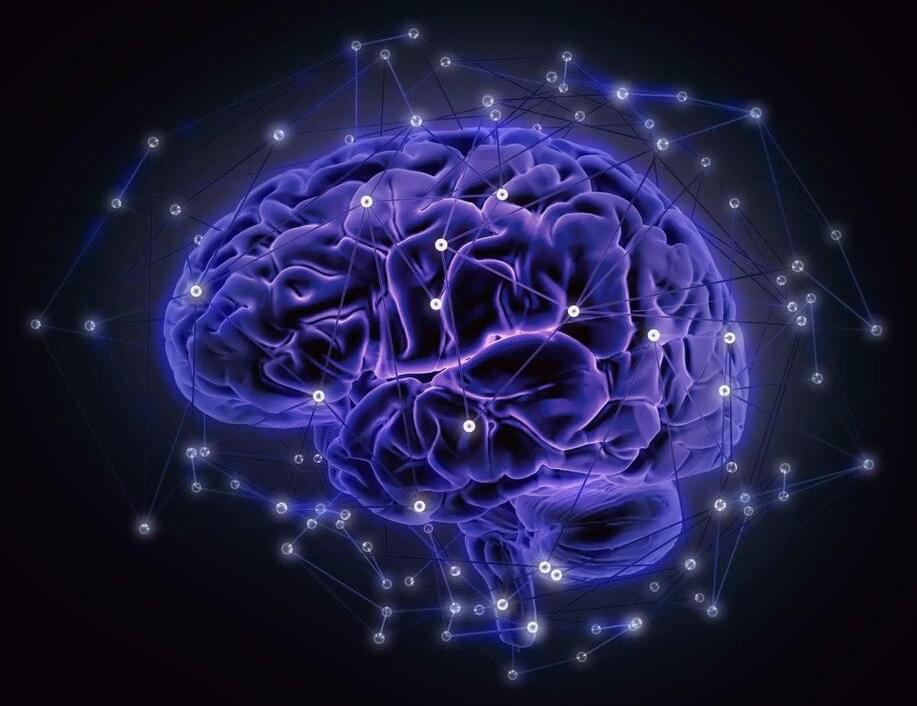
Researchers have been working for many years to comprehend the relationship between brain structure, functional connectivity, and intelligence. A recent study provides the most comprehensive understanding to date of how different regions of the brain and neural networks contribute to a person’s problem-solving ability in a variety of contexts, a trait known as general intelligence.
The researchers recently published their findings in the journal Human Brain Mapping.
The research, led by Aron Barbey, a professor of psychology, bioengineering, and neuroscience at the University of Illinois Urbana-Champaign, and first author Evan Anderson, a researcher for Ball Aerospace and Technologies Corp. working at the Air Force Research Laboratory, employed the technique of “connectome-based predictive modeling” to evaluate five theories on how the brain leads to intelligence.
https://www.patreon.com/johnmichaelgodier.
Music:
Cylinder Five by Chris Zabriskie is licensed under a Creative Commons Attribution license (https://creativecommons.org/licenses/by/4.0/)
Source: http://chriszabriskie.com/cylinders/
Artist: http://chriszabriskie.com/
Cylinder Eight by Chris Zabriskie is licensed under a Creative Commons Attribution license (https://creativecommons.org/licenses/by/4.0/)
Source: http://chriszabriskie.com/cylinders/
Artist: http://chriszabriskie.com/


Technology has already changed our world. I mean, who knew that we’d be able to flick a switch to illuminate the darkness rather than lighting a candle? It’s wild. But the technology we have today and will have in the future is absolutely insane. From 3D printing houses to robotics to help us in our jobs, here are 20 emerging technologies that will change our world.
► For copyright matters please contact us: [email protected]