Toggle light / dark theme

This AI Startup Aims To Predict Heart Failure Before It Happens

Israeli-based health tech company Cordio has developed machine learning software that can be downloaded to a smartphone and help keeps cardiac patients out of the hospital.

One day in the future.

It’s a simple daily habit that could save their life, because one day after repeating their daily refrain, their doctor might be notified that a patient is at risk of heart failure without immediate care.


Israeli-based company Cordio has developed machine learning software that can be downloaded to a smartphone and help keeps cardiac patients out of the hospital.

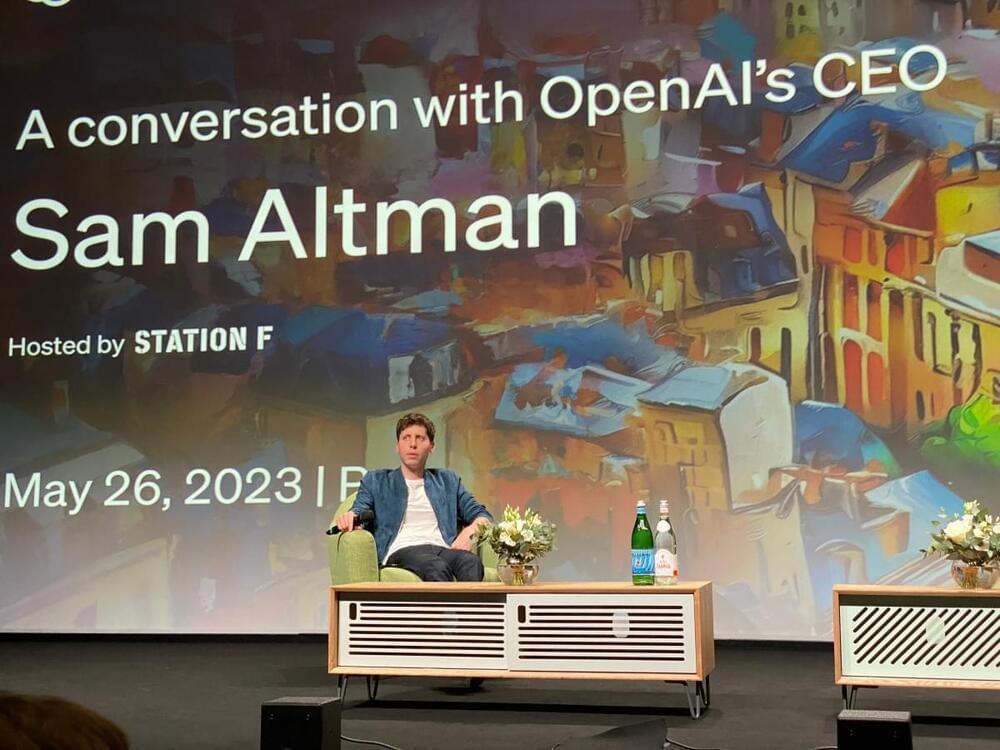
Sam Altman shares his optimistic view of our AI future

OpenAI’s CEO Sam Altman has been touring Europe for the past few days, meeting head of governments and startup communities to talk about AI regulation, ChatGPT and beyond. In his latest on-stage appearance at Station F in Paris, Altman answered questions from local entrepreneurs and shared his views about artificial intelligence.

A few days ago, Altman met with Emmanuel Macron. Station F director Roxanne Varza first asked him about the content of the conversation. As expected, the discussion mostly revolved around regulation. “It was great, we talked about how to get the balance right between protection with this technology and letting it flourish,” Altman said.

He then explained why he’s been traveling from one country to another at a frenetic pace. “The reason for doing this trip is to get out of the Bay Area tech bubble,” he said.

This two-wheeled robot is Switzerland’s latest security guard

Security guards are extremely useful, some would say necessary. But they can be quite expensive and there simply aren’t enough of them to put them everywhere they need to be.

In Europe, people living in Switzerland have been privy to witnessing a patrol bot, developed by a robotics start-up from ETH Zurich called Ascento, that could soon take the place of human security guards. The machine has thus far been successfully acting as a guard for Swiss security firm Securitas AG.

A video released by ETH Zurich shows just how agile the new security guard is, allowing him to patrol many locations without missing a step (pun intended!) Clearly this new bot has got what it takes to monitor many locations and a variety of terrian but can it do so with the attention that a human can provide?

Google AI-powered Search is rolling out — 3 things to expect and how to sign up

Google, the internet-spanning librarian of all of digital time and space, is expanding access to its new generative AI experience for Search — and you could be among the lucky few to try out this new feature in just a few clicks.

The generative AI experience for Search was unveiled at Google I/O and seeks to provide Googlers with a speedier, more natural approach to finding the information they want online — similar to the offerings of Microsoft’s Bing Chat. One key difference between the two being people actually use Google Search.

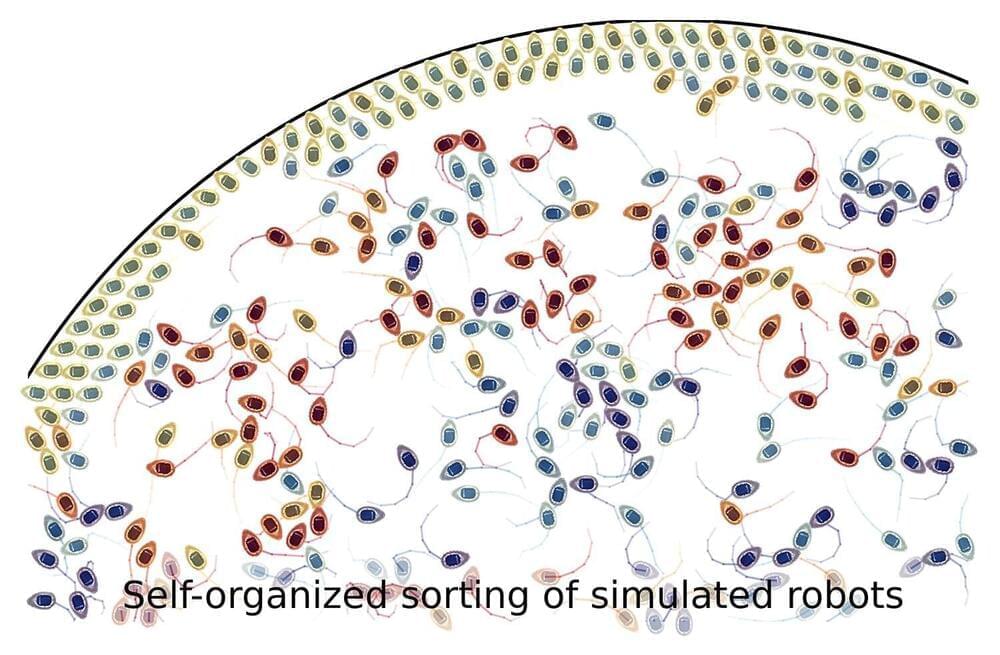
Researchers investigate the swarming behavior of microrobots

Miniaturization is progressing rapidly in many fields, and the trend toward the creation of ever smaller units is also prevalent in the world of robot technology. In the future, minuscule robots used in medical and pharmaceutical applications might be able to transport medication to targeted sites in the body. Statistical physics can contribute to the foundations for the development of such technologies.

A team of researchers at Johannes Gutenberg University Mainz (JGU) has now taken a new approach to the issue by analyzing a group of robots and how they behave as collectives of motile units based on the model of active Brownian particles. The team’s findings demonstrating that there may be an alternative route to realize programmable active matter have been published in Science Advances.

Researchers are looking for new ways to perform tasks on the micro-and nanoscale that are otherwise difficult to realize, particularly as the miniaturization of devices and components is beginning to reach physical limits. One new option being considered is the use of collectives of robotic units in place of a single robot to complete a task.

AI is here to stay; it’s time to update your HR policies

The widespread use of advanced artificial intelligence tools like ChatGPT means the rapidly developing technology is being used in workplaces across the country whether employers are aware of it or not.

So, for companies that have not yet developed ground rules for AI use, you’re being put on alert: It’s time to update your employee handbook, an human resources expert says.

Jennifer Morehead, owner and CEO of Flex HR, which handles outsourced human resources services for major firms like Harley-Davidson and Kimberly Clark, says there are an array of issues AI firms need to consider now that the tools are becoming increasingly accessible in the workplace.

Charismatic Robot Voices: A Boost for Team Creativity?

Summary: Robotic voices with a charismatic tone can positively influence the creative performance of teams.

Researchers designed a social robot’s speech to sound charismatic, employing a confident, passionate tone and tested its effects on students during a creativity task.

The results revealed students were more innovative when the robot used a charismatic tone, leading to more original and elaborate ideas.

AI Can Help You Ask Better Questions — and Solve Bigger Problems

Most companies still view AI rather narrowly, as a tool that alleviates the costs and inefficiencies of repetitive human labor and increasing organizations’ capacity to produce, process, and analyze piles and piles of data. But when paired with “soft” inquiry-related skills it can help people ask better questions and be more innovative.

There are two distinct, yet related, paths to do this. 1) Use the technology to change the cadence and patterns of their questions: AI increases question velocity, question variety, and question novelty. 2) Use AI to transform the conditions and settings where people work so that questions that spark change — what we call “catalytic” questions — can emerge. This pushes leaders out of their comfort zones and into the position of being intellectually wrong, emotionally uncomfortable, and behaviorally quiet and more reflective, all of which, it turns out, promotes innovative thinking and action.

Page-utils class= article-utils—vertical hide-for-print data-js-target= page-utils data-id= tag: blogs.harvardbusiness.org, 2007/03/31:999.356809 data-title= AI Can Help You Ask Better Questions — and Solve Bigger Problems data-url=/2023/05/ai-can-help-you-ask-better-questions-and-solve-bigger-problems data-topic= Technology and analytics data-authors= Hal Gregersen; Nicola Morini Bianzino data-content-type= Digital Article data-content-image=/resources/images/article_assets/2023/05/May23_26_887787366-383x215.jpg data-summary=

/* */