Toggle light / dark theme

CEO Fires 90 Percent of Support Staff, Saying AI Outperforms Them

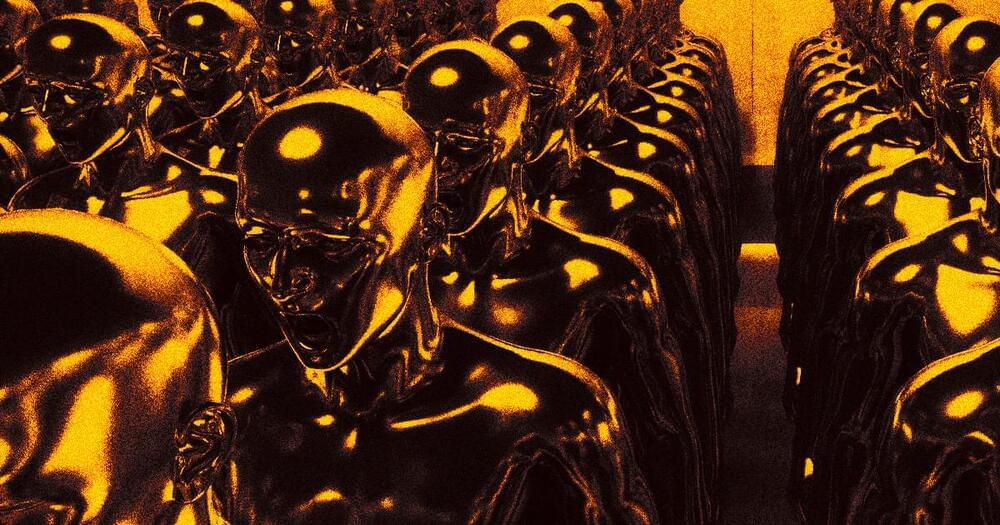
Suumit Shah, a 31-year-old CEO of an e-commerce platform called Dukaan based in India, is getting torn to shreds online for firing 90 percent of the company’s customer support staff after arguing that an AI chatbot had outperformed them.

It was an unusually callous announcement that clearly didn’t sit well with plenty of netizens, as Insider reports.

“We had to layoff [sic] 90 percent of our support team because of this AI chatbot,” he tweeted. “Tough? Yes. Necessary? Absolutely.”

Combining AI and MRI to improve human longevity

British health tech startup Twinn Health recently emerged from stealth, boasting an AI-powered platform that analyzes MRI scans to detect preventable disease “earlier than ever before.” Starting with metabolic disease, the company’s AI platform leverages validated imaging biomarkers to improve diagnosis and treatment decisions.

With age-related frailty and liver disease also on its roadmap, Twinn Health is positioning itself squarely in the domain of longevity and preventive healthcare. The company is supported by WAED, a $500 million venture capital fund backed by Saudi Aramco, which invests in innovative tech-based startups.

Longevity. Technology: Magnetic resonance imaging (MRI) has been used in healthcare for decades and is widely used in hospitals and clinics for the diagnosis and follow-up of disease. In recent years, AI tools have appeared that help identify the presence of specific conditions within MRI scans, but the technology is not yet widely used in healthcare to support healthspan and longevity improvements. Twinn Health aims to change that, combining MRI and AI to enable the early detection and management of multiple age-related diseases. To learn more, we caught up with founder and CEO Dr Wareed Alenaini.

What is PHASA-35? Cutting edge stratosphere drone passes key test in U.S.

A new solar-powered high-altitude drone has successfully navigated a stratospheric test, opening the door to a new set of possibilities for unmanned vehicles, not least in modern warfare.

The PHASA-35 solar and battery-powered unmanned aerial system reached an altitude of 66,000 feet during a 24-hour test flight launched from New Mexico in June, British defense giant BAE Systems said in mid-July.

The stratospheric test, which comes after the system’s maiden flight back in 2020, “marks a significant milestone” in the development program started in 2018, BAE said in a press release.

Personalized magnetic tentacles for targeted photothermal cancer therapy in peripheral lungs

All navigations reported in Fig. 2 were performed autonomously within 150 s and without intraoperative imaging. Specifically, each navigation was performed according to the pre-determined optimal actuation fields and supervised in real time by intraoperative localization. Therefore, the set of complex navigations performed by the magnetic tentacle was possible without the need for exposure to radiation-based imaging. In all cases, the soft magnetic tentacle is shown to conform by design to the anatomy thanks to its low stiffness, optimal magnetization profile and full-shape control. Compared to a stiff catheter, the non-disruptive navigation achieved by the magnetic tentacle can improve the reliability of registration with pre-operative imaging to enhance both navigation and targeting. Moreover, compared to using multiple catheters with different pre-bent tips, the optimization approach used for the magnetic tentacle design determines a single magnetization profile specific to the patient’s anatomy that can navigate the full range of possible pathways illustrated in Fig. 2. Supplementary Movies S1 and S2 report all the experiments. Supplementary Movie S1 shows the online tracking capabilities of the proposed platform.

In Table 1, we report the results of the localization for four different scenarios. These cases highlight diverse navigations in the left and right bronchi. The error is referred to as the percentage of tentacles outside the anatomy. This was computed by intersecting the shape of the catheter, as predicted by the FBG sensor, and the anatomical mesh grid extracted from the CT scan. The portion of the tentacle within the anatomy was measured by using “inpolyhedron” function in MATLAB. In Supplementary Movie S1, this is highlighted in blue, while the section of the tentacle outside the anatomy is marked in red. The error in Table 1 was computed using the equation.

NASA astronaut controls Earth robots while flying 17,150 mph aboard ISS

The test is part of NASA and ESA’s future plans for controlling robots on the Moon’s surface from the lunar Gateway station.

NASA astronaut Frank Rubio recently controlled a small team of robots on Earth while flying aboard the International Space Station (ISS), a blog post from the European Space Agency (ESA) reveals.

The test was carried out in order to demonstrate and investigate the capacity for using remote-controlled robots for future lunar exploration.

Scientists invent accurate AI-powered heat vision for driving at night

The technology can also be used in fog and smoke, aiding firefighters.

This is according to a report by PopSci published on Wednesday.


Researchers at Purdue University and Los Alamos National Laboratory have joined forces to engineer something they call “heat-assisted detection and ranging,” or HADAR, which consists of a completely new camera imaging system based on AI interpretations of heat signatures. The technology could soon allow vehicles and robots to see at night time.

A once muddy, unclear tech

We have all seen movies where agents use thermal imaging to see their surroundings in the dark, but in reality, this technology is far from practical because thermal radiation particles diffuse into their nearby environments. This means that trying to image them becomes a complicated, muddy, and unclear process.

/* */