Toggle light / dark theme

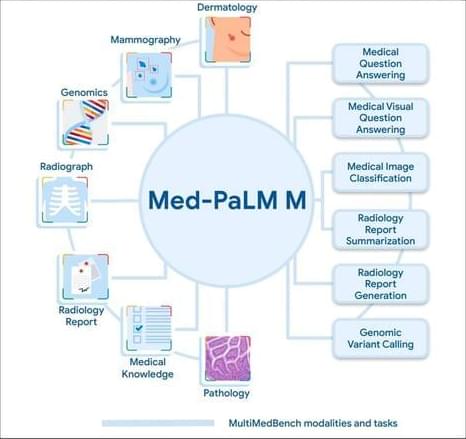
New AI chatbot equips doctors with the latest research

Could this be the future of medicine?

In order for chatbots to be useful to doctors and other health professionals, they are going to need access to the latest research. But current models simply don’t have access to data beyond their latest update. Daniel Nadler has been working to resolve this issue with his new startup OpenEvidence.

He plans to achieve his lofty goal by “marrying these language models with a real-time firehose of clinical documents,” Nadler told Forbes on Thursday. He claims that his new model “can answer with an open book, as opposed to a closed book.”

Meet the Autonomous Lab of the Future

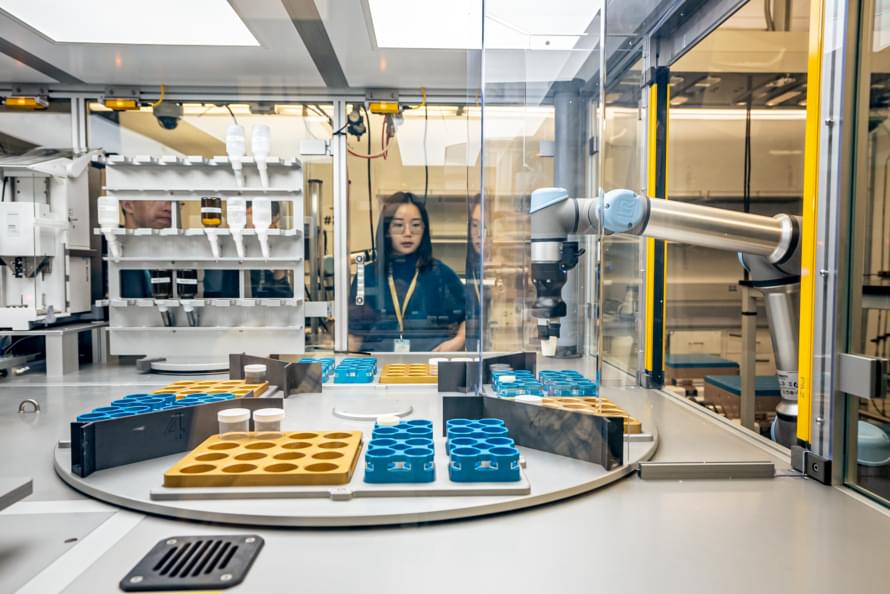
To accelerate development of useful new materials, researchers are building a new kind of automated lab that uses robots guided by artificial intelligence.

“Our vision is using AI to discover the materials of the future,” said Yan Zeng, a staff scientist leading the A-Lab at the Department of Energy’s Lawrence Berkeley National Laboratory (Berkeley Lab). The “A” in A-Lab is deliberately ambiguous, standing for artificial intelligence (AI), automated, accelerated, and abstracted, among others.

Scientists have computationally predicted hundreds of thousands of novel materials that could be promising for new technologies – but testing to see whether any of those materials can be made in reality is a slow process. Enter A-Lab, which can process 50 to 100 times as many samples as a human every day and use AI to quickly pursue promising finds.

Artificial intelligence vs. evolving super-complex tumor intelligence: critical viewpoints

Recent developments in various domains have led to a growing interest in the potential of artificial intelligence to enhance our lives and environments. In particular, the application of artificial intelligence in the management of complex human diseases, such as cancer, has garnered significant attention. The evolution of artificial intelligence is thought to be influenced by multiple factors, including human intervention and environmental factors. Similarly, tumors, being heterogeneous and complex diseases, continue to evolve due to changes in the physical, chemical, and biological environment. Additionally, the concept of cellular intelligence within biological systems has been recognized as a potential attribute of biological entities. Therefore, it is plausible that the tumor intelligence present in cancer cells of affected individuals could undergo super-evolution due to changes in the pro-tumor environment. Thus, a comparative analysis of the evolution of artificial intelligence and super-complex tumor intelligence could yield valuable insights to develop better artificial intelligence-based tools for cancer management.

Tumor evolution refers to the changes that occur in a cancerous tumor over time as it grows and spreads (Hanahan and Weinberg, 2011; Lyssiotis and Kimmelman, 2017). These changes are the result of genetic mutations and changes in gene expression that can give rise to new subpopulations of cells within the tumor (Lyssiotis and Kimmelman, 2017; Balaparya and De, 2018). Over time, these subpopulations may accumulate subsequent mutations that confer enhanced survival and heightened proliferative capacity, thereby culminating in the emergence of a more formidable tumor exhibiting either heightened aggressiveness or treatment resistance (Balaparya and De, 2018; Gui and Bivona, 2022; Shin and Cho, 2023). Tumor evolution can have important implications for cancer diagnosis and treatment.

3D display could soon bring touch to the digital world

Imagine an iPad that’s more than just an iPad—with a surface that can morph and deform, allowing you to draw 3D designs, create haiku that jump out from the screen and even hold your partner’s hand from an ocean away.

That’s the vision of a team of engineers from the University of Colorado Boulder. In a new study, they’ve created a one-of-a-kind shape-shifting display that fits on a card table. The device is made from a 10-by-10 grid of soft robotic “muscles” that can sense outside pressure and pop up to create patterns. It’s precise enough to generate scrolling text and fast enough to shake a chemistry beaker filled with fluid.

It may also deliver something even rarer: the sense of touch in a digital age.

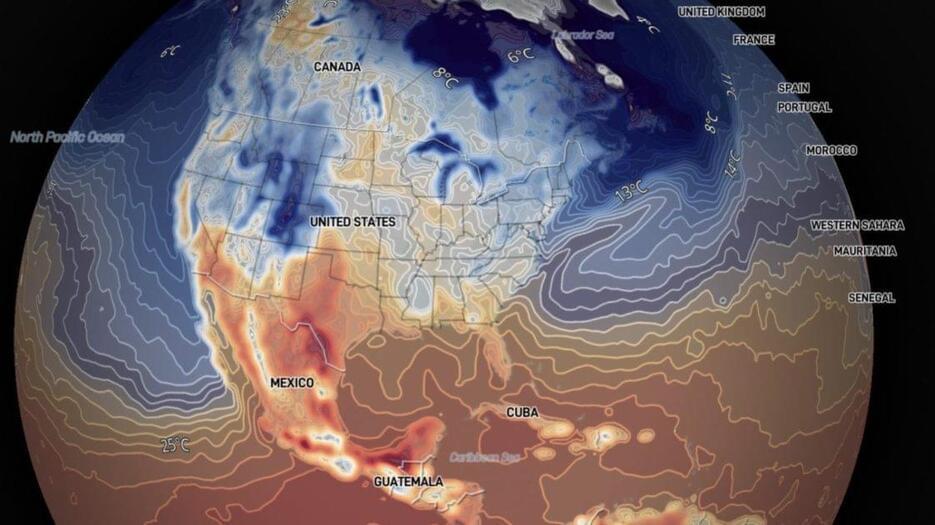
AI is going to revolutionize the weather forecast

In a high-tech laboratory, somewhere in San Francisco, sits a comma-shaped piece of metal that aims to change how the world sees the weather. The structure dominates the room. The horizontal part softly curves upwards until it’s taller than a person, with ridges that stretch from top to bottom. You’d be forgiven for thinking it’s a piece of modern art.

In fact, it is art, but it’s also much more than that. It’s an AI-powered, data-processing powerhouse from a startup called Atmo, and it could democratize weather forecasting, putting every country on a level meteorological playing field for the first time.

Bengaluru Startup’s Robot Can Cook 120 Delicious Meals In 3 Easy Steps

Imagine returning home from your evening walk or gym to the aroma of freshly cooked kadhai paneer or chicken curry, which instantly reminds you of home. Now, what if you were to know that it was no human that lovingly prepared this piping hot and delicious meal, but rather, a machine?

From booking cabs to ordering food right at your doorstep, technology makes human lives easy. So it’s about time it saves humans from having to cook after a long tiring day at work, or at times when you’re just not in the mood to enter the kitchen.

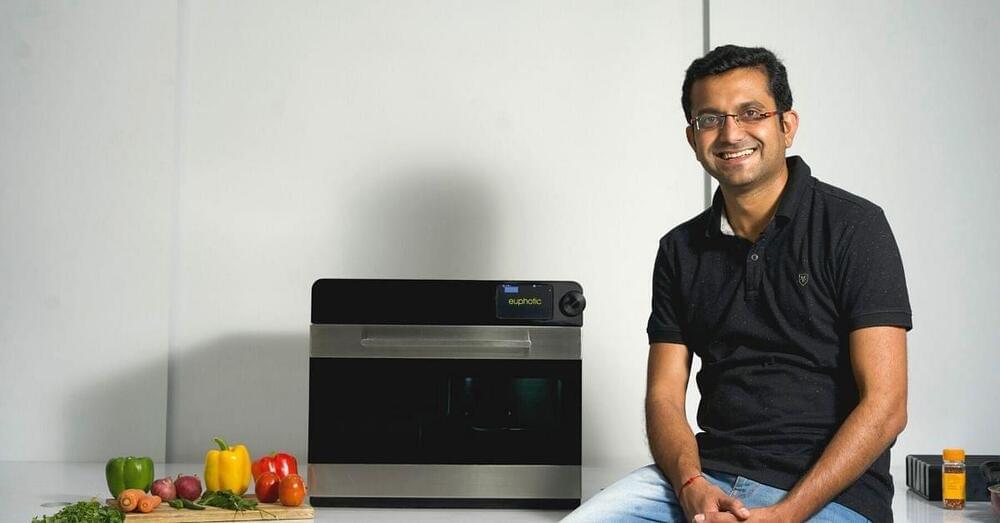
The NOSH device, developed by the Euphotic Labs, was conceived by Yatin Varachhia, co-founder of the Bengaluru-based startup. The 34-year-old says the inspiration to build a device stemmed from his struggle of having good food.

/* */