Toggle light / dark theme

Robots team up to explore planetary lava caves

In the not-too-distant future, the search for signs of life on Mars and the moon could see the next generation of robots exploring a new frontier: subsurface lava tubes. These missions could also help us determine the best locations for establishing human bases.

To see whether this could be feasible, scientists tested three in a lava cave on the Spanish island of Lanzarote.

Lava tubes are deep underground caves formed by and are found in various parts of the world, as well as on Mars and the moon. These cavernous spaces could offer protection from the harsh environment of space, such as , radiation and bombardment from meteorites. This means they may not only harbor existing life but could also serve as ideal locations for manned lunar and Martian bases.

AI chip shipments from US had secret location trackers: Report

US hid location trackers in AI chip shipments to spot diversions to China: Report.


Some chip shipments delivered from the United States to other locations had tracking devices, according to a report.

People familiar with the matter told a UK-based news agency that the location tracking devices were placed in shipments at high risk of illegal diversion to China.

The step reportedly aimed to restrict AI chip exports to destinations under the US administration’s curbs.

New AI method accelerates plasma heat defense in reactors

New AI method speeds up calculations to protect fusion reactors from plasma heat.


Scientists in the US have introduced a novel artificial intelligence (AI) approach that can protect fusion reactors from the extreme heat generated by plasma.

The new method, which is called HEAT-ML, was developed by researchers from Commonwealth Fusion Systems (CFS), the US Department of Energy’s (DOE) Princeton Plasma Physics Laboratory (PPPL), and Oak Ridge National Laboratory.

It is reportedly capable of quickly identifying magnetic shadows, which are critical areas protected from the intense heat of the plasma, and therefore help prevent potential problems before they start.

View a PDF of the paper titled Characterizing Deep Research: A Benchmark and Formal Definition, by Abhinav Java and 8 other authors

Information tasks such as writing surveys or analytical reports require complex search and reasoning, and have recently been grouped under the umbrella of \textit{deep research} — a term also adopted by recent models targeting these capabilities. Despite growing interest, the scope of the deep research task remains underdefined and its distinction from other reasoning-intensive problems is poorly understood. In this paper, we propose a formal characterization of the deep research (DR) task and introduce a benchmark to evaluate the performance of DR systems. We argue that the core defining feature of deep research is not the production of lengthy report-style outputs, but rather the high fan-out over concepts required during the search process, i.e., broad and reasoning-intensive exploration. To enable objective evaluation, we define DR using an intermediate output representation that encodes key claims uncovered during search-separating the reasoning challenge from surface-level report generation. Based on this formulation, we propose a diverse, challenging benchmark LiveDRBench with 100 challenging tasks over scientific topics (e.g., datasets, materials discovery, prior art search) and public interest events (e.g., flight incidents, movie awards). Across state-of-the-art DR systems, F1 score ranges between 0.02 and 0.72 for any sub-category. OpenAI’s model performs the best with an overall F1 score of 0.55. Analysis of reasoning traces reveals the distribution over the number of referenced sources, branching, and backtracking events executed by current DR systems, motivating future directions for improving their search mechanisms and grounding capabilities. The benchmark is available at https://github.com/microsoft/LiveDRBench.

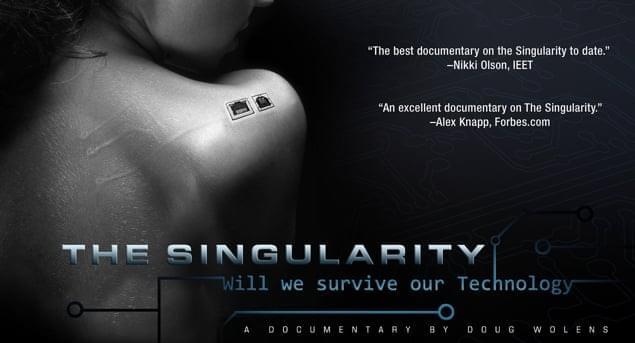
AI Started Improving Itself. Researchers Are Terrified

Detailed sources: https://docs.google.com/document/d/1ksVvFuR0IttxzH6zoASSYy7Z…b62ckaanow.

Based on the report: Situational Awareness — by Leopold Aschenbrenner https://situational-awareness.ai/from-agi-to-superintelligence/

Hi, I’m Drew! Thanks for watching smile

I also post mid memes on Twitter: https://twitter.com/PauseusMaximus.

Also, I meant to say Cortés conquered the Aztecs, not the Incas.

/* */