Toggle light / dark theme

RoboAgent: A universal agent with 12 Skills

Copied from :- Meta AI

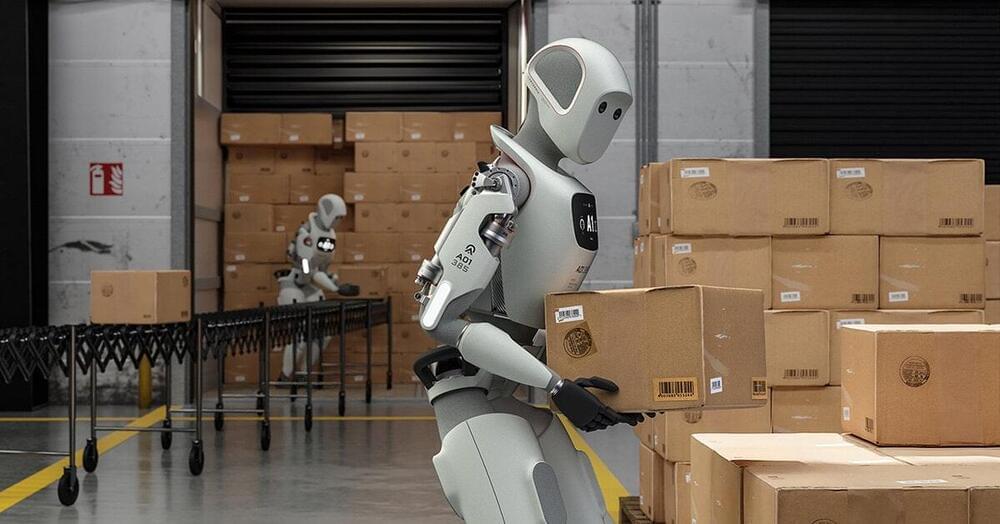
New robotics research from Meta AI and Carnegie Mellon University Robotics — RoboAgent can acquire a wide diversity of non-trivial skills and generalize them to hundreds of diverse unseen scenarios — all with an order of magnitude less data than prior works in this space.

Additionally we’re open-sourcing RoboSet, a large, high-quality robotics dataset collected with commodity hardware, to support and accelerate open source research in robot learning.

More details ➡️

Get the dataset ➡️ https://bit.ly/3DZk8vI

RoboAgent can exhibit a diverse set of 12 non-trivial manipulation skills across 38 tasks and can generalize them to hundreds of diverse unseen scenarios — beyond that, it can also evolve its capabilities with new experiences.


What Is an “Algorithm of Thoughts” (AoT)? Microsoft’s Human-like AI Training Method

It sometimes presents incorrect steps to arrive at the answer, because it is designed to base conclusions on precedent. And a precedent based on a given data set is limited to the confines of the data set. This, says Microsoft, leads to “increased costs, memory, and computational overheads.”

AoT to the rescue. The algorithm evaluates whether the initial steps—” thoughts,” to use a word generally associated only with humans—are sound, thereby avoiding a situation where an early wrong “thought” snowballs into an absurd outcome.

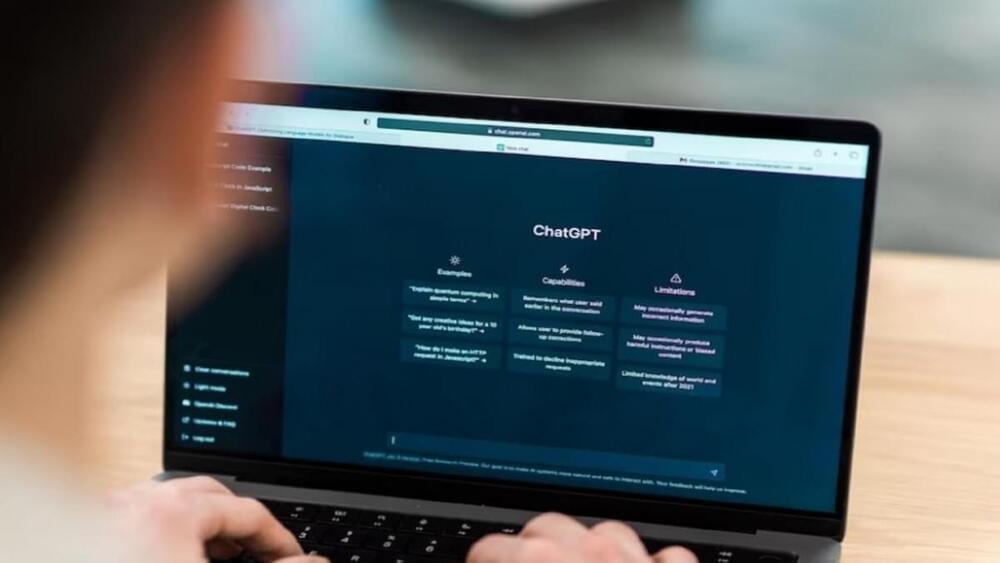
Though not expressly stated by Microsoft, one can imagine that if AoT is what it’s cracked up to be, it might help mitigate the so-called AI “hallucinations”—the funny, alarming phenomenon whereby programs like ChatGPT spits out false information. In one of the more notorious examples, in May 2023, a lawyer named Stephen A. Schwartz admitted to “consulting” ChatGPT as a source when conducting research for a 10-page brief. The problem: The brief referred to several court decisions as legal precedents… that never existed.

Personalization 2.0: Leveraging Generative AI for Tailored Customer Experiences

“Personalize or Perish.” One of the leading newspapers aptly summarizes the critical nature of personalization 2.0, or hyper-personalization for businesses.

We live in an era where customers expect businesses to understand their wants and needs. Today, companies must meet customers’ needs and anticipate and exceed them. And for this, they must pivot to a digital-first mindset to create stronger, more authentic customer interactions.

How do they do this? Through a hyper-personalized, AI-powered business strategy where products, ads, and interactions are tailor-made for each customer or a group of customers.

Nineteen researchers say AI is not sentient—not yet

There is a joke about the daughter who asks her dad why he speaks so quietly around the house. “Because there is artificial intelligence everywhere that is listening to what we say,” the dad replies. The daughter laughs, the father laughs. And Alexa laughs.

Artificial intelligence does seem to be injecting itself into more and more aspects of our lives. And as AI brains earn the equivalent of a million doctoral degrees while absorbing trillions of bits of data and in turn generate responses with an engaging tone and demeanor that sound as simple and humanlike as your favorite old college professor, some feel compelled to ask: Are computers becoming sentient?

A cynic would respond, “Of course not. Computers may solve problems in seconds that would take humankind generations to solve, but they can’t feel love and pain, can’t see and appreciate the moon and the stars, can’t smell the coffee we spill on the keyboard.”

Google Gemini Eats The World — Gemini Smashes GPT-4 By 5X, The GPU-Poors

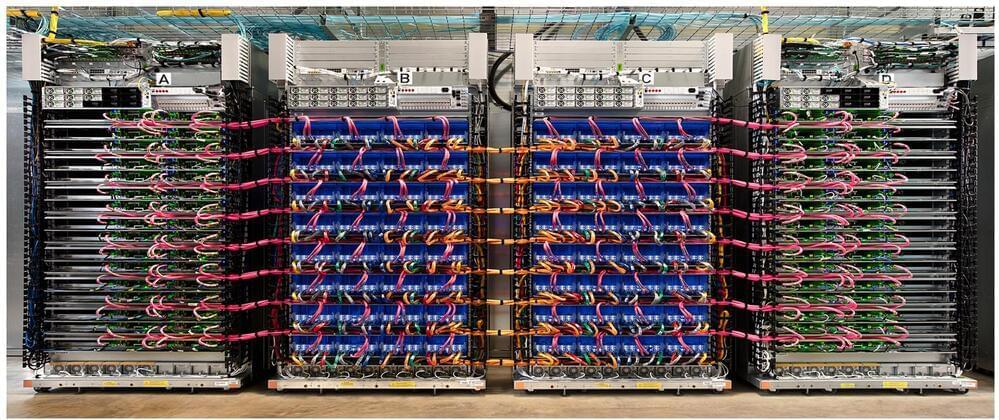
The statement that may not be obvious is that the sleeping giant, Google has woken up, and they are iterating on a pace that will smash GPT-4 total pre-training FLOPS by 5x before the end of the year. The path is clear to 100x by the end of next year given their current infrastructure buildout. Whether Google has the stomach to put these models out publicly without neutering their creativity or their existing business model is a different discussion.

Today we want to discuss Google’s training systems for Gemini, the iteration velocity for Gemini models, Google’s Viperfish (TPUv5) ramp, Google’s competitiveness going forward versus the other frontier labs, and a crowd we are dubbing the GPU-Poor.

Access to compute is a bimodal distribution. There are a handful of firms with 20k+ A/H100 GPUs, and individual researchers can access 100s or 1,000s of GPUs for pet projects. The chief among these are researchers at OpenAI, Google, Anthropic, Inflection, X, and Meta, who will have the highest ratios of compute resources to researchers. A few of the firms above as well as multiple Chinese firms will 100k+ by the end of next year, although we are unsure of the ratio of researchers in China, only the GPU volumes.

Building Tools To Learn Human Brain Processes

Aude Oliva is a prominent Cognitive and Computer Scientist directing the MIT Computational Perception and Cognition group at CSAIL while also leading the MIT-IBM Watson AI Lab and co-leading the MIT AI Hardware Program. With research spanning computational neuroscience, cognition, and computer vision, she pioneers the integration of human perception and machine recognition. Her contributions extend across academia, industry, and research, making her a distinguished figure at MIT.

Fuel your success with Forbes. Gain unlimited access to premium journalism, including breaking news, groundbreaking in-depth reported stories, daily digests and more. Plus, members get a front-row seat at members-only events with leading thinkers and doers, access to premium video that can help you get ahead, an ad-light experience, early access to select products including NFT drops and more:

https://account.forbes.com/membership/?utm_source=youtube&ut…ytdescript.

Stay Connected.
Forbes newsletters: https://newsletters.editorial.forbes.com.
Forbes on Facebook: http://fb.com/forbes.
Forbes Video on Twitter: http://www.twitter.com/forbes.
Forbes Video on Instagram: http://instagram.com/forbes.
More From Forbes: http://forbes.com.

Forbes covers the intersection of entrepreneurship, wealth, technology, business and lifestyle with a focus on people and success.

Semiconductor supplier Schunk Xycarb plans big expansion to keep up with Samsung, other chipmakers

Construction is set to break ground by the end of this year, and the company expects to move into the new space by the end of 2024. The production facility for semiconductor quartz will include a clean room, high-purity cleaning system and allow them to expand an automation component of their business that they’ve been capitalizing on for years.

“We knew that our customers all over the world were expanding at a rate we couldn’t keep up with,” said Scott Lingren, SXT’s managing director and U.S. chairman. “As you see all these expansions from Samsung in Taylor to Texas Instruments Inc. in the Dallas area to all over the world … we just have to keep up.”

SXT – which is headquartered in the Netherlands and owned by the privately-held Schunk Group in Germany – supplies semiconductor manufacturers around the world, like Samsung, which has had a presence in Central Texas for decades and is potentially adding to its existing Austin campus and its new site in Taylor. Other major players in the industry include Taiwan Semiconductor Manufacturing Co., which is expanding in Arizona, and Intel Corp., which is expanding to Ohio.

/* */