face_with_colon_three circa 2019.
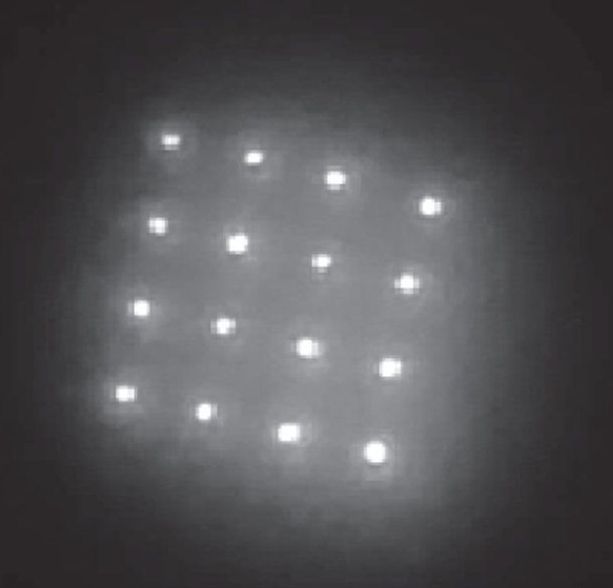
Invisible to the eye, the dots glow under infrared light from modified smartphones.

New ground-breaking research from the University of Surrey could change the way scientists understand and describe lasers—establishing a new relationship between classical and quantum physics.
In a comprehensive study published by the journal Progress in Quantum Electronics, a researcher from Surrey, in partnership with a colleague from Karlsruhe Institute of Technology and Fraunhofer IOSB in Germany, calls into question 60 years of orthodoxy surrounding the principles of lasers and the laser spectral linewidth—the foundation for controlling and measuring wavelengths of light.
In the new study, the researchers find that a fundamental principle of lasers, that the amplification of light compensates for the losses of the laser, is only an approximation. The team quantify and explain that a tiny excess loss, which is not balanced by the amplified light but by normal luminescence inside the laser, provides the answer to the spectral linewidth of the laser.
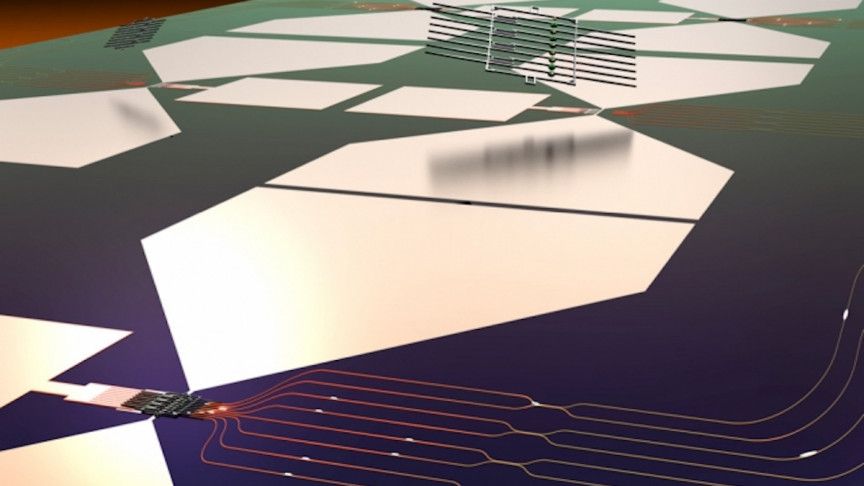
Researchers at MIT have developed a process to manufacture and integrate “artificial atoms” with photonic circuitry, and in doing so, are able to produce the largest quantum chip of its kind.
The atoms, which are created by atomic-scale defects in microscopically thin slices of diamond, allow for the scaling up of quantum chip production.
RELATED: 7 REASONS WHY WE SHOULD BE EXCITED BY QUANTUM COMPUTERS

Last week the President Council of Advisors on Science and Technology (PCAST) met (webinar) to review policy recommendations around three sub-committee reports: 1) Industries of the Future (IotF), chaired be Dario Gil (director of research, IBM); 2) Meeting STEM Education and Workforce Needs, chaired by Catherine Bessant (CTO, Bank of America), and 3) New Models of Engagement for Federal/National Laboratories in the Multi-Sector R&D Enterprise, chaired by Dr. A.N. Sreeram (SVP, CTO, Dow Corp.)
Yesterday, the full report (Recommendations For Strengthening American Leadership In Industries Of The Future) was issued and it is fascinating and wide-ranging. To give you a sense of the scope, here are three highlights taken from the executive summary of the full report:

Army researchers developed a new way to protect and safeguard quantum information, moving quantum networks a step closer to reality.
Quantum information science is a rapidly growing interdisciplinary field exploring new ways of storing, manipulating and communicating information. Researchers want to create powerful computational capabilities using new hardware that operates on quantum physics principles.
For the Army, the new quantum paradigms could potentially lead to transformational capabilities in fast, efficient and secure collecting, exchanging and processing vast amounts of information on dynamic battlefields of the future.

Researchers at the Army Research Laboratory have developed a new method to protect and safeguard quantum information, moving quantum networks a step closer to reality.
Quantum information science is a rapidly growing interdisciplinary field exploring new ways of storing, manipulating and communicating information. Researchers aim to create powerful computational capabilities using new hardware that operates on quantum physics principles.
For the army, these new quantum paradigms could potentially lead to transformational capabilities in fast, efficient and secure collecting, exchanging and processing vast amounts of information on dynamic battlefields in the future.
Quantum information scientists have introduced a new method for machine learning classifications in quantum computing. The non-linear quantum kernels in a quantum binary classifier provide new insights for improving the accuracy of quantum machine learning, deemed able to outperform the current AI technology.
The research team led by Professor June-Koo Kevin Rhee from the School of Electrical Engineering, proposed a quantum classifier based on quantum state fidelity by using a different initial state and replacing the Hadamard classification with a swap test. Unlike the conventional approach, this method is expected to significantly enhance the classification tasks when the training dataset is small, by exploiting the quantum advantage in finding non-linear features in a large feature space.
Quantum machine learning holds promise as one of the imperative applications for quantum computing. In machine learning, one fundamental problem for a wide range of applications is classification, a task needed for recognizing patterns in labeled training data in order to assign a label to new, previously unseen data; and the kernel method has been an invaluable classification tool for identifying non-linear relationships in complex data.

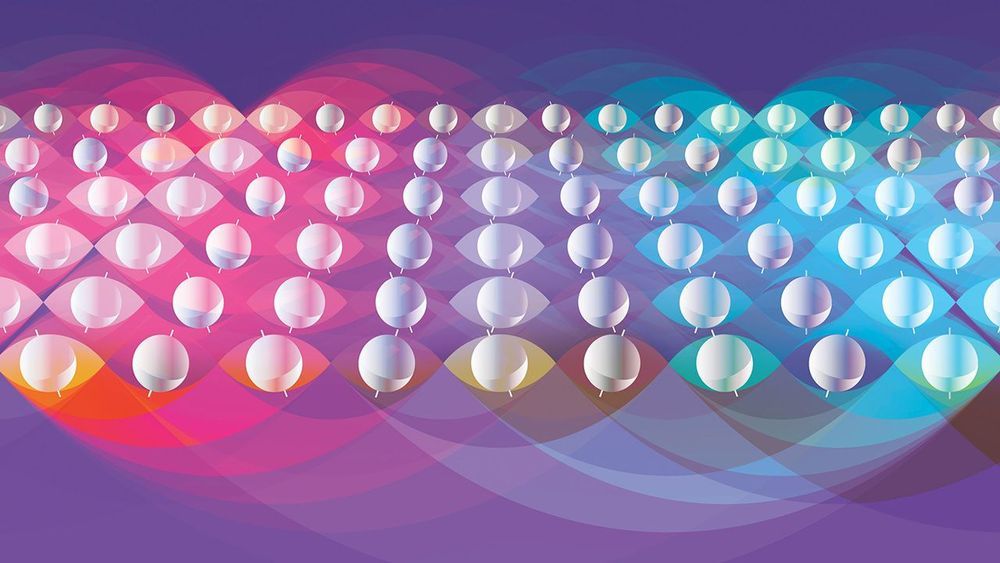
Such noise nearly drowned out the signal in Google’s quantum supremacy experiment. Researchers began by setting the 53 qubits to encode all possible outputs, which ranged from zero to 253. They implemented a set of randomly chosen interactions among the qubits that in repeated trials made some outputs more likely than others. Given the complexity of the interactions, a supercomputer would need thousands of years to calculate the pattern of outputs, the researchers said. So by measuring it, the quantum computer did something that no ordinary computer could match. But the pattern was barely distinguishable from the random flipping of qubits caused by noise. “Their demonstration is 99% noise and only 1% signal,” Kuperberg says.
To realize their ultimate dreams, developers want qubits that are as reliable as the bits in an ordinary computer. “You want to have a qubit that stays coherent until you switch off the machine,” Neven says.
Scientists’ approach of spreading the information of one qubit—a “logical qubit”—among many physical ones traces its roots to the early days of ordinary computers in the 1950s. The bits of early computers consisted of vacuum tubes or mechanical relays, which were prone to flip unexpectedly. To overcome the problem, famed mathematician John von Neumann pioneered the field of error correction.
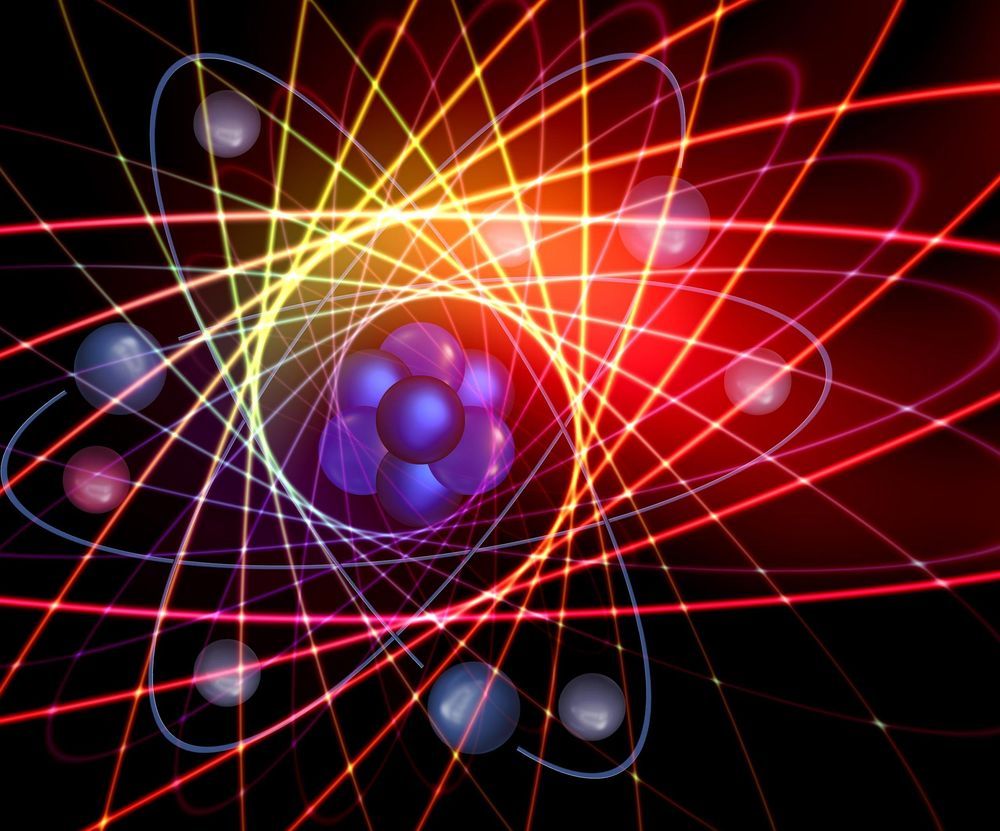
New insight into the spin behavior in an exotic state of matter puts us closer to next-generation spintronic devices.
Aside from the deep understanding of the natural world that quantum physics theory offers, scientists worldwide are working tirelessly to bring forth a technological revolution by leveraging this newfound knowledge in engineering applications. Spintronics is an emerging field that aims to surpass the limits of traditional electronics by using the spin of electrons, which can be roughly seen as their angular rotation, as a means to transmit information.
But the design of devices that can operate using spin is extremely challenging and requires the use of new materials in exotic states–even some that scientists do not fully understand and have not experimentally observed yet. In a recent study published in Nature Communications, scientists from the Department of Applied Physics at Tokyo University of Science, Japan, describe a newly synthesized compound with the formula KCu6AlBiO4(SO4)5Cl that may be key in understanding the elusive “quantum spin liquid (QSL)” state. Lead scientist Dr Masayoshi Fujihala explains his motivation: “Observation of a QSL state is one of the most important goals in condensed-matter physics as well as the development of new spintronic devices. However, the QSL state in two-dimensional (2D) systems has not been clearly observed in real materials owing to the presence of disorder or deviations from ideal models.”