Toggle light / dark theme

Direct visualization of quantum zero-point motion in complex molecule reveals eternal dance of atoms

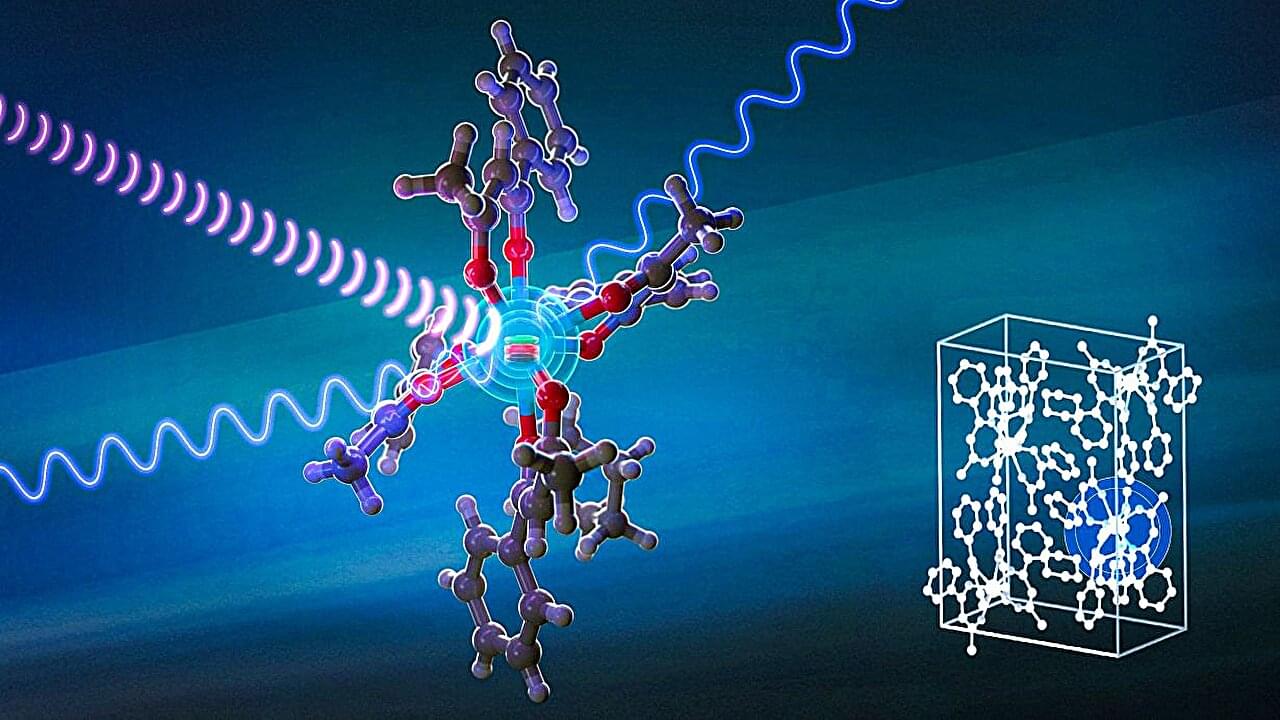
Most of us find it difficult to grasp the quantum world. According to Heisenberg’s uncertainty principle, it’s like observing a dance without being able to see simultaneously exactly where someone is dancing and how fast they’re moving—you always must choose to focus on one.

And yet, this quantum dance is far from chaotic; the dancers follow a strict choreography. In , this strange behavior has another consequence: Even if a molecule should be completely frozen at absolute zero, it never truly comes to rest. The it is made of perform a constant, never-ending quiet dance driven by so-called zero-point energy.

Researchers overcome long-standing bottleneck in single photon detection with twisted 2D materials

The ability to detect single photons (the smallest energy packets constituting electromagnetic radiation) in the infrared range has become a pressing need across numerous fields, from medical imaging and astrophysics to emerging quantum technologies. In observational astronomy, for example, the light from distant celestial objects can be extremely faint and require exceptional sensitivity in the mid-infrared.

Similarly, in free-space quantum communication—where single photons need to travel across vast distances—operating in the mid-infrared can provide key advantages in signal clarity.

The widespread use of single-photon detectors in this range is limited by the need for large, costly, and energy-intensive cryogenic systems to keep the temperature below 1 Kelvin. This also hinders the integration of the resulting detectors into modern photonic circuits, the backbone of today’s information technologies.

Radiation Shield Improves Optical Clocks

A new experimental design eliminates the top source of clock uncertainty.

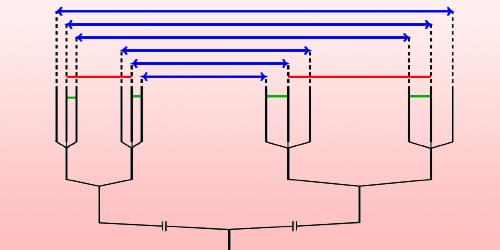
Optical lattice clocks (OLCs) are among the world’s best atomic clocks. Their largest source of uncertainty results from the ubiquitous blackbody radiation (BBR). Now Youssef Hassan of the National Institute of Standards and Technology in Colorado and his colleagues have demonstrated a cryogenic OLC with a radiation shield that virtually eliminates BBR-associated uncertainty [1]. The researchers expect this OLC design to allow major improvements in clock accuracy.

In an OLC, hundreds to tens of thousands of atoms are lined up in a 1D lattice formed by a laser beam. A second (clock) beam, whose frequency can be tuned, then excites the atoms to a specific quantum state. The clock-beam frequency that maximizes the number of atoms making the transition defines the “ticking rate” of the OLC. BBR perturbs the atoms’ quantum states and decreases the OLC’s accuracy.

A Review of the Current State of Magnetic Force Microscopy to Unravel the Magnetic Properties of Nanomaterials Applied in Biological Systems and Future Directions for Quantum Technologies

Magnetism plays a pivotal role in many biological systems. However, the intensity of the magnetic forces exerted between magnetic bodies is usually low, which demands the development of ultra-sensitivity tools for proper sensing. In this framework, magnetic force microscopy (MFM) offers excellent lateral resolution and the possibility of conducting single-molecule studies like other single-probe microscopy (SPM) techniques. This comprehensive review attempts to describe the paramount importance of magnetic forces for biological applications by highlighting MFM’s main advantages but also intrinsic limitations. While the working principles are described in depth, the article also focuses on novel micro- and nanofabrication procedures for MFM tips, which enhance the magnetic response signal of tested biomaterials compared to commercial nanoprobes. This work also depicts some relevant examples where MFM can quantitatively assess the magnetic performance of nanomaterials involved in biological systems, including magnetotactic bacteria, cryptochrome flavoproteins, and magnetic nanoparticles that can interact with animal tissues. Additionally, the most promising perspectives in this field are highlighted to make the reader aware of upcoming challenges when aiming toward quantum technologies.

Could Metasurfaces Be The Next Quantum Information Processors?

In the race toward practical quantum computers and networks, photons — fundamental particles of light — hold intriguing possibilities as fast carriers of information at room temperature. Photons are typically controlled and coaxed into quantum states via waveguides on extended microchips, or through bulky devices built from lenses, mirrors, and beam splitters. The photons become entangled – enabling them to encode and process quantum information in parallel – through complex networks of these optical components. But such systems are notoriously difficult to scale up due to the large numbers and imperfections of parts required to do any meaningful computation or networking.

Could all those optical components could be collapsed into a single, flat, ultra-thin array of subwavelength elements that control light in the exact same way, but with far fewer fabricated parts?

Optics researchers in the Harvard John A. Paulson School of Engineering and Applied Sciences (SEAS) did just that. The research team led by Federico Capasso, the Robert L. Wallace Professor of Applied Physics and Vinton Hayes Senior Research Fellow in Electrical Engineering, created specially designed metasurfaces — flat devices etched with nanoscale light-manipulating patterns — to act as ultra-thin upgrades for quantum-optical chips and setups.


Researchers blend theoretical insight and precision experiments to entangle photons on an ultra-thin chip.

Scientists achieve direct measurement of quantum metric tensor in black phosphorus

Quantum distance refers to a measure of quantum mechanical similarity between two quantum states. A quantum distance of one means that the two quantum states are the same, whereas a quantum distance of zero implies that they are exactly the opposite. Physicists introduced this concept in the realm of theoretical science a long time ago, but its importance has been increasingly recognized in the field of physics only in recent times.

In the last few years, many have tried to measure the quantum distance of electrons in real , but a direct measurement of the quantum distance and thus quantum metric tensor—a key geometric quantity in modern physics defined in terms of the distance between nearby quantum states—has remained elusive so far.

Since the quantum metric tensor is highly relevant in explaining and understanding fundamental physical phenomena in solids, it is, therefore, crucial to come up with an effective methodology for its direct measurement in solid-state systems.

/* */