
Be it large enterprises or small medium-sized businesses, Quantum Computing and Artificial Intelligence (AI) are two of the biggest buzzwords in IT today.
Category: quantum physics – Page 884
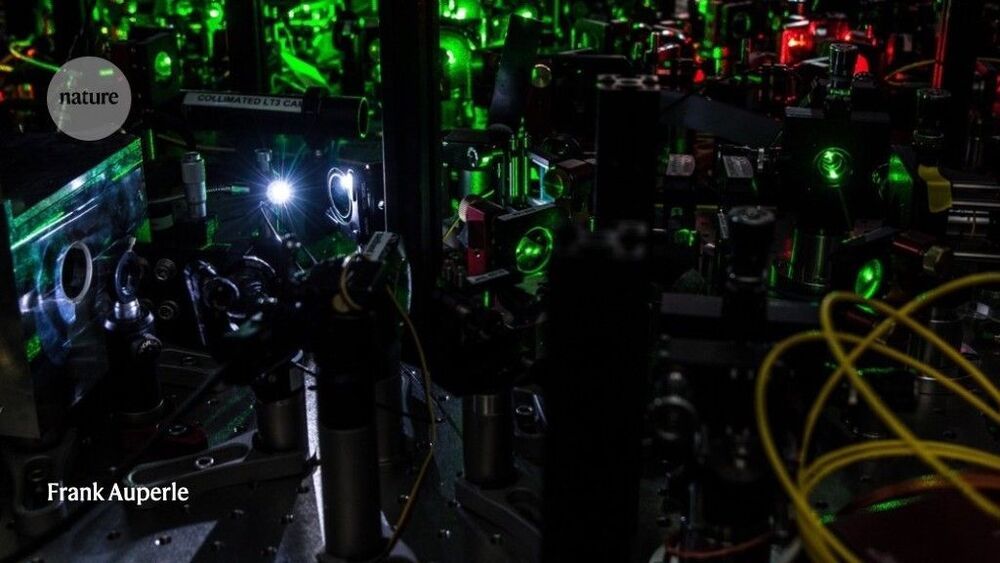
Quantum network is step towards ultrasecure internet
Experiment connects three devices with entangled photons, demonstrating a key technique that could enable a future quantum internet. Experiment demonstrates a key technique that could enable a future quantum internet.

Physicists Show That a Quantum Particle Made of Light and Matter Can Be Dragged by a Current of Electrons
A pair of studies in Nature show that a quasiparticle, known as a plasmon polariton, can be pulled with and against a flow of electrons, a finding that could lead to more efficient ways of manipulating light at the nanoscale.
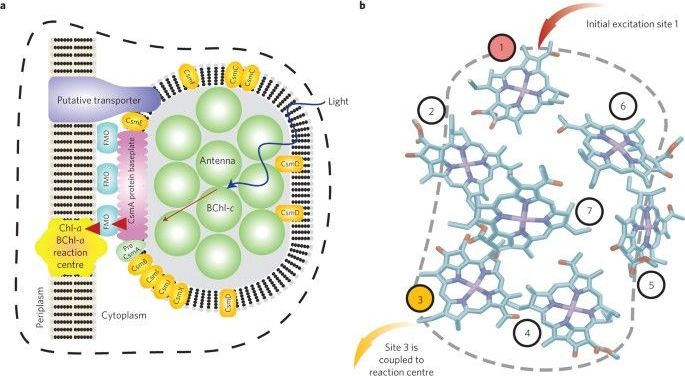
Quantum biology
Circa 2012
Could biological systems have evolved to find the optimal quantum solutions to the problems thrown at them by nature? This Review presents an overview of the possible quantum effects seen in photosynthesis, avian magnetoreception and several other biological systems.
Can consciousness be explained by quantum physics? Research is closer to finding out
One of the most important open questions in science is how our consciousness is established. In the 1990s, long before winning the 2020 Nobel Prize in Physics for his prediction of black holes, physicist Roger Penrose teamed up with anaesthesiologist Stuart Hameroff to propose an ambitious answer.
They claimed that the brain’s neuronal system forms an intricate network and that the consciousness this produces should obey the rules of quantum mechanics —the theory that determines how tiny particles like electrons move around. This, they argue, could explain the mysterious complexity of human consciousness.
Penrose and Hameroff were met with incredulity. Quantum mechanical laws are usually only found to apply at very low temperatures. Quantum computers, for example, currently operate at around -272°C. At higher temperatures, classical mechanics takes over. Since our body works at room temperature, you would expect it to be governed by the classical laws of physics. For this reason, the quantum consciousness theory has been dismissed outright by many scientists—though others are persuaded supporters.
100-Qubit Quantum Computing System Unveiled
Startup reveals a unique quantum computing system.
Quantum computing startup claims it has a 100-qubit quantum computing system.

‘Magic-angle’ trilayer graphene may be a rare, magnet-proof superconductor
MIT physicists have observed signs of a rare type of superconductivity in a material called magic-angle twisted trilayer graphene. In a study appearing in Nature, the researchers report that the material exhibits superconductivity at surprisingly high magnetic fields of up to 10 Tesla, which is three times higher than what the material is predicted to endure if it were a conventional superconductor.
The results strongly imply that magic-angle trilayer graphene, which was initially discovered by the same group, is a very rare type of superconductor, known as a “spin-triplet,” that is impervious to high magnetic fields. Such exotic superconductors could vastly improve technologies such as magnetic resonance imaging, which uses superconducting wires under a magnetic field to resonate with and image biological tissue. MRI machines are currently limited to magnet fields of 1 to 3 Tesla. If they could be built with spin-triplet superconductors, MRI could operate under higher magnetic fields to produce sharper, deeper images of the human body.
The new evidence of spin-triplet superconductivity in trilayer graphene could also help scientists design stronger superconductors for practical quantum computing.
Will we ever be able to teleport?
Is teleportation possible? Oddly enough, thanks to quantum mechanics, the answer might actually be yes… sort of!
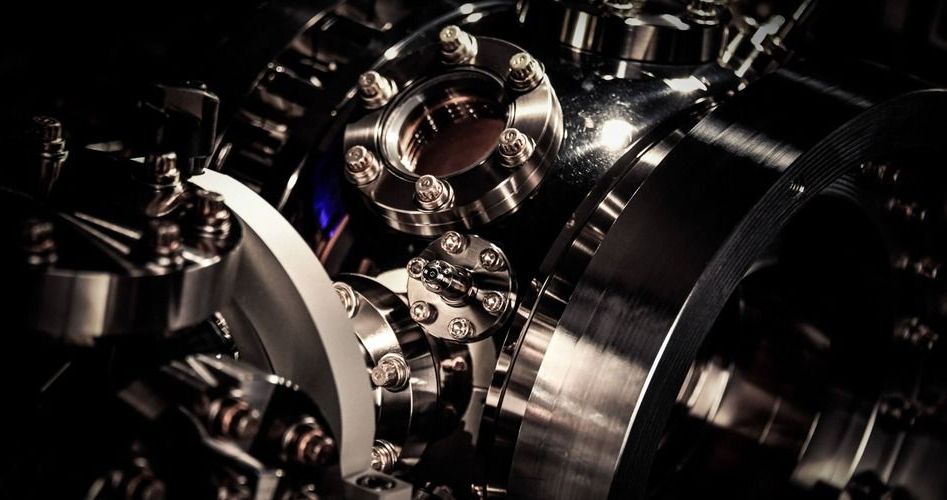
Quantum Milestone: We Can Now Detect and Correct Quantum Errors in Real Time
Researchers at Honeywell Quantum Solutions have taken a significant step toward demonstrating the viability of large-scale quantum computing on its trapped-ion quantum computing technology.
The Honeywell team can now perform quantum error correction (QEC), which are protocols necessary to detect and correct errors in real time on a quantum computer. They demonstrated the ability to “protect” quantum information (prevent a quantum computation from being quickly corrupted by imperfections and noise) on the System Model H1. This is an important first in the quantum computing industry. Currently, most demonstrations of quantum error correction involve correcting errors or “noise” after the procedure has finished running, a technique known as post-processing.
In a paper published this week on arXiv, researchers detailed how they created a single logical qubit (a series of entangled physical qubits) and applied multiple rounds of quantum error correction. This logical qubit is protected from two main types of errors that occur in a quantum computer: bit flips and phase flips.
High-power portable terahertz laser systems
Circa 2020
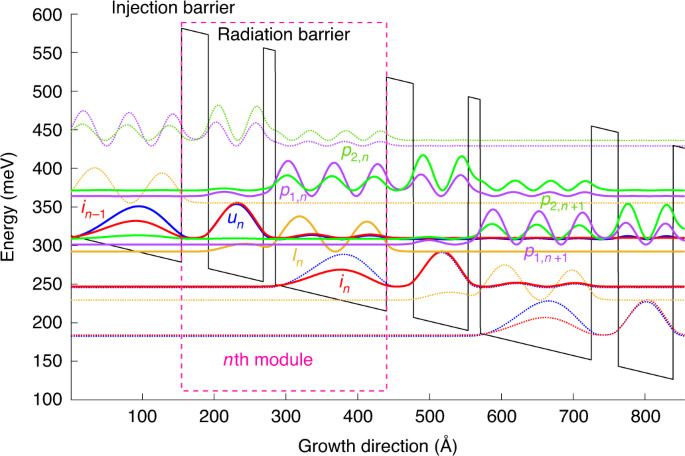
GaAs-based terahertz quantum cascade lasers emitting around 4 THz are demonstrated up to 250 K without a magnetic field. To elevate the operation temperature, carrier leakage channels are reduced by carefully designing the quantum well structures.