The Quantum ransomware, a strain first discovered in August 2021, were seen carrying out speedy attacks that escalate quickly, leaving defenders little time to react.
The threat actors are using the IcedID malware as one of their initial access vectors, which deploys Cobalt Strike for remote access and leads to data theft and encryption using Quantum Locker.
The technical details of a Quantum ransomware attack were analyzed by security researchers at The DFIR Report, who says the attack lasted only 3 hours and 44 minutes from initial infection to the completion of encrypting devices.
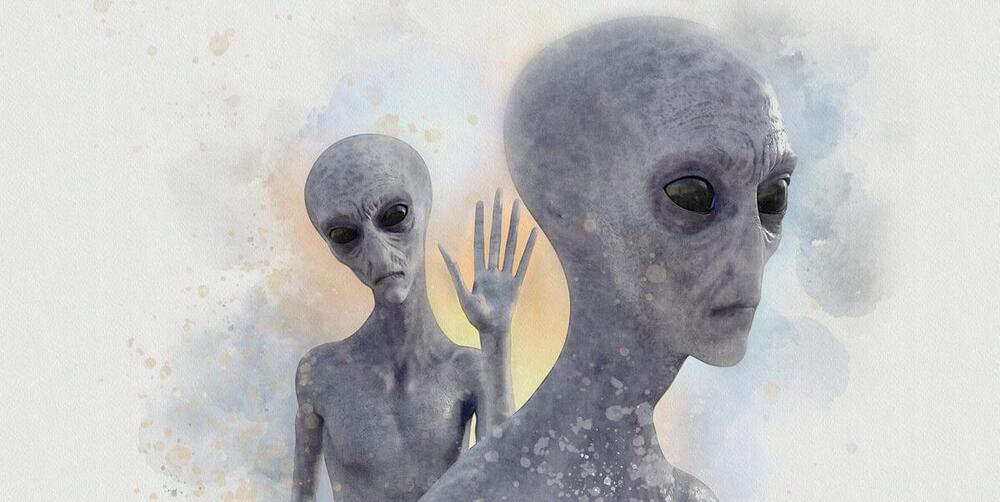
If true, we started out as a “baby universe.” Cute.
Could our universe have been created in a petri dish? Avi Loeb seems to think so. The Harvard astronomer posits that a higher “class” of civilization may have conjured up our universe in a laboratory far, far away.
“Since our universe has a flat geometry with a zero net energy, an advanced civilization could have developed a technology that created a baby universe out of nothing through quantum tunneling,” Loeb writes in an op-ed published by Scientific American last year.
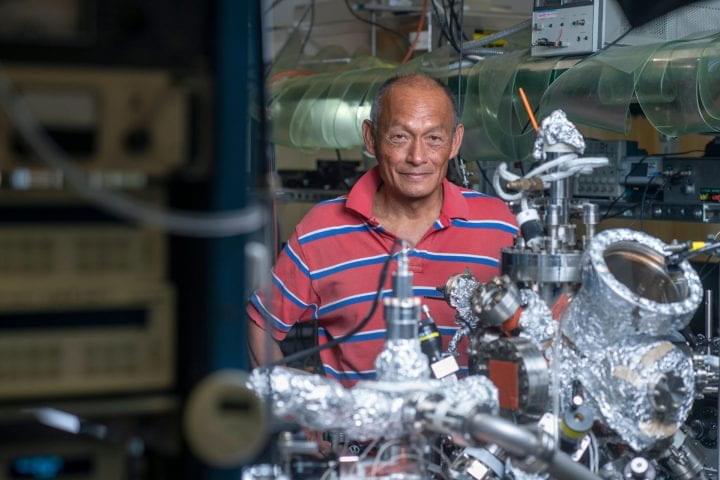
What if we could use a hydrogen molecule as a quantum sensor in a terahertz laser-equipped scanning tunneling microscope? This would allow us to measure the chemical properties of materials at unprecedented time and spatial resolutions.
This new technique has now been developed by physicists at the University of California, Irvine, according to a statement released by the institution on Friday.
“This project represents an advance in both the measurement technique and the scientific question the approach allowed us to explore,” said in the press release co-author of the new study Wilson Ho, Donald Bren Professor of physics & astronomy and chemistry.
PsiQuantum, founded in 2016 by four researchers with roots at Bristol University, Stanford University, and York University, is one of a few quantum computing startups that’s kept a moderately low PR profile. (That’s if you disregard the roughly $700 million in funding it has attracted.) The main reason is PsiQuantum has eschewed the clamorous public chase for NISQ (near-term intermediate scale quantum) computers and set out to develop a million-qubit system the company says will deliver big gains on big problems as soon as it arrives.
When will that be?
PsiQuantum says it will have all the manufacturing processes in place “by the middle of the decade” and it’s working closely with GlobalFoundries (GF) to turn its vision into reality. The generous size of its funding suggests many think it will succeed. PsiQuantum is betting on a photonics-based approach called fusion-based quantum computing (paper) that relies mostly on well-understood optical technology but requires extremely precise manufacturing tolerances to scale up. It also relies on managing individual photons, something that has proven difficult for others.
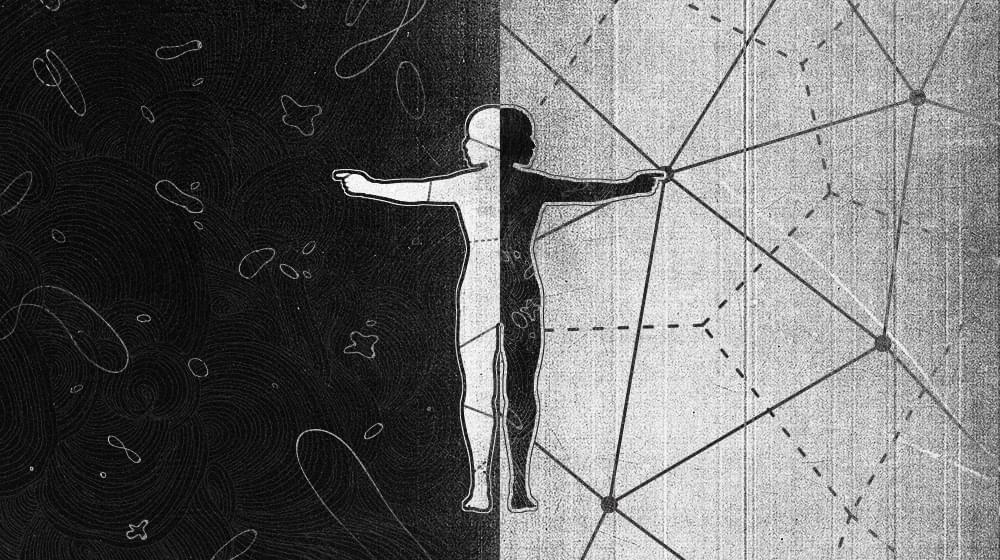
A macroscopic arrow of time can be derived from reversible and time-symmetric fundamental laws if we assume an appropriate notion of coarse-graining and a Past Hypothesis of low entropy at early times. It is an ongoing project to show how familiar aspects of time’s arrow, such as the fact that causes precede effects, can be derived from such a formalism. I will argue that the causal arrow arises naturally when we describe macroscopic systems in terms of a causal network, and make some suggestions about how to fit prediction and memory into this framework.
Sean Carroll is a Research Professor of theoretical physics at the California Institute of Technology, and Fractal Faculty at the Santa Fe Institute. He received his Ph.D. in 1993 from Harvard University. His research focuses on foundational questions in quantum mechanics, spacetime, cosmology, emergence, entropy, and complexity, occasionally touching on issues of dark matter, dark energy, symmetry, and the origin of the universe. Carroll is the author of Something Deeply Hidden, The Big Picture, The Particle at the End of the Universe, From Eternity to Here, and Spacetime and Geometry: An Introduction to General Relativity. He has been awarded prizes and fellowships by the National Science Foundation, NASA, the Sloan Foundation, the Packard Foundation, the American Physical Society, the American Institute of Physics, the American Association for the Advancement of Science, the Freedom From Religion Foundation, the Royal Society of London, and the Guggenheim Foundation. Carroll has appeared on TV shows such as The Colbert Report, PBS’s NOVA, and Through the Wormhole with Morgan Freeman, and frequently serves as a science consultant for film and television. He is host of the weekly Mindscape podcast. He lives in Los Angeles with his wife, writer Jennifer Ouellette.