Toggle light / dark theme

Quantum Computing Breakthrough: Entanglement of Three Spin Qubits Achieved in Silicon

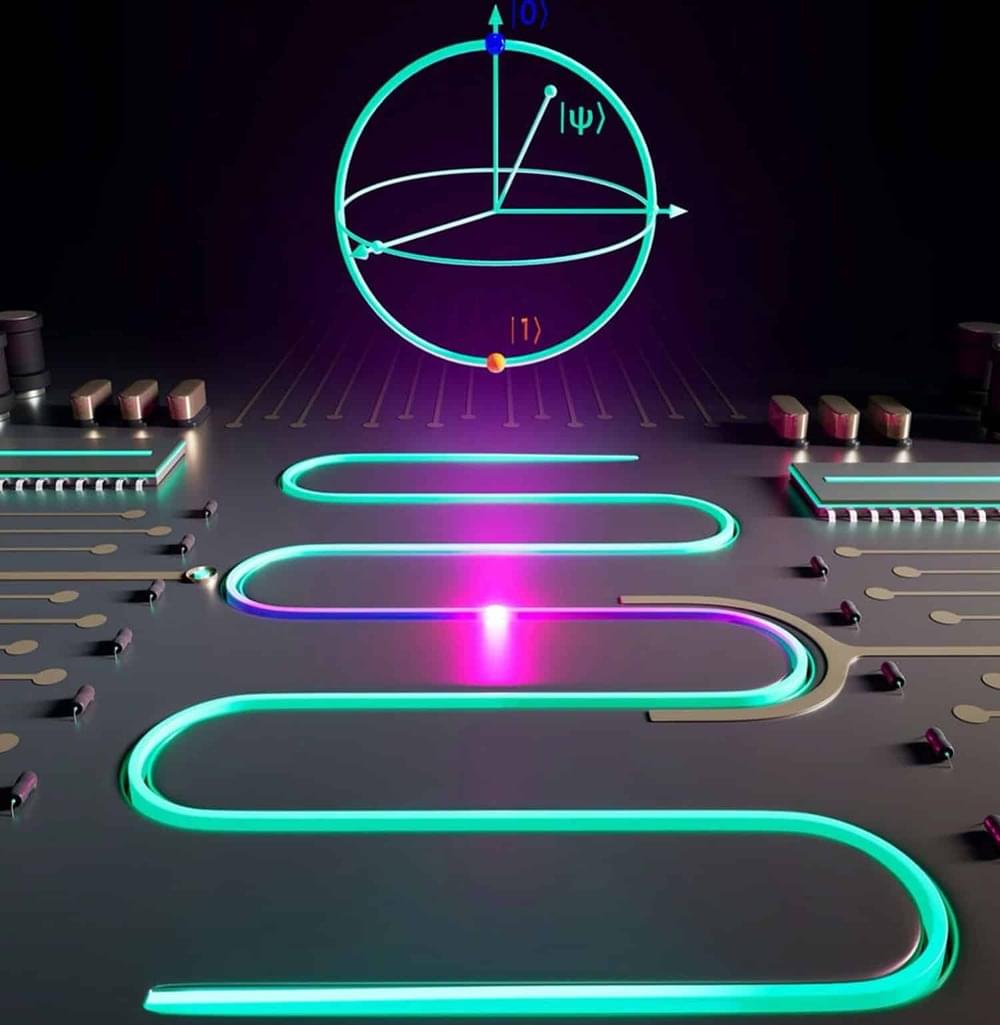
A three-qubit entangled state has been realized in a fully controllable array of spin qubits in silicon.

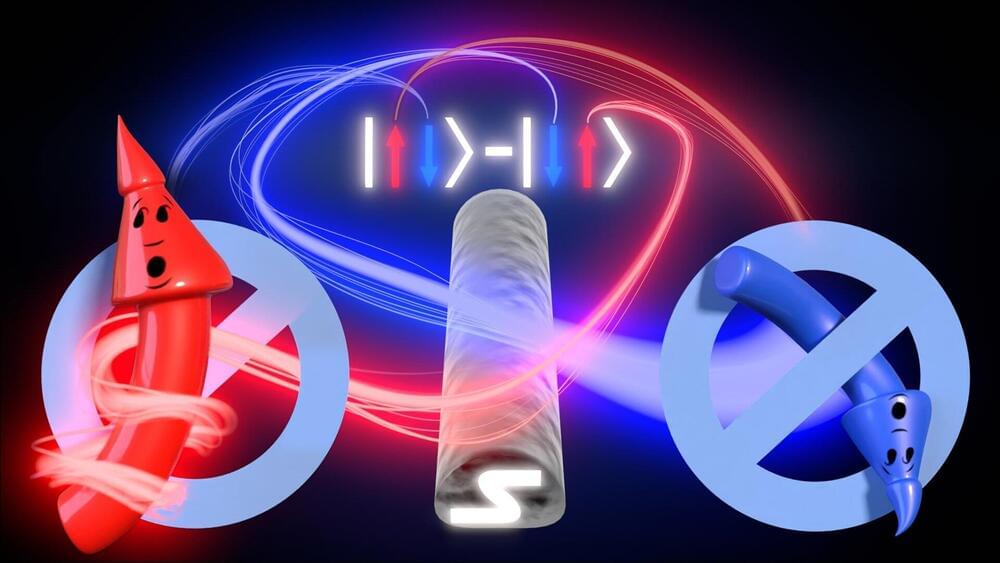
An all-RIKEN team has increased the number of silicon-based spin qubits that can be entangled from two to three, highlighting the potential of spin qubits for realizing multi-qubit quantum algorithms.

Quantum computers have the potential to leave conventional computers in the dust when performing certain types of calculations. They are based on quantum bits, or qubits, the quantum equivalent of the bits that conventional computers use.

Unexpected Peaks in Spectrum Upset Conventional Models of Exotic Quantum Material

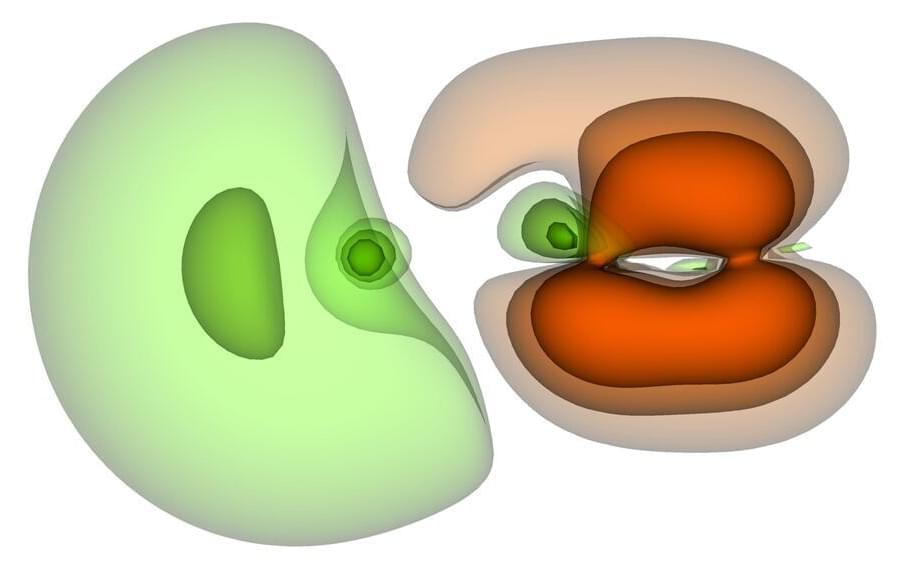
Mott Insulator Exhibits a Sharp Response to Electron Injection In a finding that will give theorists plenty to ponder, an all-RIKEN team has observed an unexpected response in an exotic material known as a Mott insulator when they injected electrons into it. This observation promises to give physicists new insights into such materials, which are closely related to high-temperature superconductors.

Chinese Scientists Say Quantum Radar Could End Stealth Advantage

A new quantum radar technology developed by a team of Chinese researchers would be able to detect stealth planes, the South China Morning Post is reporting.

The news service reports that the radar technology generates a mini electromagnetic storm to detect objects. Professor Zhang Chao and his team at Tsinghua University’s aerospace engineering school, reported their findings in a paper in Journal of Radars.

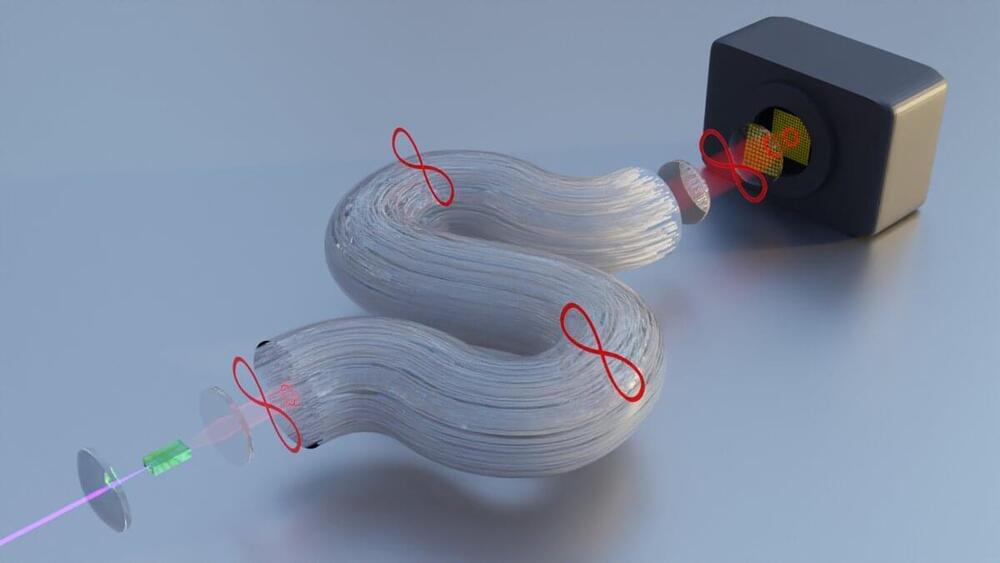
A quantum radar is different from traditional radars in several ways, according to the paper. While traditional radars have on a fixed or rotating dish, the quantum design features a gun-shaped instrument that accelerates electrons. The electrons pass through a winding tube of a strong magnetic fields, producing what is described as a tornado-shaped microwave vortex.

Quantum Computers Check Each Other’s Answers in New Error-Correction Approach

Quantum computers may be now able to employ a “call-a-friend” tactic to make sure their answers are correct.

In a study published today in Physical Review X, a team of physicists from Vienna, Innsbruck, Oxford, and Singapore designed an error-correction method that lets quantum computers check each other’s answers. While quantum computers are advancing quickly, the devices are still extremely sensitive to outside influences — like heat and cosmic rays — that make them more prone to errors that affect their computations, according to the researchers.

“In order to take full advantage of future quantum computers for critical calculations we need a way to ensure the output is correct, even if we cannot perform the calculation in question by other means,” said Chiara Greganti, a physicist at the University of Vienna.

AMD files teleportation patent to supercharge quantum computing

That’s teleportation for Qubits, not for humans, sadly.


AMD has proposed a patent for ‘teleportation,’ meaning things could be about to get much more efficient around here. With the incredible technological feats humanity achieves on a daily basis, and Nvidia’s Jensen going off on one last year about GeForce holodecks and time machines, it’s easy for us to slip into a headspace that lets us believe genuine human teleportation is just around the corner.

“Finally,” you sigh, mouthing the headline to yourself. “Goodbye work commute, hello popping to Japan for an authentic Ramen on my lunch break.”

Radar ‘closer to spotting stealth jets’ with Chinese quantum project

Quantum radar was proposed as a solution more than a decade ago. Some quantum technologies, such as the entanglement of subatomic particles, could in theory boost the sensitivity of a radar.


Quantum particles in a man-made electromagnetic storm bounced back after hitting stealth object, increasing chance of detection, according to Tsinghua University team.

The first experimental realization of a dissipative time crystal

A time crystal is a unique and exotic phase of matter first predicted by the American physicist Frank Wilczek in 2012. Time crystals are temporal analogs of more conventional space crystals, as both are based on structures characterized by repeating patterns.

Instead of forming repetitive patterns across three-dimensional (3D) space, as space crystals do, time crystals are characterized by changes over time that occur in a set pattern. While some research teams have been able to realize these exotic phases of matter, so far, these realizations have only been achieved using closed systems. This raised the question of whether time crystals could also be realized in open systems, in the presence of dissipation and decoherence.

Researchers at the Institute of Laser Physics at the University of Hamburg have recently realized a time crystal in an open quantum system for the first time. Their paper, published in Physical Review Letters, could have important implications for the study of exotic phases of matter in quantum systems.

Researchers use gold film to enhance quantum sensing with qubits in a 2D material

Quantum sensing is being used to outpace modern sensing processes by applying quantum mechanics to design and engineering. These optimized processes will help beat the current limits in processes like studying magnetic materials or studying biological samples. In short, quantum is the next frontier in sensing technology.

As recently as 2,019 spin defects known as qubits were discovered in 2D materials (hexagonal boron nitride) which could amplify the field of ultrathin . These scientists hit a snag in their discovery which has unleashed a scientific race to resolve the issues. Their sensitivity was limited by their low brightness and the low contrast of their magnetic resonance signal. As recently as two weeks ago on August 9 2021, Nature Physics published an article titled “quantum sensors go flat,” where they highlighted the benefits and also outlined current shortfalls of this new and exciting means of sensing via qubits in 2D materials.

A team of researchers at Purdue took on this challenge of overcoming qubit signal shortcomings in their work to develop ultrathin quantum sensors with 2D materials. Their publication in Nano Letters was published today, September 2 2021, and they have solved some of the critical issues and yielded much better results through experimentation.

/* */