The International Space Station is now home to an even more capable quantum laboratory, where NASA cools atoms to nearly absolute zero to study one of the strangest states of matter known.
A problem once touted as requiring a quantum computer has now been solved on a laptop.
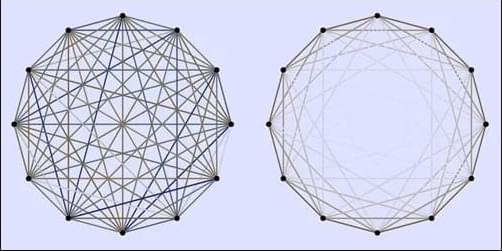
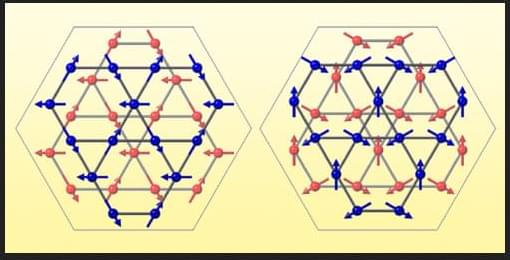
Using advanced mathematical techniques and sophisticated software, physicists at the Center for Computational Quantum Physics (CCQ) at the Simons Foundation’s Flatiron Institute and collaborators at Boston University showed that a conventional computer can successfully simulate a notoriously difficult quantum system previously claimed to be beyond the reach of classical computing.
Metric tensor identities.
metric tensor inverse.
metric tensor matrix.
metric tensor examples.
identity tensor pytorch.
a tensor is something that transforms like a tensor.
a metric is a specific type of data.
what is the difference between a tensor and a matrix.
identify metric bolts.
euclidean metric tensor.
metric tensor explained.
metric tensor g.
metric tensor in general relativity.
identity tensor.
identity metrics.
metric tensor jacobian.
metric identification.
identify metric threads.
identify metrics.
determinant of metric tensor.
quantum metric tensor.
s metric system.
metric tensor properties.
vector internal metrics.
metric tensor wiki.
metric tensor dot product.
#metrictensor #tensoranalysis #tensorflow
Here I discuss two experiment and Gluon plasma, Gluon dipole. My lectures note is taken from professor Leonar Suskind string theory books and his lecture series. Professor Leonard Suskind books and his lecture grow my string theory knowledge. I have great respect🙏 to him. My main target to grow curiosity on science.
#stringtheory #quantumphysics #advancedphysics #astrophysics #m_theory.
#Leonard_suskind.
#blackhole
For 72 hours, enjoy 15% OFF on all Hoverpens with code SABINE, or click on the link https://noviumdesign.shop/sabine — Free shipping to most countries. Also on Amazon: https://noviumdesign.shop/jTAp1f.
The biggest open problem in the foundations of physics is that Einstein’s theory of gravity, General Relativity, does not cooperate with quantum mechanics. Physicists have tried to solve this issue by coming up with a theory of quantum gravity, but those theories fall apart when you need them most – inside of black holes and at the Big Bang. Recently, though, physicists published a new calculation for the Big Bang, with a theory called quadratic gravity, which lets us skip over quantum gravity entirely, and that could explain the origin of time. Let’s take a look.
Paper: https://journals.aps.org/prl/abstract… mugs, posters and more: ➜ https://sabines-store.dashery.com/ 💌 Support me on Donorbox ➜ https://donorbox.org/swtg 👉 Transcript with links to references on Patreon ➜ / sabine 📝 Transcripts and written news on Substack ➜ https://sciencewtg.substack.com/ 📩 Free weekly science newsletter ➜ https://sabinehossenfelder.com/newsle… 👂 Audio only podcast ➜ https://open.spotify.com/show/0MkNfXl… 🔗 Join this channel to get access to perks ➜
/ @sabinehossenfelder 📚 Buy my book ➜ https://amzn.to/3HSAWJW #science #sciencenews #physics #gravity This video discusses a new explanation for the beginning of the universe, published in PRL, which addresses quantum gravity and the period before time began. It features a presenter discussing “Asymptotically Safe Gravity” and includes scientific graphics and charts related to cosmological research. This new idea elegantly addresses the origin of the universe and offers a fresh perspective on space time, making it a significant contribution to science news.
👕T-shirts, mugs, posters and more: ➜ https://sabines-store.dashery.com/
💌 Support me on Donorbox ➜ https://donorbox.org/swtg.
👉 Transcript with links to references on Patreon ➜ / sabine.
📝 Transcripts and written news on Substack ➜ https://sciencewtg.substack.com/
📩 Free weekly science newsletter ➜ https://sabinehossenfelder.com/newsle…
👂 Audio only podcast ➜ https://open.spotify.com/show/0MkNfXl…
🔗 Join this channel to get access to perks ➜
/ @sabinehossenfelder.
📚 Buy my book ➜ https://amzn.to/3HSAWJW
#science #sciencenews #physics #gravity.
This video discusses a new explanation for the beginning of the universe, published in PRL, which addresses quantum gravity and the period before time began. It features a presenter discussing \.
Werner Heisenberg (1901–1976) was one of the founders of quantum mechanics — author of the uncertainty principle (1927) and winner of the 1932 Nobel Prize in Physics. He was also among the most philosophically engaged physicists of the century. In his late teens he read Plato’s Timaeus in the original Greek (his father was a professor of Greek), and the dialogue’s central idea stayed with him: that the smallest constituents of matter are not material objects but mathematical forms.
In Physics and Philosophy (1958), Heisenberg argued that modern physics \.
Researchers have shown that an unusual class of quantum states known as “fractional Fermi seas” can be deliberately created, according to a new study published in Physical Review Letters. The work was carried out by the Nägerl group together with theoretical physicist Alvise Bastianello of CNRS and Université Paris-Dauphine.
The study demonstrates how a new critical phase of matter can emerge when quantum particles are pushed far from their normal equilibrium conditions. Using ultracold cesium atoms confined to one dimension, the researchers repeatedly altered how strongly the particles interacted with one another. The resulting state goes beyond the behavior predicted by the well-known Tomonaga-Luttinger liquid theory, a cornerstone for understanding one-dimensional quantum systems.
This publication provides the theoretical framework for recent experimental research conducted in the group of Hans-Christoph Nägerl at the Department of Experimental Physics.
Google has unveiled a quantum computing breakthrough that could reshape the future of artificial intelligence, cryptography, medicine, and global technology. But does this really mean AI is becoming obsolete?
In this video, we break down Google’s Willow quantum chip, the revolutionary error-correction milestone it achieved, and why experts believe this could be one of the biggest advances in computing history. We also explain what the headlines get wrong, how quantum computing actually differs from AI, and why the future is likely to be a combination of both technologies rather than a competition.
You’ll discover:
• What makes Google’s Willow chip so significant.
• How quantum computers differ from classical AI
• Why the \.
University of Chicago researchers may have found the shortcut quantum computers have needed for decades.
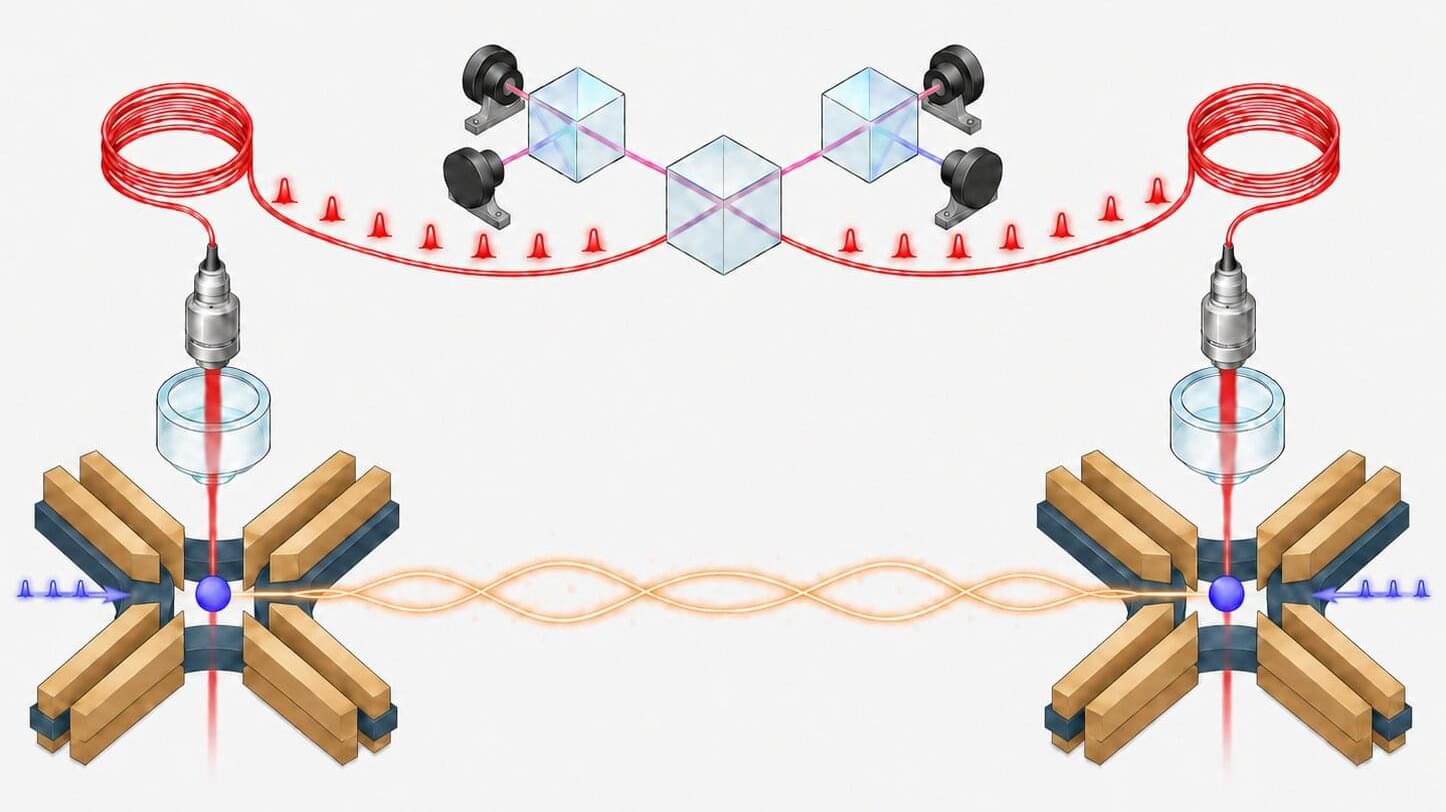
In this video, we break down a major quantum computing breakthrough involving QLDPC error correction codes, reconfigurable atom arrays, and movable neutral atoms controlled by laser light. This new approach could reduce the number of physical qubits needed for practical fault-tolerant quantum computing by a factor of ten to twenty.
That matters because quantum computers have always faced one massive problem: qubits are extremely fragile. Traditional surface-code error correction can require thousands of physical qubits just to protect one reliable logical qubit, pushing useful quantum computers decades into the future. But this new blueprint could bring the requirement down from millions of qubits to tens of thousands.
We also explain why this discovery could affect medicine, drug discovery, encryption, post-quantum cybersecurity, climate technology, materials science, artificial intelligence, and the global race to build real quantum machines.
This is not a finished quantum computer yet. It is a credible engineering roadmap through one of the biggest bottlenecks in the field. But it may move practical quantum computing much closer than experts expected.
Watch the full video to understand why this University of Chicago breakthrough could change the quantum timeline.