Nice.
Forum on Quantum Information Science addresses challenges to the field, and identifies strategic options and innovative approaches to move QIS forward.

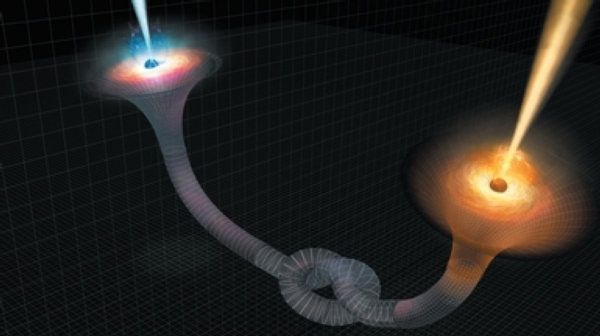

Great advancement around how to make QC available on small scale devices.
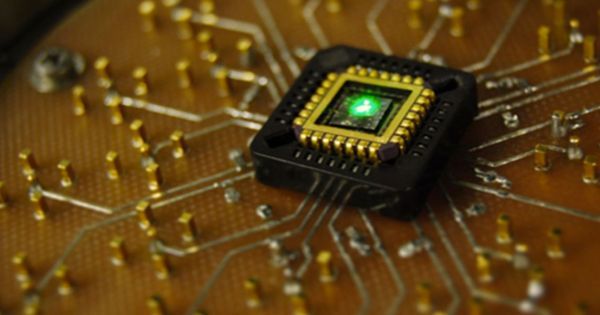
Researchers from the Institute for Quantum Computing (IQC) at the University of Waterloo led the development of a new extensible wiring technique capable of controlling superconducting quantum bits, representing a significant step towards to the realization of a scalable quantum computer.
“The quantum socket is a wiring method that uses three-dimensional wires based on spring-loaded pins to address individual qubits,” said Jeremy Béjanin, a PhD candidate with IQC and the Department of Physics and Astronomy at Waterloo. He and Thomas McConkey, PhD candidate from IQC and the Department of Electrical and Computer Engineering at Waterloo, are lead authors on the study that appears in the journal Physical Review Applied as an Editors’ Suggestion and is featured in Physics. “The technique connects classical electronics with quantum circuits, and is extendable far beyond current limits, from one to possibly a few thousand qubits.”
One promising implementation of a scalable quantum computing architecture uses a superconducting qubit, which is similar to the electronic circuits currently found in a classical computer, and is characterized by two states, 0 and 1. Quantum mechanics makes it possible to prepare the qubit in superposition states, meaning that the qubit can be in states 0 and 1 at the same time. To initialize the qubit in the 0 state, superconducting qubits are brought down to temperatures close to −273 degrees Celsius inside a cryostat, or dilution refrigerator.
In Brief:
This new development in photoelectronics makes the technology more cost (and quantum) efficient. This opens ways for graphene to be further integrated in the field of photoelectronics.
EICREA professors Frank Koppens and Gerasimos Konstantatos led researchers in the ICFO in developing a hybrid photodetector that is better-performing in terms of speed, accuracy and range, and operates in the visible spectrum, near infrared (NIR) and short-wave infrared (SWIR), with wavelengths ranging from 400 to 3000 nm.
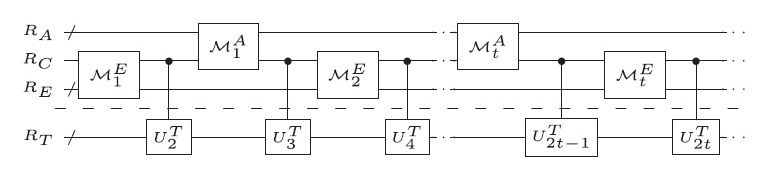
(Phys.org)—Over the past few decades, quantum effects have greatly improved many areas of information science, including computing, cryptography, and secure communication. More recently, research has suggested that quantum effects could offer similar advantages for the emerging field of quantum machine learning (a subfield of artificial intelligence), leading to more intelligent machines that learn quickly and efficiently by interacting with their environments.
In a new study published in Physical Review Letters, Vedran Dunjko and coauthors have added to this research, showing that quantum effects can likely offer significant benefits to machine learning.
“The progress in machine learning critically relies on processing power,” Dunjko, a physicist at the University of Innsbruck in Austria, told Phys.org. “Moreover, the type of underlying information processing that many aspects of machine learning rely upon is particularly amenable to quantum enhancements. As quantum technologies emerge, quantum machine learning will play an instrumental role in our society—including deepening our understanding of climate change, assisting in the development of new medicine and therapies, and also in settings relying on learning through interaction, which is vital in automated cars and smart factories.”
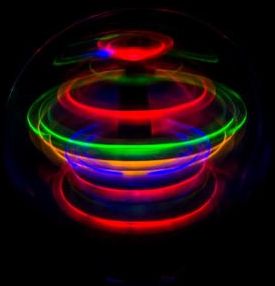
New method for information storage via QC uncovered.
Abstract: Researchers from the Harvard John A. Paulson School of Engineering and Applied Sciences (SEAS) have made a discovery that could lay the foundation for quantum superconducting devices. Their breakthrough solves one the main challenges to quantum computing: how to transmit spin information through superconducting materials.
Every electronic device — from a supercomputer to a dishwasher — works by controlling the flow of charged electrons. But electrons can carry so much more information than just charge; electrons also spin, like a gyroscope on axis.
Harnessing electron spin is really exciting for quantum information processing because not only can an electron spin up or down — one or zero — but it can also spin any direction between the two poles. Because it follows the rules of quantum mechanics, an electron can occupy all of those positions at once. Imagine the power of a computer that could calculate all of those positions simultaneously.

Everything is about cloud computing these days. In fact, there is such an emphasis on stuffing all your applications into the cloud that we’ve managed to create a situation where now we’re having performance issues. So then the tech world came up with another concept called fog computing which means we take everything out of the cloud and move it “to the edge”. It’s only a matter of time before we decide that edge computing isn’t centralized enough and then start moving everything back up to the cloud. All the while, highly paid data consultants are laughing all the way to the bank. The truth is though that cloud based solutions (also called software-as-a-service or SaaS) are here to stay. In many cases, the technology on offer is so complex and resource intensive that it only works with a centralized model. Quantum computing is a good example of this. So is IBM’s Watson cognitive computing solution. The company we’re going to talk about in this article, Cognitive Scale, is taking IBM Watson and making cognitive computing available to anyone via the cloud.

Founded in 2013, Texas based startup Cognitive Scale took in $25 million in funding just last week from investors that included Intel, Microsoft, and IBM. Probably the most compelling thing about Cognitive Scale is the pedigree of their leadership. The Company Chairman, Manoj Saxena, was responsible for commercializing IBM’s Watson with a $1 billion investment from IBM. He ended up at IBM because a company he founded called Webify was acquired by IBM in 2006. In fact, he founded and sold two venture-backed software companies in just 5 years’ time. The founder and CTO of Cognitive Scale, Matt Sanchez, was the 3rd employee and Chief Architect of Webify and was responsible for founding the R&D arm of IBM Watson called IBM Watson Labs. See how this all fits together?

Ok; USA where are you nowdays?
Scientists have shown they can teleport photons across a city, a development that has been hailed as “a technological breakthrough”.
However, do not expect to see something akin to the Star Trek crew beaming from the planet’s surface to the Starship Enterprise.
Instead, in the two studies, published today in Nature Photonics, separate research groups have used quantum teleportation to send photons to new locations using fibre-optic communications networks in the cities of Hefei in China and Calgary in Canada.
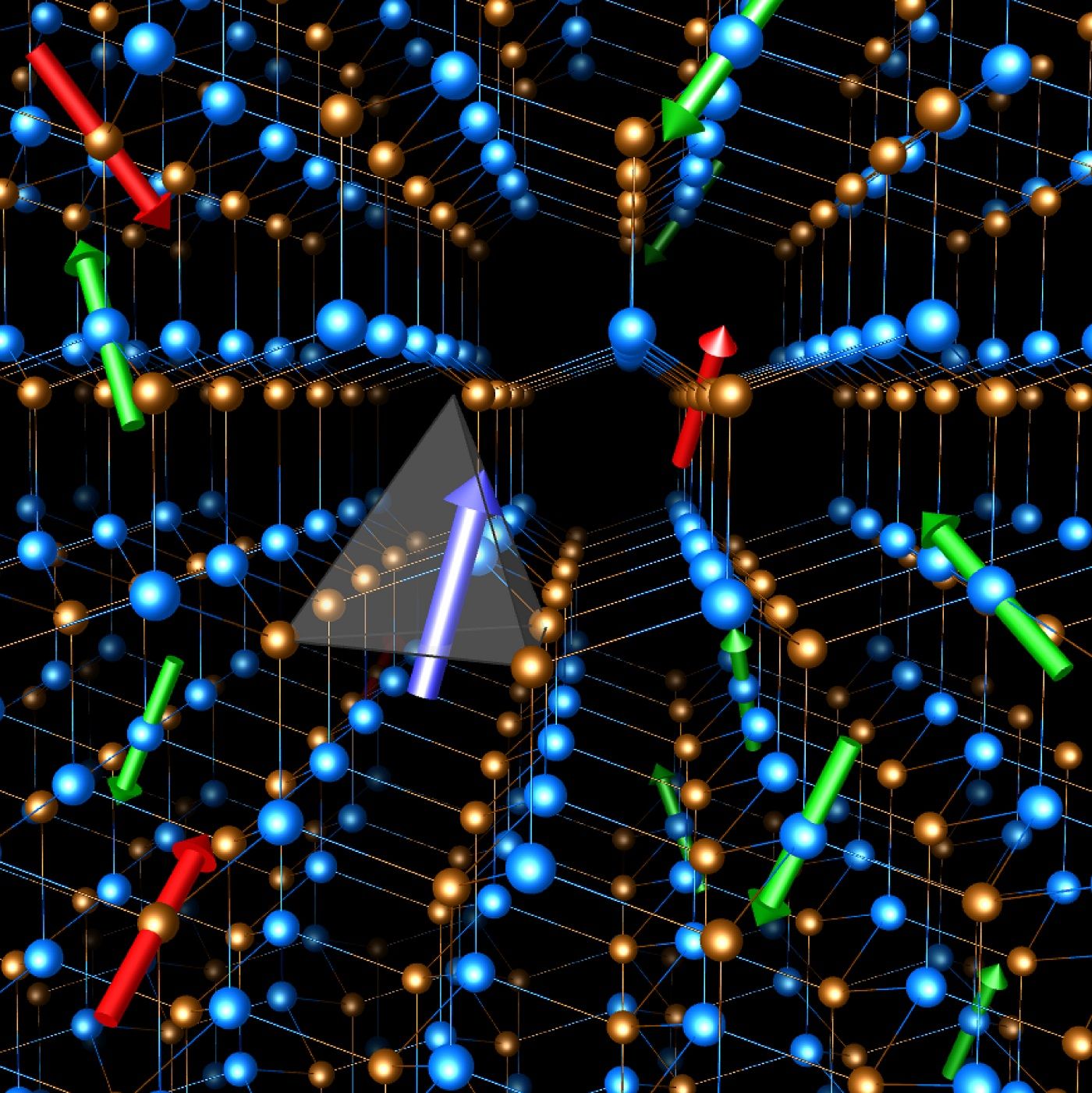
Another huge leap forward in mass production of Quantum devices found.
Harnessing solid-state quantum bits, or qubits, is a key step toward the mass production of electronic devices based on quantum information science and technology. However, realizing a robust qubit with a long lifetime is challenging, particularly in semiconductors comprising multiple types of atoms.
The close collaboration between experiments in Prof. David Awschalom’s group and theory and simulations in Prof. Giulia Galli’s group, both in the Institute for Molecular Engineering, has enabled a crucial step toward solid-state qubits in industrially important semiconductors. In a paper, published Sept. 29 in Nature Communications, the two groups showed that electron qubits bound to atom-like defects in a commercial silicon carbide wafer can exhibit the longest electronic coherence times ever measured in a natural crystal.
“Quantum coherence underlies all quantum information technologies, such as quantum communication and quantum sensing. However, the coherence time in materials is eventually limited by the magnetic noise produced by the fluctuating nuclear spins in a crystal,” said Hosung Seo, an IME postdoctoral researcher and the paper’s lead author.

More on that “Quantum State of Mind”.
Collective Evolution: Lanza’s theory implies that if the body generates consciousness, then consciousness dies when the body dies. But if the body receives consciousness in the same way that a cable box receives satellite signals, then of course consciousness does not end at the death of the physical vehicle. This is an example that’s commonly used to describe the enigma of consciousness.