Toggle light / dark theme

Does Quantum Weirdness Arise When Parallel Classical Worlds Repel?

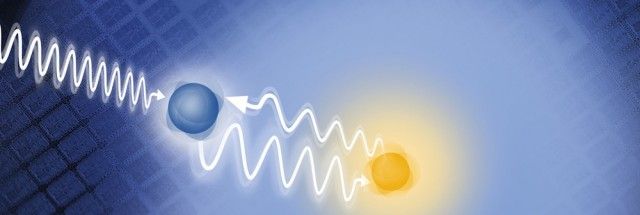
With that goal in mind, a few years back, Wiseman began to ponder what would happen if multiple worlds not only existed, but could influence each other. Within these worlds even objects on the smallest scales obey the plain old rules that Isaac Newton devised to explain force and motion. A classical law is also used to describe the forces that the parallel worlds exert on each other. “Ours is a new picture of reality at the atomic scale,” Hall says, adding that they believe it to be “both elegant in principle, and useful for calculations in practice.”

Global Wearable Technologies: Devices, Applications, And Services Market 2016 — 2021

We’re in an exploding evolution state for technology across all industry sectors and consumer markets.

3 to next 5 years — we see IoT, Smartphones, Wearables, AI (bots, drones, smart devices and machines), 3D printing, commercialization of space, CRISPR, Liq Biopsies, and VR & AR tech.

5 to next 8 years — we will see more BMI technology, smart body parts, QC & other Quantum Tech, Humanoid AI tech, bio-computing, early stage space colonization and mining expansion in space, smart medical tech., and an early convergence of human & animals with technology. 1st expansion of EPA in space exploration due to mining and over mining risks as well as space colonization. New laws around Humanoids and other technologies. Smartphones no longer is mass use due to AR and BMI technology and communications.

Beyond 10 years, Singularity (all things connected) and immortality is offered.

The universe, where space-time becomes discrete

In quantum gravity, classical physics and quantum mechanics are at odds: scientists are still uncertain how to reconcile the quantum “granularity” of space-time at the Planck scale with the theory of special relativity. In their attempts to identify possible tests of the physics associated with this difficult union, the most commonly studied scenario is the one that implies violations of “Lorentz invariance”, the principle underlying special relativity. However, there may be another approach: to salvage special relativity and to reconcile it with granularity by introducing small-scale deviations from the principle of locality. A recent theoretical study just published in Physical Review Letters and led by the International School for Advanced Studies (SISSA) in Trieste has analysed such a model demonstrating that it can be experimentally tested with great precision. The team is already collaborating on developing an experiment, which will take place at the LENS (European Laboratory for Non-linear Spectroscopy) in Florence, some members of which have also taken part in the theoretical study.

Our experience of space-time is that of a continuous object, without gaps or discontinuities, just as it is described by classical physics. For some models however, the texture of space-time is “granular” at tiny scales (below the so-called Planck scale, 10–33 cm), as if it were a variable mesh of solids and voids (or a complex foam). One of the great problems of physics today is to understand the passage from a continuous to a discrete description of spacetime: is there an abrupt change or is there gradual transition? Where does the change occur?

The separation between one world and the other creates problems for physicists: for example, how can we describe gravity – explained so well by – according to quantum mechanics? Quantum gravity is in fact a field of study in which no consolidated and shared theories exist as yet. There are, however, “scenarios”, which offer possible interpretations of quantum gravity subject to different constraints, and which await experimental confirmation or confutation.

Europe’s billion Euro bet on quantum computing

Nice


Quantum computers have been hailed for their revolutionary potential in everything from space exploration to cancer treatment, so it might not come as a surprise that Europe is betting big on the ultra-powerful machines.

A new €1 billion ($1.13 billion) project has been announced by the European Commission aimed at developing quantum technologies over the next 10 years and placing Europe at the forefront of “the second quantum revolution.”

The Quantum Flagship announced will be similar in size, time scale and ambition as the EC’s other ongoing Flagship projects: the Graphene Flagship and the Human Brain Project. As well as quantum computers, the initiative will aim to address other aspects of quantum technologies, including quantum secure communication, quantum sensing and quantum simulation.

Superfast light source made from artificial atom

A new method to create light while retaining the energy using Q-Dot technology.


All light sources work by absorbing energy – for example, from an electric current – and emit energy as light. But the energy can also be lost as heat and it is therefore important that the light sources emit the light as quickly as possible, before the energy is lost as heat. Superfast light sources can be used, for example, in laser lights, LED lights and in single-photon light sources for quantum technology. New research results from the Niels Bohr Institute show that light sources can be made much faster by using a principle that was predicted theoretically in 1954. The results are published in the scientific journal, Physical Review Letters.

Researchers at the Niels Bohr Institute are working with quantum dots, which are a kind of artificial atom that can be incorporated into optical chips. In a quantum dot, an electron can be excited (i.e. jump up), for example, by shining a light on it with a laser and the electron leaves a ‘hole’. The stronger the interaction between light and matter, the faster the electron decays back into the hole and the faster the light is emitted.

But the interaction between light and matter is naturally very weak and it makes the light sources very slow to emit light and this can reduce energy efficiency. Already in 1954, the physicist Robert Dicke predicted that the interaction between light and matter could be increased by having a number of atoms that ‘share’ the excited state in a quantum superposition.

Reliability of material simulations put to test

Change is good; looks like we’re about to re-review some existing simulation codes around Quantum Mechanic Simulation.


Researchers show that new generations of quantum mechanical simulation codes agree better than earlier generations’. The study appears in Science.

Several international scientists from over 30 universities and institutes teamed to investigate to what extent quantum simulations of material properties agree when they are performed by different researchers and with different software. Torbjörn Björkman from Åbo Akademi participated from Finland. Björkman has previously worked at COMP Centre of Excellende at Aalto University. “A group of researchers compared the codes, and the results we got were more precise than in any other calculations before,” he said.

The possibility to produce identical results in independent yet identical researches is a corner stone of science. Only in this way science can identify ‘laws’, which lead to new insights and new technologies. However, several recent studies have pointed out that such reproducibility does not always come spontaneously. Even predictions by computer codes require caution, since the way in which theoretical models are implemented may affect simulation results.

/* */