Toggle light / dark theme

Novel state of matter: Observation of a quantum spin liquid

Excellent article on improving crystalized formations & usage.


According to conventional understanding, if the interactions are isotropic (where all spin directions are possible), this phenomenon can occur if the spins are arranged in triangular geometries and the interactions between them are antiferromagnetic favouring antiparallel alignment of the spins. For three atoms forming the corners of a triangle, the electronic spin of one atom cannot simultaneously be oriented antiparallel to those on both the other two atoms. In real materials that contain triangular units coupled by antiferromagnetic interactions this “frustration” can prevent the spins from coming to rest in a particular orientation even at absolute zero temperature, instead they move collectively like atoms in a liquid. By contrast, ferromagnetic interactions do not give rise to frustration in isotropic magnets because mutually parallel alignment of the spins can always occur. For these reasons, only a few isotropic materials have been proposed as spin liquid candidates.

Monocrystals with complex magnetic interactions

Now a team headed by Prof. Bella Lake has produced and investigated the first monocrystals of calcium-chromium oxide (Ca10Cr7O28). Calcium-chromium oxide is made up of what are known as Kagomé lattices — reminiscent of the pattern of triangles and hexagons woven in Japanese basketry. As a result, a complex set of isotropic magnetic interactions develop in this material, consisting of not only anti-ferromagnetic interactions but also much stronger ferromagnetic interactions that according to conventional understanding should prevent the existence of spin liquid behavior. Magnetic and Neutron scattering experiments conducted in Germany, France, England, and the USA, as well as muon spectroscopy experiments performed in Switzerland have however shown that the spins in these samples retain their collective motion even at temperatures as low as 20 millikelvin and behave like a quantum spin liquid.

Quantum Advantage on Information Leakage for Equality

Abstract: We prove a lower bound on the information leakage of any classical protocol.

Computing the equality function in the simultaneous message passing (SMP) model. Our bound is valid in the finite length regime and is strong enough to demonstrate a quantum advantage in terms of information leakage for practical quantum protocols. We prove our bound by obtaining an improved finite size version of the communication bound due to Babai and Kimmel, relating randomized.

Communication to deterministic communication in the SMP model. We then relate. information leakage to randomized communication through a series of reductions.

We first provide alternative characterizations for information leakage, allowing us to link it to average length communication while allowing for. shared randomness (pairwise, with the referee). A Markov inequality links this.

With bounded length communication, and a Newman type argument allows us to go from shared to private randomness. The only reduction in which we incur more.

ComNav releases Quantum algorithm for its OEM boards

BTW — make sure you view that reference whitepaper on the new quantum algorithms on OEM boards.


ComNav Technologies has released its new generation Quantum algorithm to international market. The Quantum algorithm can be easily achieved through a firmware upgrade (version 2.5.2 and above), and suits all ComNav OEM boards and OEM-based receivers.

An upgrade to ComNav’s Quan algorithm, the Quantum algorithm dramatically improves the stability and reliability of RTK positioning in complex environments, as well as providing a DP-filter enhancement for the ComNav GNSS products.

A new type of quantum bits

Age of Quantum Bit.


In computers of the future, information might be stored in the form of quantum bits. But how can a quantum bit be realized?

A research team from Germany, France and Switzerland has realized quantum bits, short qubits, in a new form. One day, they might become the information units of quantum computers.

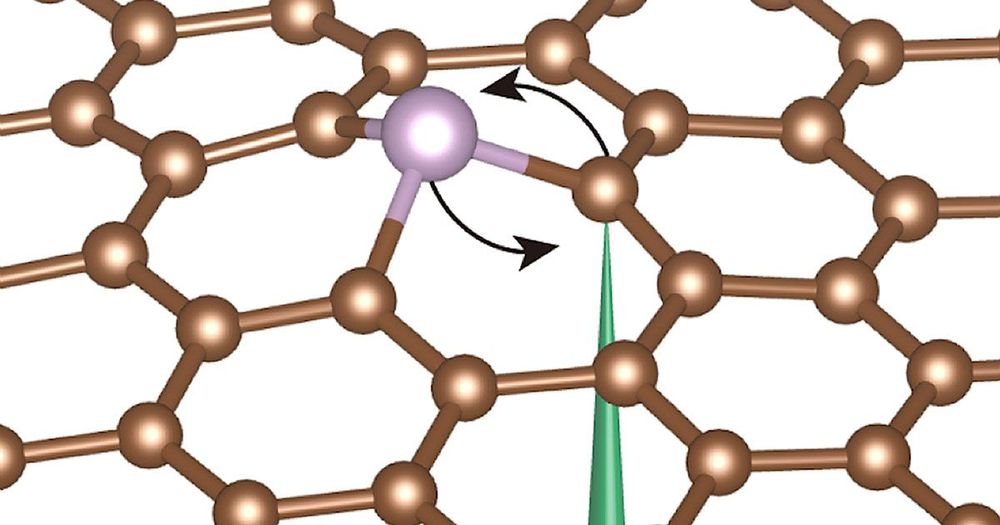
To date, researchers have realized qubits in the form of individual electrons. However, this led to interferences and rendered the information carriers difficult to programme and read. The group has solved this problem by utilising electron holes as qubits, rather than electrons.

Russia making new type of universal quantum computer with multilevel quantum qudits instead of qubits

Physicists from MIPT and the Russian Quantum Center have developed a method which is going to make it easier to create a universal quantum computer — they have discovered a way of using multilevel quantum systems (qudits), each one of which is able to work with multiple “conventional” quantum elements — qubits.

Professor Vladimir Man’ko, Scientific Supervisor of MIPT’s Laboratory of Quantum Information Theory and member of staff at the Lebedev Physical Institute, Aleksey Fedorov, a member of staff at the Russian Quantum Center, and his colleague Evgeny Kiktenko published the results of their studies of multilevel quantum systems in a series of papers in Physical Review A, Physics Letters A, and also Quantum Measurements and Quantum Metrology.

For The First Time Ever, Physicists Made A Quantum Hologram

Who wants a Quantum Hologram?


Scientists from Warsaw were able to produce a hologram of a photon. Hopefully, this method may be used to produce holograms of more complex objects and further understand quantum mechanics.

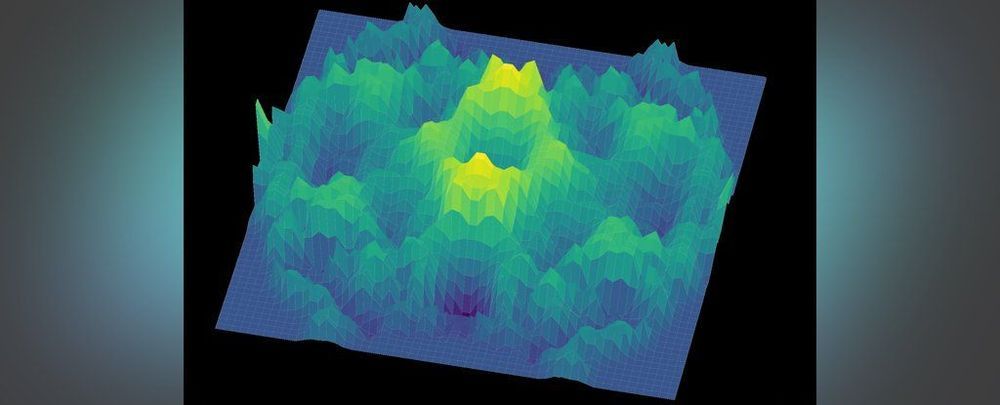
Physicists from the University of Warsaw believe that they may have achieved “the impossible.” They were able to create a hologram of a single particle of light. Previously, scientists believed that the fundamental laws of physics did not allow this, and to that end, their breakthrough allows physicists to further study quantum holography (which may give us a new way to peer into the heart of quantum phenomena).

To break this down a bit, holography takes advantage of classical interference, a phenomenon where two waves meet and form a new wave. However, property of photons called “phases” does not allow classical interference because the phases constantly fluctuate. The physicists instead used quantum interference wherein the photons’ wave functions interact.

/* */