Particles known as “bottom mesons” are not decaying in the way the Standard Model of particle physics says they should, and it’s causing some excitement.

The Great Pyramid of Giza has been shrouded in mystery for millennia, but now a long-held secret of its structure might be known thanks to particle physics.
A narrow void lying deep within the ancient Wonder of the World has been found by scientists using cosmic-ray based imaging.
The internal structure is located above the Grand Gallery — which links two of the Pyramid’s chambers — and traces a similar route for at least 30 metres (100ft).
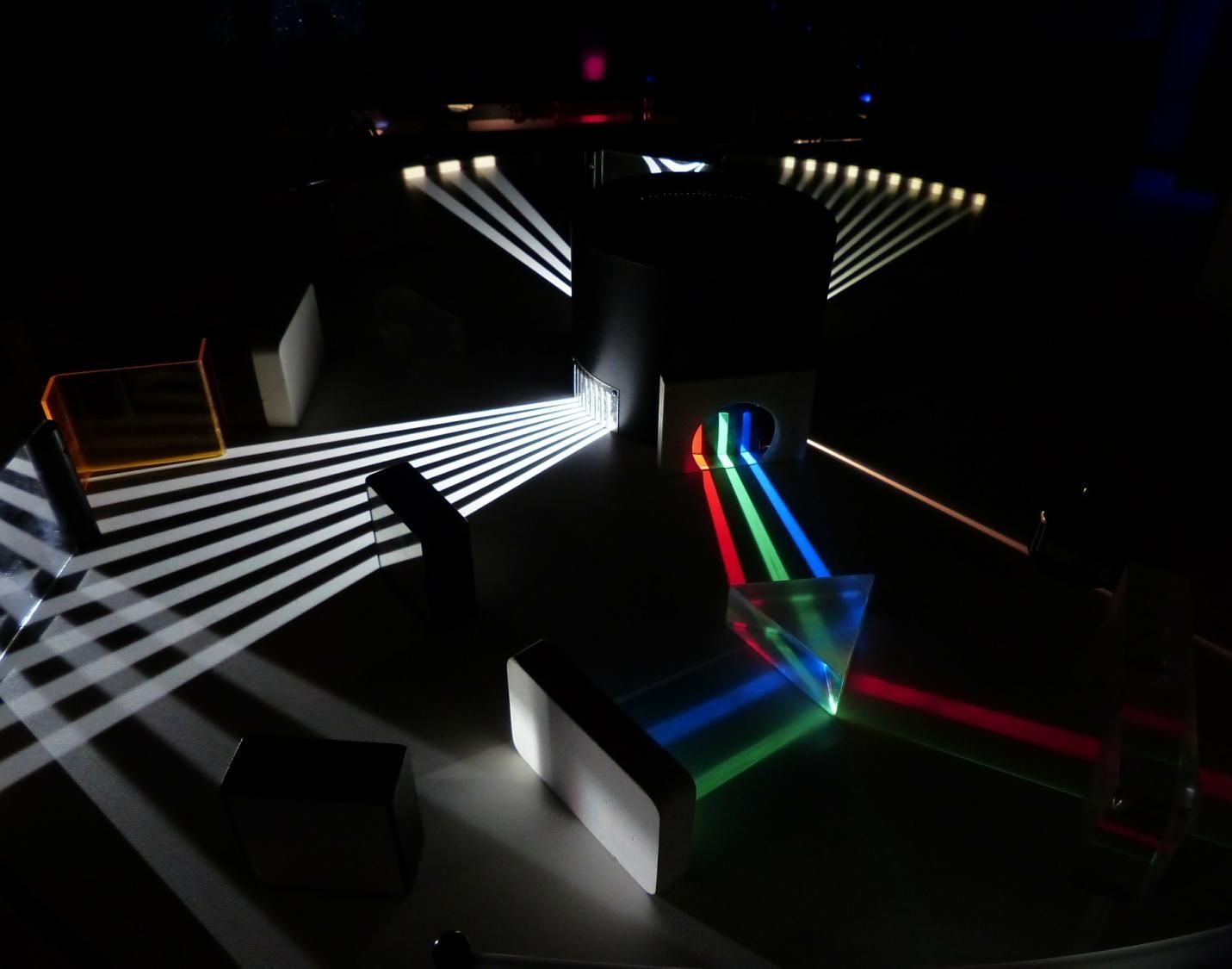
A team of researchers with Università degli Studi di Padova and the Matera Laser Ranging Observatory in Italy has conducted experiments that add credence to John Wheeler’s quantum theory thought experiment. In their paper published on the open access site Science Advances, the group describes their experiment and what they believe it showed.
The nature of light has proven to be one of the more difficult problems facing physicists. Nearly a century ago, experiments showed that light behaved like both a particle and a wave, but subsequent experiments seemed to show that light behaved differently depending on how it was tested, and weirdly, seemed to know how the researchers were testing it, changing its behavior as a result.
Back in the late 1970s, physicist Johan Wheeler tossed around a thought experiment in which he asked what would happen if tests allowed researchers to change parameters after a photon was fired, but before it had reached a sensor for testing—would it somehow alter its behavior mid-course? He also considered the possibilities as light from a distant quasar made its way through space, being lensed by gravity. Was it possible that the light could somehow choose to behave as a wave or a particle depending on what scientists here on Earth did in trying to measure it? In this new effort, the team in Italy set out to demonstrate the ideas that Wheeler had proposed—but instead of measuring light from a quasar, they measured light bounced from a satellite back to Earth.
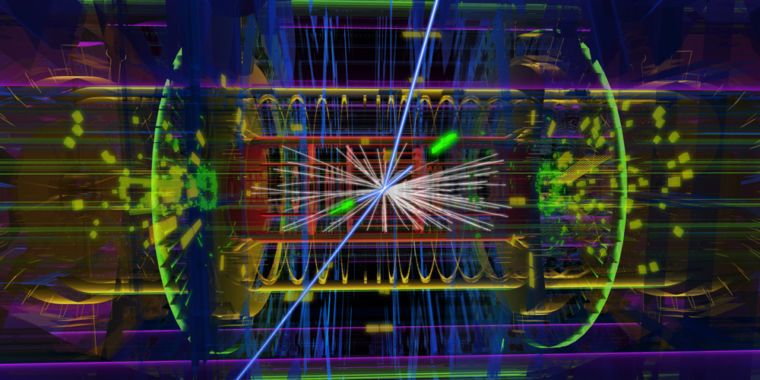
D-Wave system shows quantum computers can learn to detect particle signatures in mountains of data, but doesn’t outpace conventional methods — yet.
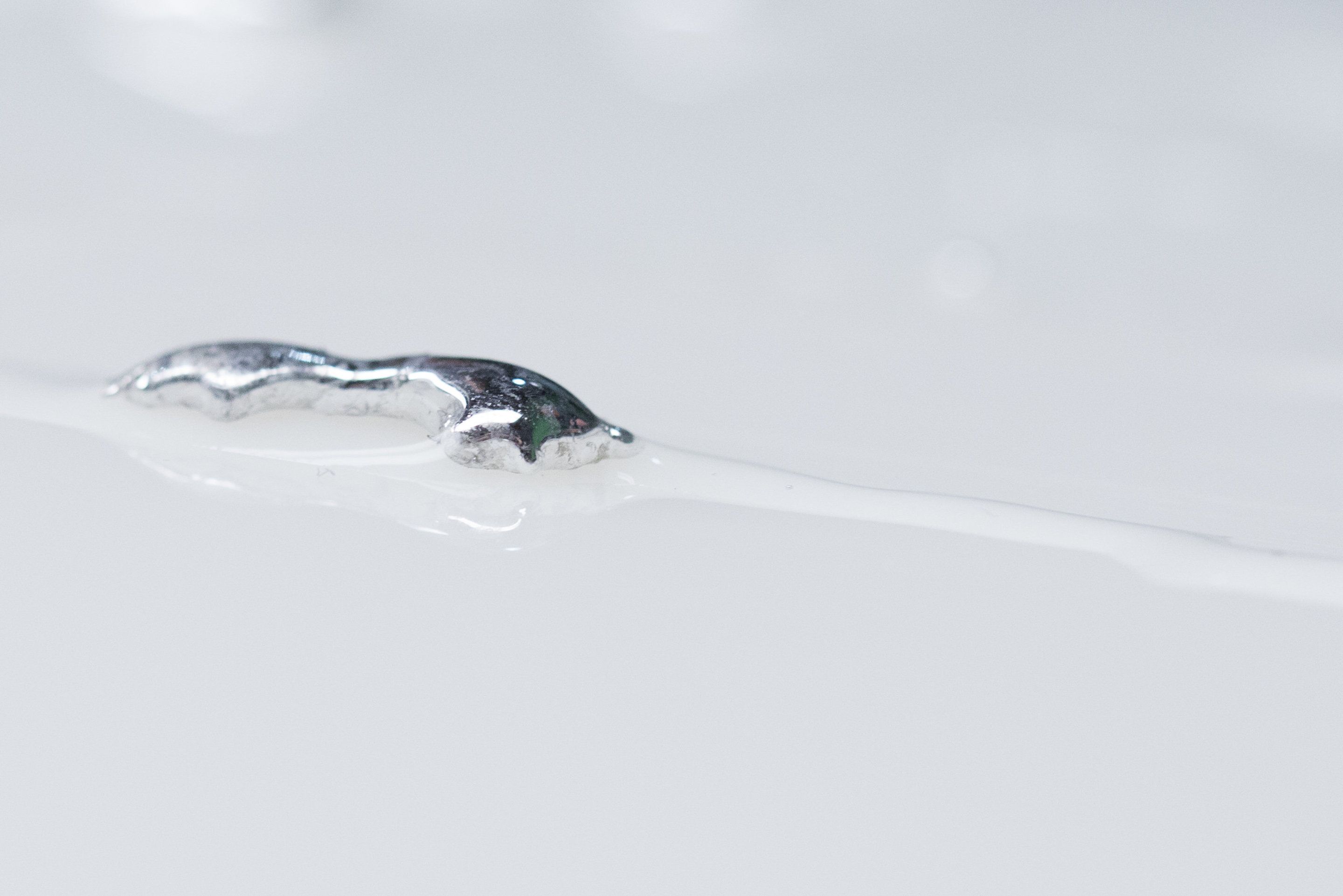
Researchers from RMIT University in Melbourne, Australia, have used liquid metal to create two-dimensional materials no thicker than a few atoms that have never before been seen in nature.
The incredible breakthrough will not only revolutionise the way we do chemistry but could be applied to enhance data storage and make faster electronics. The “once-in-a-decade” discovery has been published in Science.
The researchers dissolve metals in liquid metal to create very thin oxide layers, which previously did not exist as layered structures and which are easily peeled away.
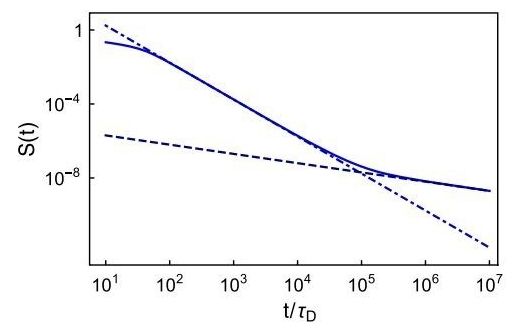
(Phys.org)—Ever since the early days of quantum mechanics, the decay dynamics of unstable quantum systems has been thought to follow an exponential decay law, just like the one used to describe radioactive decay and many other natural processes. The exponential law in the quantum domain was originally proposed by George Gamow and later developed by Eugene Wigner and Victor Weisskopf. According to this law, when given a sample of unstable atoms, the number of those that are likely to decay during a brief period of time is proportional to the number of atoms present.
In the years since then, however, physicists have found that deviations from the exponential law can occur in unstable quantum systems, but only in those that are isolated from the external environment. This is because isolated systems are free from environmental decoherence, which makes it possible for the quantum decay products to reconstruct themselves back into their initial, pre-decayed states. Consequently, the decay is initially slower than that predicted by the exponential law, and in the later stages, the decay often exhibits a power-law behavior. Researchers have previously shown that this nonexponential decay can be harnessed for quantum control.
Now in a new study, physicists have theoretically shown that quantum decay processes can deviate from the exponential decay law not only when the system is isolated, but even when it is in contact with the external environment. The results suggest that an unstable quantum system can decay and subsequently return to its original state, even in the presence of environmental decoherence.

Aleksandr Noy has big plans for a very small tool. A senior research scientist at Lawrence Livermore National Laboratory, Noy has devoted a significant part of his career to perfecting the liquid alchemy known as desalination—removing salt from seawater. His stock-in-trade is the carbon nanotube. In 2006, Noy had the audacity to embrace a radical theory: Maybe nanotubes—cylinders so tiny, they can be seen only with an electron microscope—could act as desalination filters. It depended on just how wide the tubes were. The opening needed to be big enough to let water molecules flow through but small enough to block the larger salt particles that make seawater undrinkable. Put enough carbon nanotubes together and you potentially have the world’s most efficient machine for making clean water.

In a classical thermodynamic system, heat current flows from the hotter body to the colder one, or electricity from the higher voltage to the lower one. The same thing happens in quantum systems, but this state can be changed, and the flow of energy and particles can be reversed if a quantum observer is inserted into the system.
This is the main result obtained by the group led by Professor Ángel Rubio of the UPV/EHU and of the Max Planck Institute PMSD, together with collaborators at the BCCMS centre in Bremen. Their study has been published in npj Quantum Materials.
In macroscopic objects such as a current of water, observing the current does not affect the flow of the water and, in accordance with the laws of classical thermodynamics, this flow would take place from the upper to the lower part of the system. However, in quantum systems, “the process of observation changes the state of the system, and this makes it more likely that the current will be made to flow in one direction or another,” says Ángel Rubio, a professor with the Hamburg-based Max Planck Institute for the Structure and Dynamics of Matter.
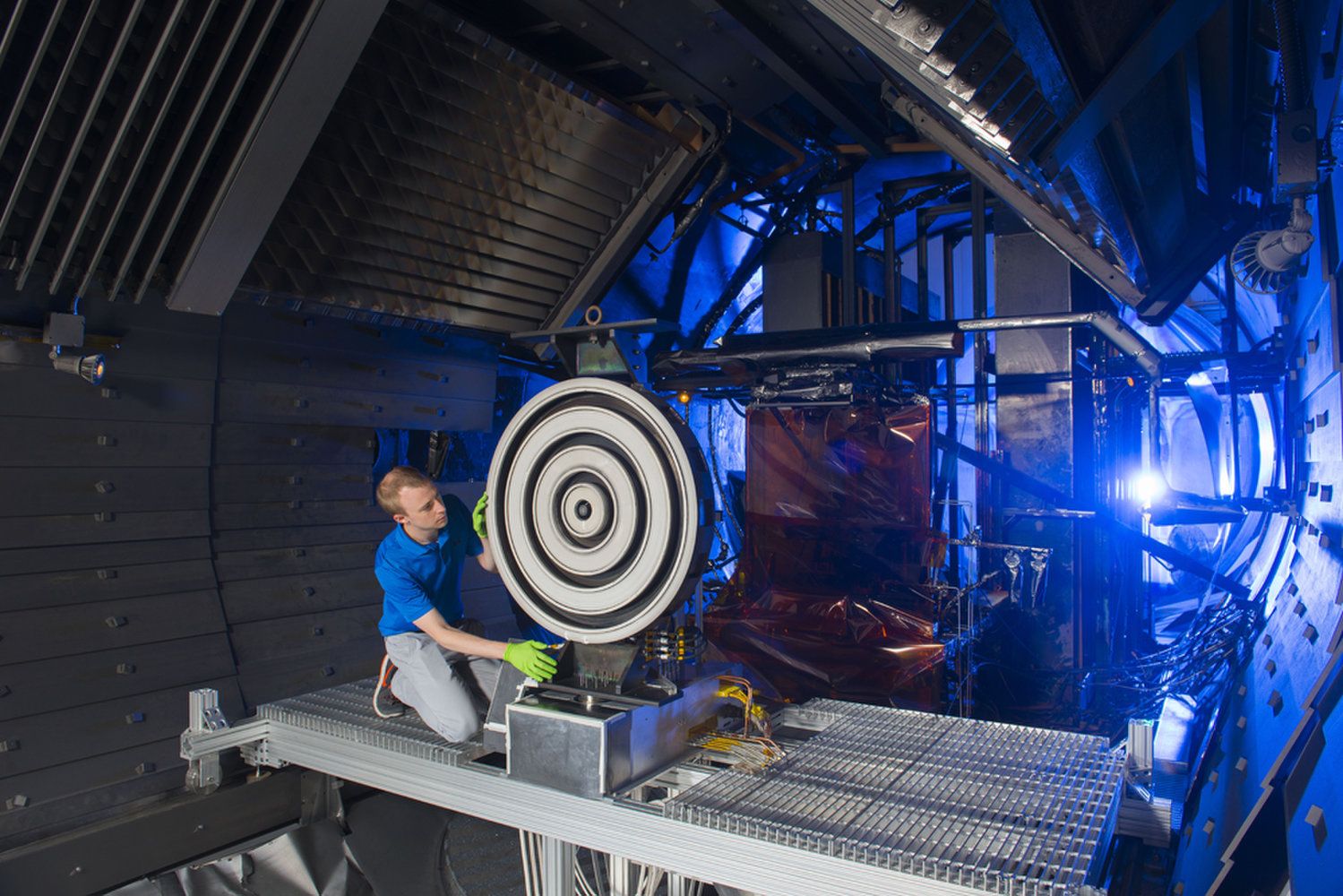
A thruster that’s being developed for a future NASA mission to Mars broke several records during recent tests, suggesting that the technology is on track to take humans to the Red Planet within the next 20 years, project team members said.
The X3 thruster, which was designed by researchers at the University of Michigan in cooperation with NASA and the U.S. Air Force, is a Hall thruster — a system that propels spacecraft by accelerating a stream of electrically charged atoms, known as ions. In the recent demonstration conducted at NASA’s Glenn Research Center in Ohio, the X3 broke records for the maximum power output, thrust and operating current achieved by a Hall thruster to date, according to the research team at the University of Michigan and representatives from NASA.
“We have shown that X3 can operate at over 100 kW of power,” said Alec Gallimore, who is leading the project, in an interview with Space.com. “It operated at a huge range of power from 5 kW to 102 kW, with electrical current of up to 260 amperes. It generated 5.4 Newtons of thrust, which is the highest level of thrust achieved by any plasma thruster to date,” added Gallimore, who is dean of engineering at the University of Michigan. The previous record was 3.3 Newtons, according to the school.