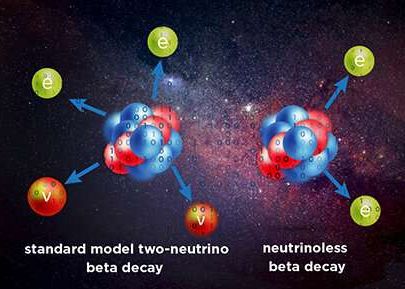
The ACME experiment has released new result showing the “roundness” of the electron, which are touted as a test of fundamental physics theories. How does that work, anyway?
Perhaps physicists should leave human intuition at the laboratory door when designing quantum experiments too.
An Australian crew enlisted the help of a neural network — a type of artificial intelligence — to optimise the way they capture super-cold atoms.
Usually, physicists smoothly tune lasers and magnetic fields to gradually coax atoms into a cloud, according to study co-author Ben Buchler from the Australian National University.
The German space agency DLR carried out the tests in January last year on the MAIUS 1 rocket, beating NASA’s Cold Atom Laboratory who have also since produced a BEC in space.
The findings have been published this week in the journal Nature.
Scientists at 11 German research facilities miniaturised the technology for the production of Bose-Einstein condensates which normally fills a whole lab room.
Our universe is permeated with a vast, unseen force that seems to oppose gravity. Physicists call this force dark energy, and it is thought to be constantly pushing our universe outward.
But in June, a group of physicists published a paper in the preprint journal arXiv implying that dark energy changes over time. This means that the universe will not expand forever but might eventually collapse into the size it was before the Big Bang.
Almost immediately, however, physicists found problems with the theory: Several independent groups subsequently published papers that suggested revisions to the conjecture. Now, a paper published on Oct. 2 in the journal Physical Review D suggests that, as it stands, the original conjecture can’t be true because it can’t explain the existence of the Higgs boson — which we know exists, thanks to the Large Hadron Collider, the massive particle collider on the border between France and Switzerland. [Beyond Higgs: 5 Elusive Particles That May Lurk in the Universe].
Scientists at TU Wien, the University of Innsbruck and the ÖAW have for the first time demonstrated a wave effect that can lead to measurement errors in the optical position estimation of objects. The work now published in Nature Physics could have consequences for optical microscopy and optical astronomy, but could also play a role in position measurements using sound, radar, or gravitational waves.
With modern optical imaging techniques, the position of objects can be measured with a precision that reaches a few nanometers. These techniques are used in the laboratory, for example, to determine the position of atoms in quantum experiments.
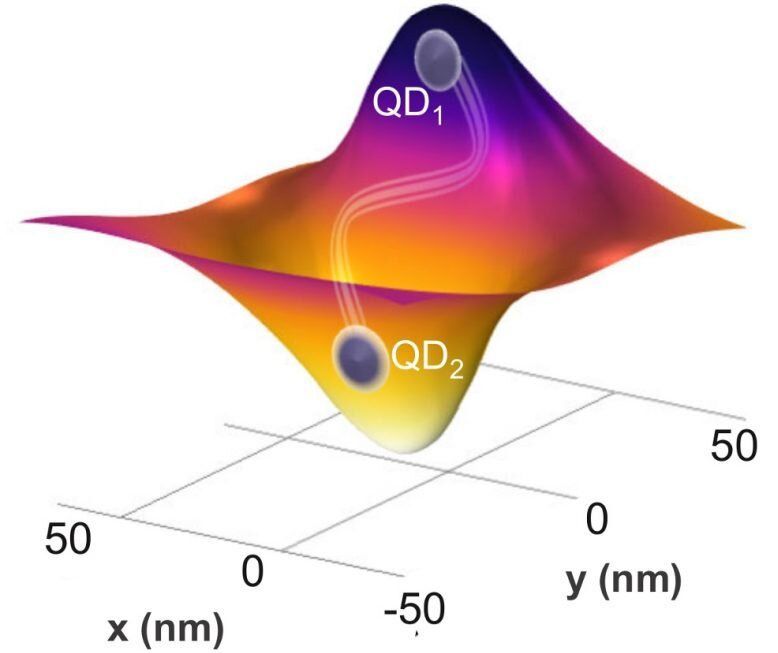
“We want to know the position of our quantum bits very precisely so that we can manipulate and measure them with laser beams,” explains Gabriel Araneda from the Department of Experimental Physics at the University of Innsbruck.
Dark matter supposedly makes up 85% of the matter in the universe, but so far, efforts to catch hypothesized dark matter particles have all ended in failure. Weakly interacting massive particles (WIMPs) are no-shows at grand experiments housed in Italy, Canada, and the United States. Even tinier axions have not been detected either. Neutralinos, born out of supersymmetry, may look nice on paper but so far have no bearing on reality.
The standard model of modern cosmology is unthinkable without dark matter, although direct detections are still missing. A broad perspective of how dark matter was postulated and became accepted is presented, from prehistory, over observations of galaxy clusters, galaxy rotation curves, the search for baryonic dark matter, possible alternative explanations via modified gravity, up to the hunt for dark matter particles. The interplay is described between observational discoveries and theoretical arguments which led finally to the adoption of this paradigm.
If you replace classical bits with qubits, though, you go back to only needing one per spin in the system, because all the quantum stuff comes along for free. You don&s;t need extra bits to track the superposition, because the qubits themselves can be in superposition states. And you don&s;t need extra bits to track the entanglement, because the qubits themselves can be entangled with other qubits. A not-too-big quantum computer— again, 50–100 qubits— can efficiently solve problems that are simply impossible for a classical computer.
These sorts of problems pop up in useful contexts, such as the study of magnetic materials, whose magnetic nature comes from adding together the quantum spins of lots of particles, or some types of superconductors. As a general matter, any time you&s;re trying to find the state of a large quantum system, the computational overhead needed to do it will be much less if you can map it onto a system of qubits than if you&s;re stuck using a classical computer.
So, there&s;s your view-from-30,000-feet look at what quantum computing is, and what it&s;s good for. A quantum computer is a device that exploits wave nature, superposition, and entanglement to do calculations involving collective mathematical properties or the simulation of quantum systems more efficiently than you can do with any classical computer. That&s;s why these are interesting systems to study, and why heavy hitters like Google, Microsoft, and IBM are starting to invest heavily in the field.