Toggle light / dark theme

Ghost Particles Just Got Lighter: KATRIN Sets a New Benchmark for Neutrino Mass

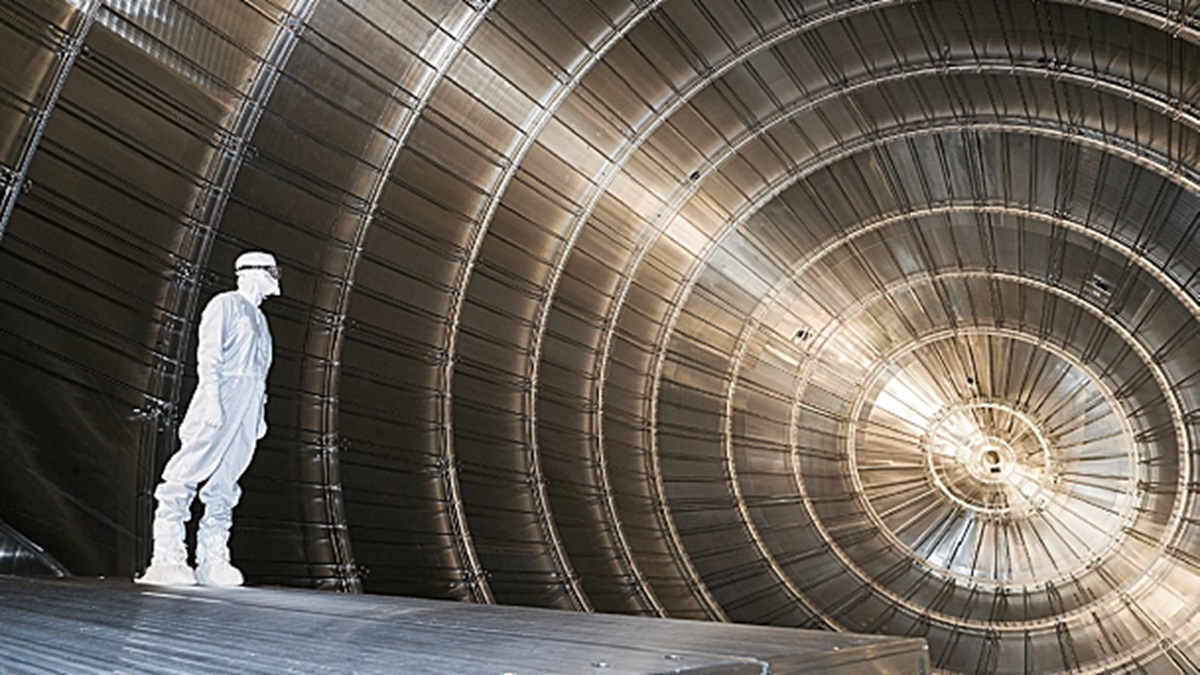
Neutrinos, the mysterious and nearly massless particles that barely interact with anything, are revealing new secrets through the KATRIN experiment.

Using tritium decay and advanced spectrometry, KATRIN has slashed the upper limit on neutrino mass, pushing our understanding of fundamental physics into new territory. With 250 days of data already analyzed and more to come, researchers are optimistic about uncovering even more surprises. Future upgrades aim to detect hypothetical sterile neutrinos, potential dark matter candidates, and possibly revolutionize our view of the universe’s invisible side.

Neutrinos: The Universe’s Ghost Particles.

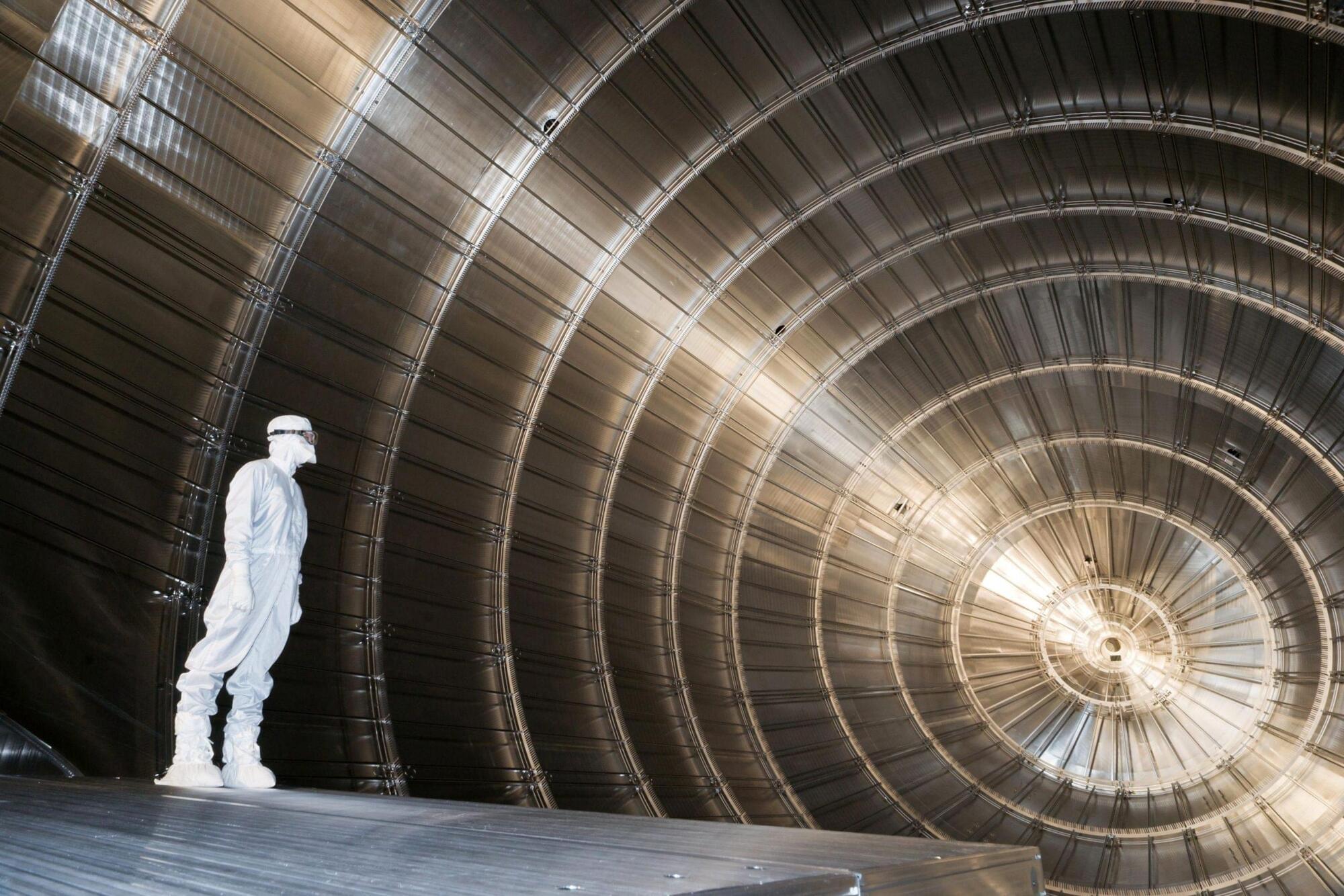
Neutrino mass: most precise measurement shows they are a million times smaller than electrons

Physicists in Germany have performed the most accurate measurement of the mass of the fundamental particle neutrinos. The finding deepens physicists’ attempts to uncover laws of nature beyond even the best current theories.

The standard model of particle physics – the best theory which explains the fundamental forces and particles of nature – posits that neutrinos are massless. Experiments, however, suggest that they do have mass.

Measuring the neutrino mass could explain the limitations of the standard model and offer insights into new areas of physics and beyond.

Scientists observe exotic quantum phase once thought impossible

A team of Rice University researchers reported the first direct observation of a surprising quantum phenomenon predicted over half a century ago, opening pathways for revolutionary applications in quantum computing, communication, and sensing.

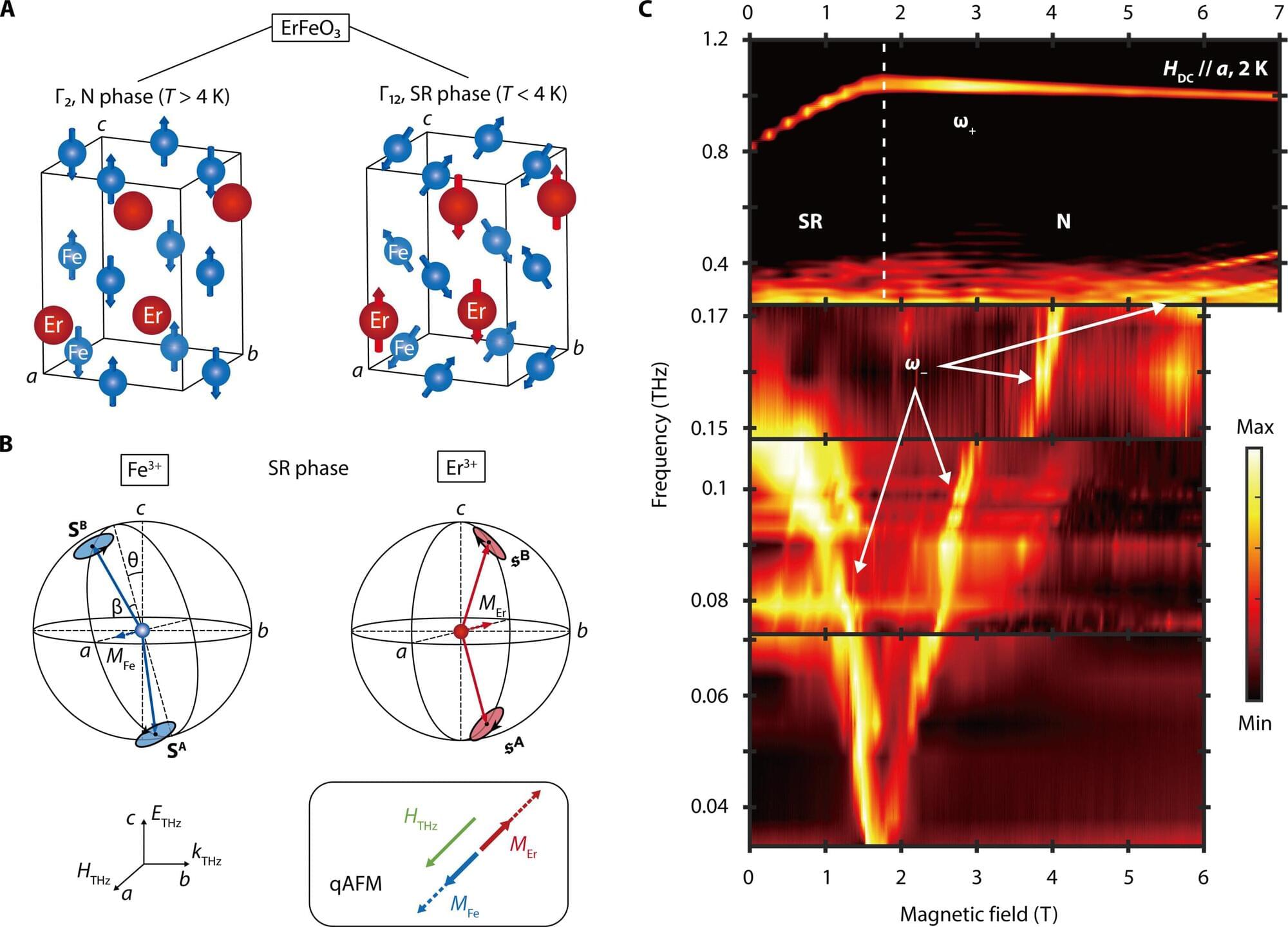
Known as a superradiant phase transition (SRPT), the phenomenon occurs when two groups of quantum particles begin to fluctuate in a coordinated, collective way without any external trigger, forming a new state of matter.

The discovery was made in a crystal composed of erbium, iron, and oxygen that was cooled to minus 457 Fahrenheit and exposed to a powerful magnetic field of up to 7 tesla (over 100,000 times stronger than Earth’s magnetic field), according to a study published in Science Advances.

Rare crystal shape found to increase the strength of 3D-printed metal

Andrew Iams saw something strange while looking through his electron microscope. He was examining a sliver of a new aluminum alloy at the atomic scale, searching for the key to its strength, when he noticed that the atoms were arranged in an extremely unusual pattern.

“That’s when I started to get excited,” said Iams, a materials research engineer, “because I thought I might be looking at a .”

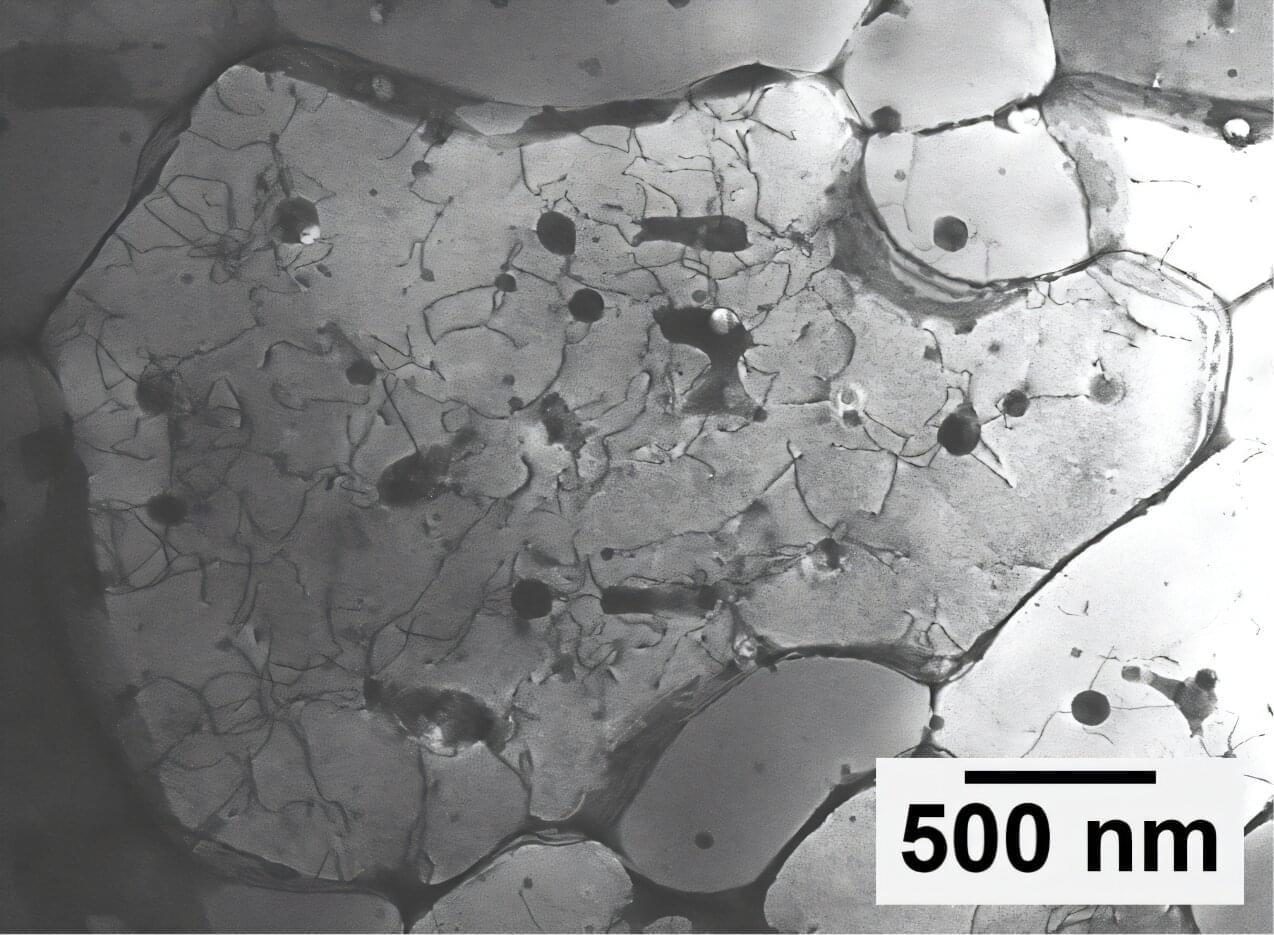
Not only did he find quasicrystals in this , but he and his colleagues at the National Institute of Standards and Technology (NIST) found that these quasicrystals also make it stronger. They have published their findings in the Journal of Alloys and Compounds.

Mindscape 311 | Annaka Harris on Whether Consciousness Is Fundamental

Patreon: https://www.patreon.com/seanmcarroll.
Blog post with audio player, show notes, and transcript: https://www.preposterousuniverse.com/podcast/2025/04/14/311-…ndamental/

Questions about consciousness range from the precise and empirical — what neurons fire when I have some particular experience — to the deeply profound — does consciousness emerge from matter, or does matter emerge from consciousness? While it might be straightforward to think that consciousness arises from the collective behavior of atoms in the brain, Annaka Harris and others argue that consciousness could be the fundamental stuff from which matter arises. She talks with a variety of experts in her new audio series, Lights On: How Understanding Consciousness Helps Us Understand the Universe.

Annaka Harris received a BFA from New York University. She is the author of Consciousness: A Brief Guide to the Fundamental Mystery of the Mind. She is a co-founder of Project Reason.

Mindscape Podcast playlist: https://www.youtube.com/playlist?list=PLrxfgDEc2NxY_fRExpDXr87tzRbPCaA5x.
Sean Carroll channel: https://www.youtube.com/c/seancarroll.

#podcast #ideas #science #philosophy #culture

Maximal entanglement sheds new light on particle creation

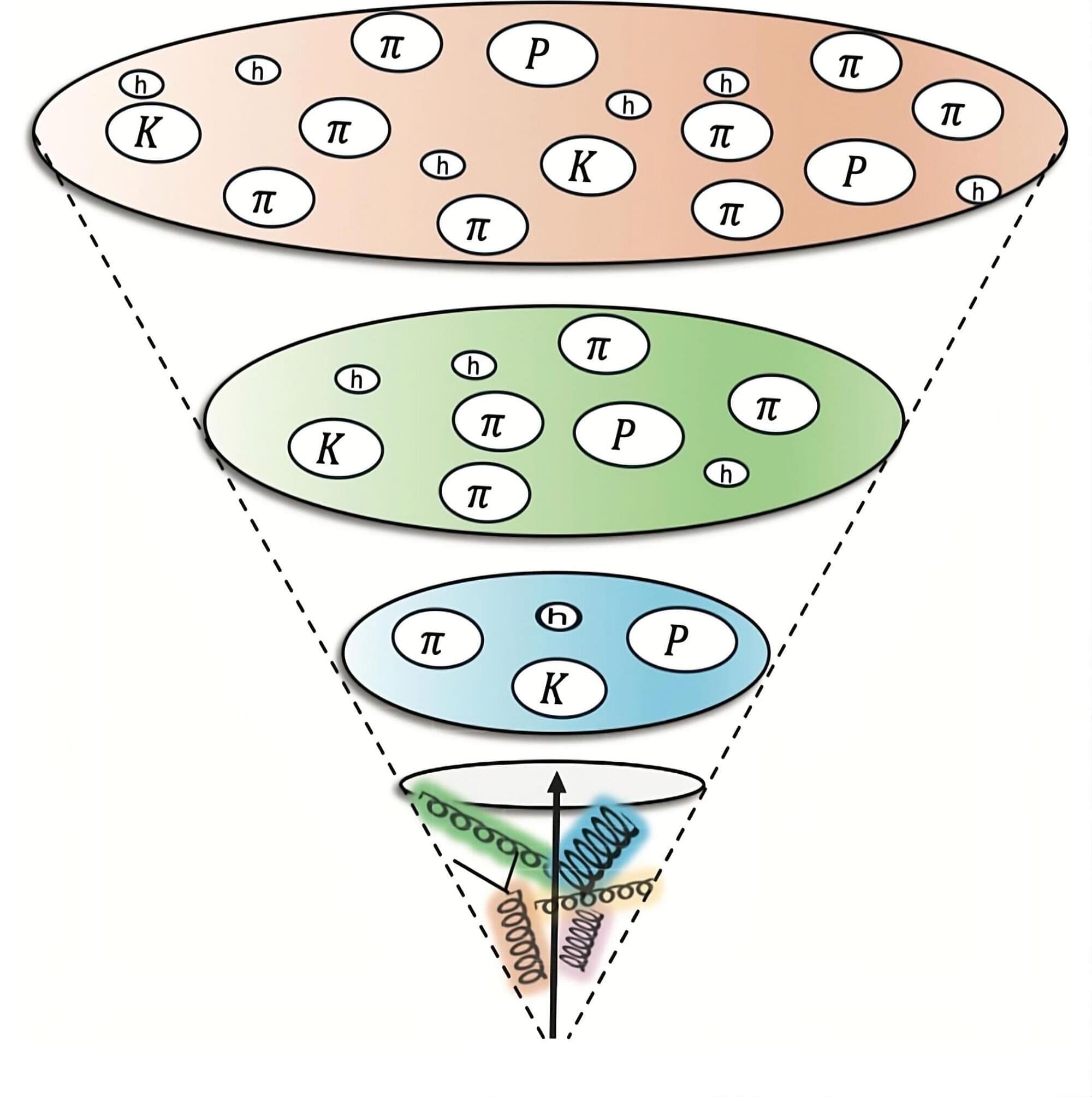
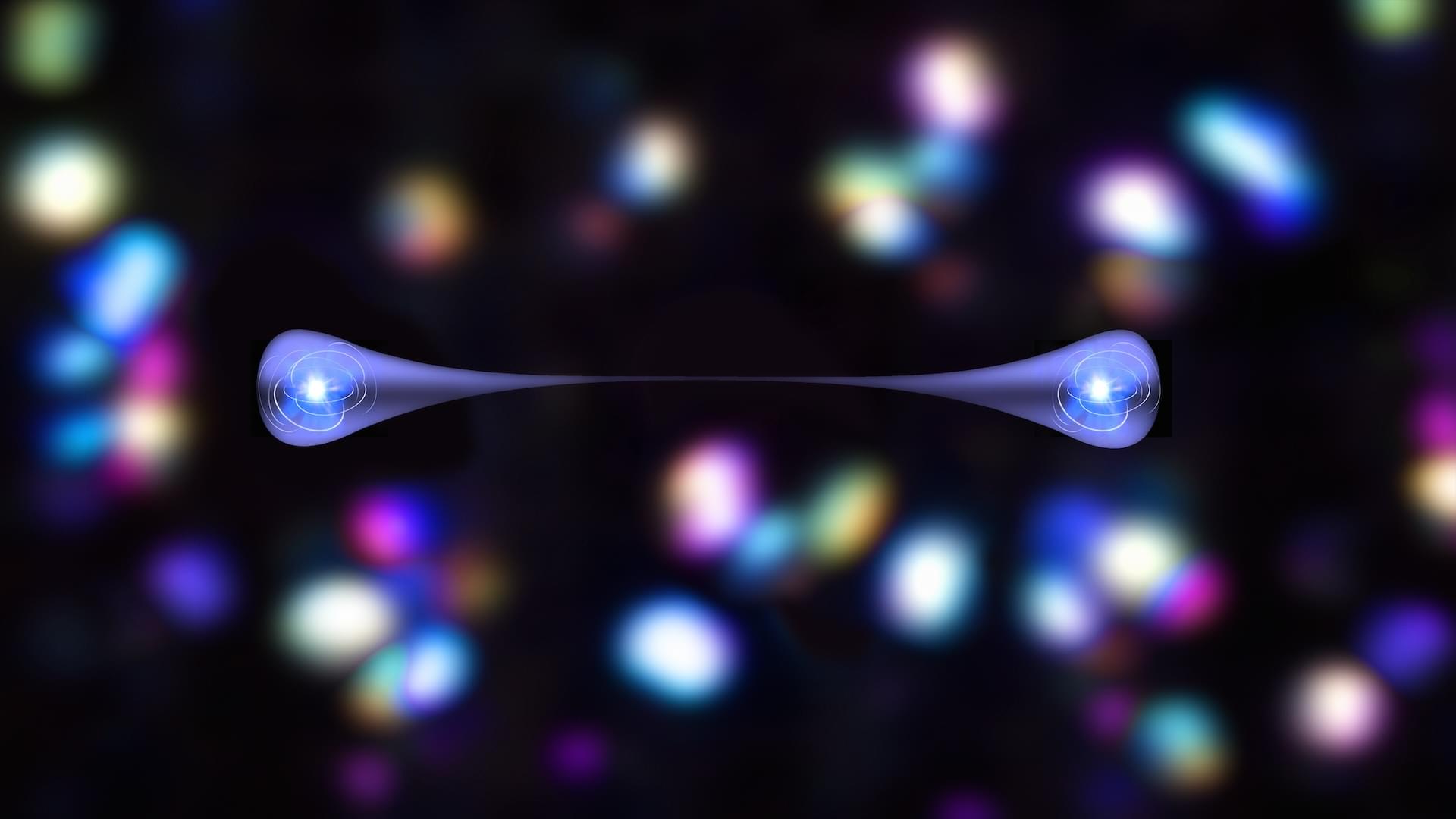
Physicists at the U.S. Department of Energy’s (DOE) Brookhaven National Laboratory and Stony Brook University (SBU) have shown that particles produced in collimated sprays called jets retain information about their origins in subatomic particle smashups. The study was recently published as an Editor’s Suggestion in the journal Physical Review Letters.

“Despite extensive research, the connection between a jet’s initial conditions and its final particle distribution has remained elusive,” said Charles Joseph Naim, a research associate at the Center for Frontiers in Nuclear Science (CFNS) in SBU’s Department of Physics and Astronomy. “This study, for the first time, establishes a direct connection between the ‘entanglement entropy’ at the earliest stage of jet formation and the particles that emerge as a jet evolves.”

The evidence comes from an analysis of jet particles emerging from captured by the ATLAS experiment at the Large Hadron Collider, a 17-mile-circumference circular collider located at CERN, the European Organization for Nuclear Research. In these powerful collisions, the individual building blocks of the colliding protons, known as quarks and gluons, scatter off one another and sometimes get knocked free with enormous amounts of energy. But quarks can’t stay free for long. They and the gluons that normally hold them together immediately begin to split and reconnect through a branching process called fragmentation. The result is the formation of many new composite particles made of pairs or triplicates of quarks—collectively known as hadrons—that spray out of the collision in a coordinated way, that is, as a jet.
“Scientists Stunned as CERN Unveils Tiny Particle”: Groundbreaking Discovery at Large Hadron Collider Sends Shockwaves Through Physics Community

IN A NUTSHELL 🔬 Toponium discovery at CERN could revolutionize our understanding of particle physics. 📊 The CMS collaboration detected an unexpected excess of top quark-antiquark pairs, hinting at this elusive particle. 🚀 If confirmed, toponium would be the smallest hadron ever discovered, challenging existing theories. 🧩 Researchers aim to refine their models and collaborate

Electron transport in bilayer graphene nanoconstrictions patterned using atomic force microscope nanolithography

Here we report on low temperature transport measurements of encapsulated bilayer graphene nano constrictions fabricated employing electrode-free AFM-based local anodic oxidation (LAO) nanolithography. This technique allows for the creation of constrictions as narrow as 20 nm. While larger constrictions exhibit an enhanced energy gap, single quantum dot (QD) formation is observed within smaller constrictions with addition energies exceeding 100 meV, which surpass previous experiments on patterned QDs. These results suggest that transport through these narrow constrictions is governed by edge disorder combined with quantum confinement effects. Our findings introduce electrode-free AFM-LAO lithography as an easy and flexible method for creating nanostructures with tunable electronic properties without relying on patterning techniques such as e-beam lithography. The excellent control and reproducibility provided by this technique opens exciting opportunities for carbon-based quantum electronics and spintronics.

Citation.

Physical Review B

/* */