“It’s all thanks to the sacrifice of the hawk moth Manduca sexta, which is an extremely sensitive smeller, like other moths. When a moth picks up a scent, like that of a flower or a potential mate, the odors bind to proteins inside the antennae, and these proteins in turn activate neurons dedicated to specific chemicals. That means the antennae are producing electrical signals that researchers can tap into. In order to create a sort of moth-drone cyborg, mechanical engineer Melanie Anderson of the University of Washington cold-anesthetized a hawk moth in a freezer before removing its antennae. Then she cut both ends off of a single antenna and attached each to an itty-bitty wire hooked up to an electrical circuit. “A lot like a heart monitor, which measures the electrical voltage that is produced by the heart when it beats, we measure the electrical signal produced by the antenna when it smells odor,” says Anderson, lead author on a recent paper in the journal Bioinspiration and Biomimetics describing the research. “And very similarly, the antenna will produce these spike-shaped pulses in response to patches of odor.””
Researchers slap a living antenna on a drone to give the machine an insanely keen sense of smell. Ladies and gentlemen, meet the “Smellicopter.”
Summary: People with spinal cord injuries have the same brain activity during processing speed tasks as healthy older adults. The findings suggest the theory of accelerated cognitive aging following SCI is correct.
Source: Kessler Foundation.
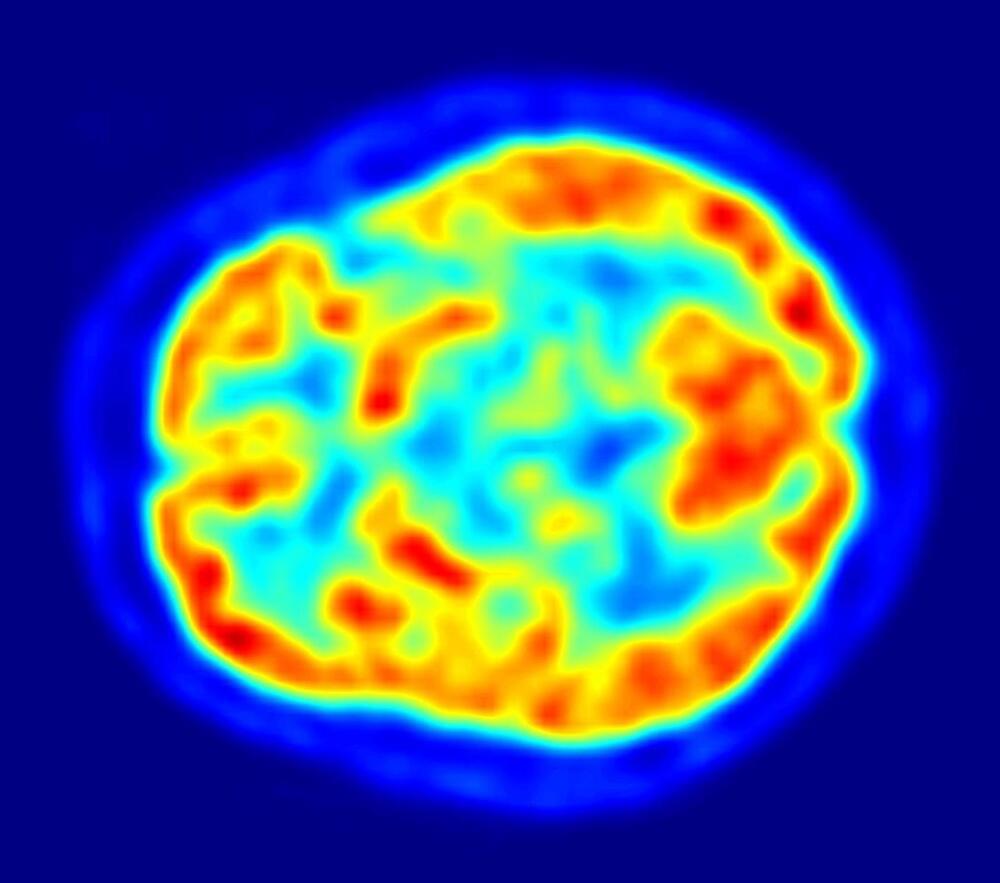
A team of rehabilitation researchers has studied processing speed deficits in individuals with spinal cord injury (SCI), comparing their brain activation patterns with those of healthy age-matched controls, and older healthy individuals. They found that the SCI group and older controls had similar activation patterns, but the SCI group differed significantly from their age-matched controls.
Before the century is out, advances in nanotechnology, nanomedicine, AI, and computation will result in the development of a “Human Brain/Cloud Interface” (B/CI), that connects neurons and synapses in the brain to vast cloud-computing networks in real time.
That’s the prediction of a large international team of neurosurgeons, roboticists, and nanotechnologists, writing in the journal Frontiers in Neuroscience.
A Human Brain/Cloud Interface, sometimes dubbed the “internet of thoughts”, theoretically links brains and cloud-based data storage through the intercession of nanobots positioned at strategically useful neuronal junctions.
Summary: Study supports the theory that highly specialized neurons in the brain are key to translating diverse visual stimuli into behavior.
Source: Max Planck Institute.
Retinal ganglion cells (RGCs) are the bottleneck through which all visual impressions flow from the retina to the brain. A team from the Max Planck Institute of Neurobiology, University of California Berkeley and Harvard University created a molecular catalog that describes the different types of these neurons. In this way, individual RGC types could be systematically studied and linked to a specific connection, function and behavioral response.
Ralph Baric, PhD, is the William R. Kenan, Jr. Distinguished Professor in the Department of Epidemiology and Professor in the Department of Microbiology and Immunology. He is a Harvey Weaver Scholar from the National Multiple Sclerosis Society and an Established Investigator Awardee from the American Heart Association. In addition, he is a World Technology Award Finalist and a fellow of the American Association for Microbiology. He has spent the past three decades as a world leader in the study of coronaviruses and is responsible for UNC-Chapel Hill’s world leadership in coronavirus research. For these past three decades, Dr. Baric has warned that the emerging coronaviruses represent a significant and ongoing global health threat, particularly because they can jump, without warning, from animals into the human population, and they tend to spread rapidly.
The Baric Lab uses coronaviruses as models to study the genetics of RNA virus transcription, replication, persistence, pathogenesis, genetics and cross-species transmission. He has used alphavirus vaccine vectors to develop novel candidate vaccines. Dr. Baric has led the world in recognizing the importance of zoonotic viruses as a potentially rich source of new emerging pathogens in humans, with detailed studies of the molecular, genetic and evolutionary mechanisms that regulate the establishment and dissemination of such a virus within a newly adopted host. Specifically, he works to decipher the complex interactions between the virion and cell surface molecules that function in the entry and cross-species transmission of positive-strand RNA viruses.
In 20172018 and 2019, Dr. Baric was named to Clarivate Analytics’ Highly Cited Researchers list, which recognizes researchers from around the world who published the most widely-cited papers in their field. Also in 2017, he was awarded a grant for more than $6 million from the National Institute of Allergy and Infectious Diseases (NIAID) to accelerate the development of a promising new drug in the fight against deadly coronaviruses, which is currently in clinical trials to reverse COVID-19 disease in humans. In this collaboration, he continued his partnership between the Gillings School and Gilead Sciences Inc. to focus on an experimental antiviral treatment that he had previously shown to prevent the development of severe acute respiratory syndrome coronavirus (SARS-CoV) in mice. The drug also was shown to inhibit MERS-CoV and multiple other coronaviruses (CoV), suggesting that it may actually inhibit all CoV. He continues to work with this drug.
Neuromorphic computing is coming, and it’s based on the way the brain works. In this installment of Brains Behind the Brains, Mike Davies, Director of Neuromorphic Computing at Intel Labs, talks to us about this technology, Intel’s Loihi processors, and how neuromorphic computing will change our world in wonderful ways. https://intel.ly/3hmL0Ip.
About Intel: Intel, the world leader in silicon innovation, develops technologies, products and initiatives to continually advance how people work and live. Founded in 1968 to build semiconductor memory products, Intel introduced the world’s first microprocessor in 1971. This decade, our mission is to create and extend computing technology to connect and enrich the lives of every person on earth.
MEXICO CITY (Reuters) — Mexican authorities said they are studying the case of a 32-year-old female doctor who was hospitalized after receiving the Pfizer-BioNTech COVID-19 vaccine.
The doctor, whose name has not been released, was admitted to the intensive care unit of a public hospital in the northern state of Nuevo Leon after she experienced seizures, difficulty breathing and a skin rash.
“The initial diagnosis is encephalomyelitis,” the Health Ministry said in a statement released on Friday night. Encephalomyelitis is an inflammation of the brain and spinal cord.
Shared last year, but with the talk of future regenerative medicine I think it is important: Regenerative medicine aims to engineer tissue constructs that can recapitulate the functional and structural properties of native organs. Most novel regenerative therapies are based on the recreation of a three-dimensional environment that can provide essential guidance for cell organization, survival, and function, which leads to adequate tissue growth. The primary motivation in the use of conductive nanomaterials in tissue engineering has been to develop biomimetic scaffolds to recapitulate the electrical properties of the natural extracellular matrix, something often overlooked in numerous tissue engineering materials to date. In this review article, we focus on the use of electroconductive nanobiomaterials for different biomedical applications, particularly, very recent advancements for cardiovascular, neural, bone, and muscle tissue regeneration. Moreover, this review highlights how electroconductive nanobiomaterials can facilitate cell to cell crosstalk (i.e., for cell growth, migration, proliferation, and differentiation) in different tissues. Thoughts on what the field needs for future growth are also provided.
In this talk, Anil looks into the mechanisms at play when experiencing both inner and outer phenomena, the central components of which are prediction and perception.
Anil Seth is Professor of Cognitive and Computational Neuroscience at the University of Sussex, and the Co-Director of the Sackler Centre for Consciousness Science. He is a Wellcome Trust Engagement Fellow, and a Senior Fellow of the Canadian Institute for Advanced Research. Professor Seth is Editor-in-Chief of Neuroscience of Consciousness, sits on the steering group and advisory board of the Human Mind Project, and was President of the British Science Association Psychology Section in 2017.
He is the co-author of the ‘30 Second Brain’, and contributes regularly to a variety of media including New Scientist, The Guardian, and the BBC. His 2017 TED talk has been viewed more than 9 million times. Professor Seth’s research bridges neuroscience, mathematics, artificial intelligence, computer science, psychology, philosophy and psychiatry. He has also worked extensively with playwrights, dancers and other artists to shape a truly humanistic view of consciousness and self. You can keep up to date with his work at www.anilseth.com.