Enjoy the talk given by Liz Parrish on June 14, 2022 during the Digital Enterprise Show 2022. The event took place from June 14th to the 16th in Málaga, Spain.
BioViva Science is using bioinformatics to improve gene therapies to enhance healthy human longevity and combat age-related diseases like Alzheimer’s, diabetes, cancer, and heart disease. TimeKeeper™ is an epigenetic clock and the BioViva BioVault™ is a bioinformatics database for researchers and consumers.
Understanding the mind and how thinking occurs has been a challenge for philosophers, scientists, theorists, educators, and artists throughout history. Until recently, ideas about how we learn have been mainly theoretical and intuitive. However, with ongoing advances in neuroscience, considerable progress is occurring. As a result, a paradigm shift is taking hold in human cognition, pointing to a new science-based understanding about the way we think and, ultimately, the way we learn.
This paradigm shift — a move away from traditional notions of the mind to an “embodied cognition” model of human thinking and learning — is the subject of a new book “Movement Matters: How Embodied Cognition Informs Teaching and Learning”. The book is summarised as follows:
“Experts translate the latest findings on embodied cognition from neuroscience, psychology, and cognitive science to inform teaching and learning pedagogy.”
This London Futurists webinar featured the co-editors of this book, Sheila Macrine, Professor of STEM Education & Teacher Development at the University of Massachusetts, Dartmouth, and Jennifer Fugate, Associate Professor in the Department of Health Service Psychology, at Kansas City University.
In the webinar, professors Macrine and Fugate highlighted key implications of this improved understanding for the future of teaching and learning, and answered audience questions.
The webinar was recorded on Saturday 18th June 2022. It was introduced and moderated by David Wood, Chair of London Futurists.
Scientists have created the first reference charts for the human brain, mapping its growth from infancy to 100 years old. Now, they have to grapple with difficult ethical questions about how they should — and perhaps shouldn’t — be used.
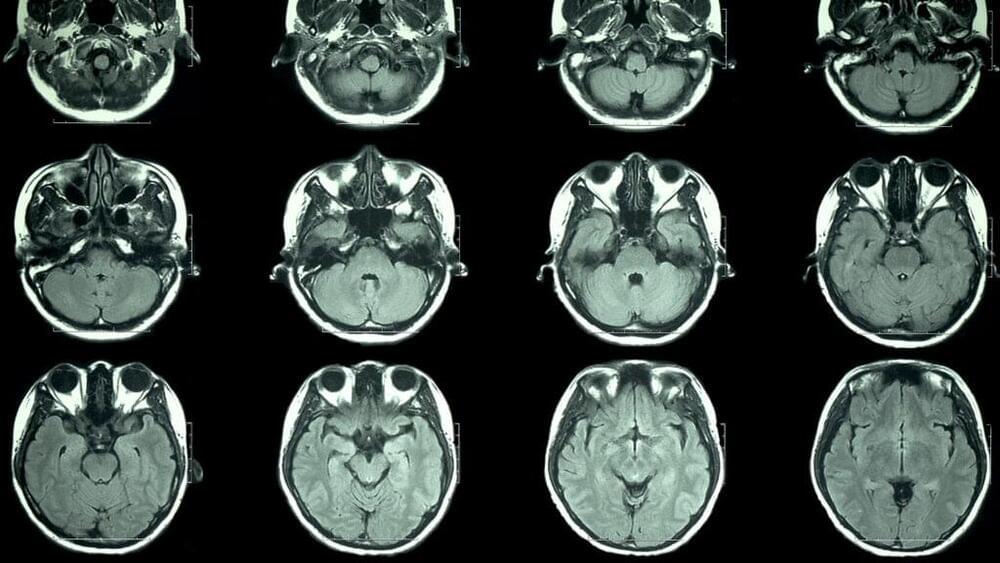
The reference charts are visualizations created from aggregating analyses of over 120,000 brain scans to show ranges in brain size, or gray matter volume, for each age. They also track the human brain’s rapid expansion early in life and its gradual shrinking over time. The researchers primarily developed the charts to provide a standardized measurement that other neuroscientists could use for brain imaging research, with the hope that maybe one day it could lead to a tool used in clinics.
“It’s an absolutely spectacular advancement in neuroscience and neuroimaging,” said Judy Illes, professor of neurology and neuroethics at the University of British Columbia.
Gene therapy shows promise for clinical benefit in demyelinating, neurodegenerative disease.
Krabbe disease is an aggressive, incurable pediatric neurodegenerative disease caused by mutations in the galactosylceramidase (GALC) gene. Deficiency of the GALC protein activity leads to cytotoxic accumulation of a cellular metabolite called psychosine, which compromises normal turnover of myelin in the central and peripheral nervous system (CNS, PNS). The ensuing damage leads to progressive disease, including paralysis, loss of sensory functions and death, in the developing infant. The incidence of Krabbe disease is estimated at 1 in 100,000 live births.
The standard of care for presymptomatic babies is hematopoietic stem cell transplantation (HSCT); however, the morbidity and mortality of HSCT is high due to the strong ablative chemotherapy just after birth, and notably, this treatment is not curative. Furthermore, affected babies must be diagnosed and receive HSCT prior to symptom onset, typically a mere 4 weeks of age. No standard of care has been established for post-symptomatic treatment of the disease.
With 17.3 million adult Americans affected, depression is one of the most prevalent mental disorders in the country. A gloomy or depressed mood that lasts for two weeks or more is considered major depression.
Depression is distinct from common mood swings and brief emotional reactions to problems in daily life. Depression may develop into a serious medical condition, particularly if it is recurring and of moderate to severe intensity. The afflicted individual may experience severe suffering and perform badly at work, in school, and with family. In the worst cases, depression might result in suicide.
Since its introduction in the late 1980s to prevent heart attack and stroke, statins have been hailed as a wonder drug and prescribed to tens of millions of individuals. However, some research has suggested that the medications may still have other benefits, particularly those for mental health. A recent study investigates the impact of statins on the emotional bias, a risk factor for depression. The study appears in Biological Psychiatry and was published by Elsevier.
From the engine in your car to the components in your laptop, mechanical systems tend to heat up when they’re working harder. Now new research has revealed that the same can be said of the brain – and it runs hotter than was previously thought.
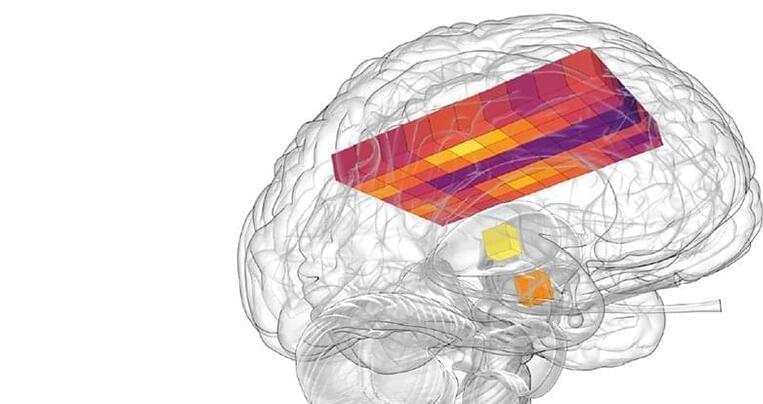
Some parts of the deep brain can get up to 40 °C (104 °F), a new study shows, though this varies by sex, time of day, and various other factors. Compare that with the average oral temperature in human bodies, which is typically under 37 °C (98.6 °F).
This isn’t a sign of malfunctioning though, researchers think, and may actually be evidence that the brain is operating healthily. Unusual heat signatures could potentially be used in the future to look for signs of brain damage or disorder.
The origin of consciousness is one of the greatest mysteries of science. One proposed solution, first suggested by Nobel Laureate and Oxford mathematician Roger Penrose and anesthesiologist Stuart Hammeroff, at Arizona State University, in Tucson, attributes consciousness to quantum computations in the brain. This in turn hinges on the notion that gravity could play a role in how quantum effects disappear, or “collapse.” But a series of experiments in a lab deep under the Gran Sasso mountains, in Italy, has failed to find evidence in support of a gravity-related quantum collapse model, undermining the feasibility of this explanation for consciousness. The result is reported in the journal Physics of Life Reviews.
“How consciousness arises in the brain is a huge puzzle,” says Catalina Curceanu, a member of the physics think tank, the Foundational Questions Institute, FQXi, and the lead physicist on the experiments at INFN in Frascati, Italy. “There are many competing ideas, but very few can be experimentally tested.”
Quantum physics famously tells us that cats can be alive and dead at the same time, at least in theory. Yet in practice we never see felines locked in such an unfortunate limbo state. One popular explanation for why not is because the “wavefunction” of a system–its quantum character allowing it to be in two contradictory states simultaneously–is more likely to “collapse” or be destroyed if it is more massive, leaving it in one defined state, either dead or alive, say, but not both at the same time. This model of collapse, related to gravity acting on heavy objects like cats, was invoked by Penrose and Hammeroff when developing their model of consciousness, ‘Orch OR theory’ (the Orchestrated Objective Reduction theory), in the 1990s.