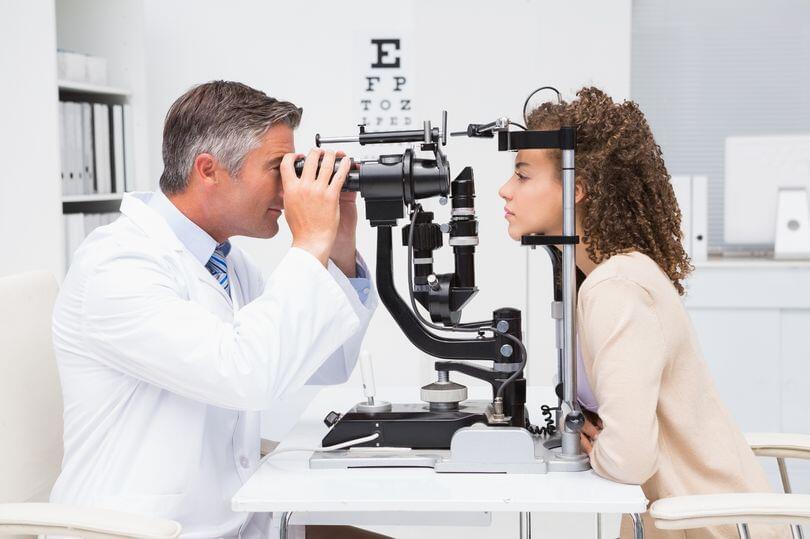
A groundbreaking study suggests a simple eye test could pick up on signs if someone is at risk of having a stroke. The research suggests that by analyzing the blood vessels in the retina, it’s possible to forecast an individual’s likelihood of having a stroke.
The retinal vascular network reflects characteristics similar to those found in the brain’s vasculature. Scientists can learn a lot about a person’s overall health by examining factors like the density, curliness, and branching angles of the veins and arteries in the eye.
In an extensive study involving over 45,000 participants from the UK Biobank, researchers analyzed eye images and followed the subjects for an average of 13 years, during which 749 suffered a stroke, reports Daily Express UK.
Based on how an AI model transcribes audio into text, the researchers behind the study could map brain activity that takes place during conversation more accurately than traditional models that encode specific features of language structure — such as phonemes (the simple sounds that make up words) and parts of speech (such as nouns, verbs and adjectives).
The model used in the study, called Whisper, instead takes audio files and their text transcripts, which are used as training data to map the audio to the text. It then uses the statistics of that mapping to “learn” to predict text from new audio files that it hasn’t previously heard.
00:00 Intro. 00:20 José Delgado’s beginnings with BCIs. 00:42 Use of BCI to reduce aggression. 00:57 How the brain and nerve cells work. 03:00 Stimulation of brain areas (motor cortex) 03:51 How Utah arrays works! 05:16 Measurement of voltage peaks (spikes) 06:06 How the Neuralink N1 works! 08:20 How the Stentrode by Synchron works! 09:40 The future of exoskeletons. 09:53 Are we becoming machines ourselves?
New in JNeurosci: Klein et al. characterized changes in the brain as people age and discovered that neural changes in teenagers may predict how decision-making and behavioral control develop.
▶️
Seminal studies in animal neuroscience demonstrate that frontostriatal circuits exhibit a ventral-dorsal functional gradient to integrate neural functions related to reward processing and cognitive control. Prominent neurodevelopmental models posit that heightened reward-seeking and risk-taking during adolescence result from maturational imbalances between frontostriatal neural systems underlying reward processing and cognitive control. The present study investigated whether the development of ventral (VS) and dorsal (DS) striatal resting-state connectivity (rsFC) networks along this proposed functional gradient relates to putative imbalances between reward and executive systems posited by a dual neural systems theory of adolescent development. 163 participants aged 11–25 years (54% female, 90% white) underwent resting scans at baseline and biennially thereafter, yielding 339 scans across four assessment waves. We observed developmental increases in VS rsFC with brain areas implicated in reward processing (e.g., subgenual cingulate gyrus and medial orbitofrontal cortex) and concurrent decreases with areas implicated in executive function (e.g., ventrolateral and dorsolateral prefrontal cortices). DS rsFC exhibited the opposite pattern. More rapid developmental increases in VS rsFC with reward areas were associated with developmental improvements in reward-based decision making, whereas increases in DS rsFC with executive function areas were associated with improved executive function, though each network exhibited some crossover in function. Collectively, these findings suggest that typical adolescent neurodevelopment is characterized by a divergence in ventral and dorsal frontostriatal connectivity that may relate to developmental improvements in affective decision-making and executive function.
Significance Statement Anatomical studies in nonhuman primates demonstrate that frontostriatal circuits are essential for integration of neural functions underlying reward processing and cognition, with human neuroimaging studies linking alterations in these circuits to psychopathology. The present study characterized the developmental trajectories of frontostriatal resting state networks from childhood to young adulthood. We demonstrate that ventral and dorsal aspects of the striatum exhibit distinct age-related changes that predicted developmental improvements in reward-related decision making and executive function. These results highlight that adolescence is characterized by distinct changes in frontostriatal networks that may relate to normative increases in risk-taking. Atypical developmental trajectories of frontostriatal networks may contribute to adolescent-onset psychopathology.
Please join my mailing list here 👉 https://briankeating.com/list to win a meteorite 💥 Sabine (@SabineHossenfelder) argues that superdeterminism eliminates free will, challenging the idea of causal choice and possibly undermining science if the laws of physics govern all phenomena. However, inspired by daily life experiences in Southern California, I present a defense of indeterminism, countering the claim that everything is predetermined, while also exploring the ideas of cosmologists Raphael Bousso and Alan Guth.
Sabine Hossenfelder, a theoretical physicist, has argued in favor of superdeterminism, a theory that suggests the universe is deterministic and that our choices are predetermined.
According to her, the apparent randomness in quantum mechanics is an illusion, and the universe is actually a predetermined, clockwork-like system. She claims that if we knew enough about the initial conditions of the universe, we could predict every event, including human decisions.
Hossenfelder’s argument relies on the idea that the randomness in quantum mechanics is not fundamental, but rather a result of our lack of knowledge about the underlying variables. She suggests that if we could access these “hidden variables,” we would find that the universe is deterministic. However, this argument is flawed.
For example, consider the double-slit experiment, where particles passing through two slits create an interference pattern on a screen. Hossenfelder would argue that the particles’ behavior is predetermined, and that the apparent randomness is due to our lack of knowledge about the initial conditions. However, this ignores the fact that the act of observation itself can change the outcome of the experiment, a phenomenon known as wave function collapse.
The eyes can reveal a lot about the health of our brain. Indeed, problems with the eyes can be one of the earliest signs of cognitive decline.
Our latest study shows that a loss of visual sensitivity can predict dementia 12 years before it is diagnosed.
Our research was based on 8,623 healthy people in Norfolk, England, who were followed up for many years. By the end of the study, 537 participants had developed dementia, so we could see what factors might have preceded this diagnosis.