Toggle light / dark theme

Transcranial direct current stimulation can boost language comprehension: Stimulation of the brain’s left angular gyrus enhanced the comprehension of simple, two-word phrases

How the human brain processes the words we hear and constructs complex concepts is still somewhat of a mystery to the neuroscience community. Transcranial direct current stimulation (tDCS) can alter our language processing, allowing for faster comprehension of meaningful word combinations, according to new research from the department of Neurology the Perelman School of Medicine at the University of Pennsylvania. The work is published in the Journal of Neuroscience.

“Integrating conceptual knowledge is one of the neural functions fundamental to human intelligence,” said the study’s first author Amy Price, a neuroscience graduate student at Penn. “For example, when we read or listen to a sentence, we need to combine, or integrate, the meaning of the words to understand the full idea of the sentence. We perform this process effortlessly on a daily basis but it is quite a complex process and little is known about the brain regions that support this ability.”

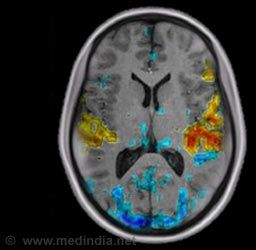
Semantic memory is our stored knowledge about the world, such as the meaning of words and objects. “We sought to understand how and in what part of the brain semantic representations are integrated into more complex ideas” said senior author Roy Hamilton, MD, MS, an assistant professor in the departments of Neurology and Physical Medicine & Rehabilitation, and director of the Laboratory for Cognition and Neural Stimulation at Penn. Recent findings from functional MRI scans (fMRI) and magnetoencephalography (MEG) have suggested the angular gyrus, a region of the brain known to be involved in language, number processing and spatial cognition, memory retrieval and attention, as a potential hub for semantic memory integration, specifically the left angular gyrus.

IBM’s brain-inspired chip TrueNorth changes how computers ‘think,’ but experts question its purpose

I see great potential for the TrueNorth chip as we migrate towards Quantum & Singularity. TrueNorth is an interim chip that assists researchers, engineers, etc. in their efforts to mimic the human brain’s nuero sensors and processing for robotics, BMI technology, etc.


The new IBM supercomputer chip mimics the human brain by using an architecture with 1 million neurons. Nevertheless, its true purpose remains in question for a project with massive public funding.

Human Brain Project’s Research Platforms Released

30.03.16 — Public Release of Platforms Will Help Advance Collaborative Research in Neuroscience, Medicine, and Computing

The Human Brain Project (HBP) is pleased to announce the release of initial versions of its six Information and Communications Technology (ICT) Platforms to users outside the Project. These Platforms are designed to help the scientific community to accelerate progress in neuroscience, medicine, and computing.

The Platforms released today consist of prototype hardware, software tools, databases and programming interfaces, which will be refined and expanded in a collaborative approach with users, and integrated within the framework of a European Research Infrastructure. The public release of the Platforms represents the end of the Ramp-Up Phase of the HBP and the beginning of the Operational Phase.

Salesforce: Future Works

Our sponsors provide financial support for this website. We endeavour to give our sponsors the opportunity to communicate their messages in placements that are clearly demarcated. Such placements are clearly labelled as Advertisement, Advertisement feature, Sponsored content, Sponsor’s perspective, “Brought to you by” the sponsor or words to that effect. Occasionally, we group together content from various sources relating to the same topic. In cases where content from The Economist Group is included, it will be clearly labelled as from The Economist or Economist Intelligence Unit. At all times there is a clear division between our editorial staff and sponsors, and sponsors are never allowed to influence what our editorial teams write. Sponsors are solely responsible for their content, and their views do not necessarily reflect those of The Economist.

Invading the brain to understand and repair cognition

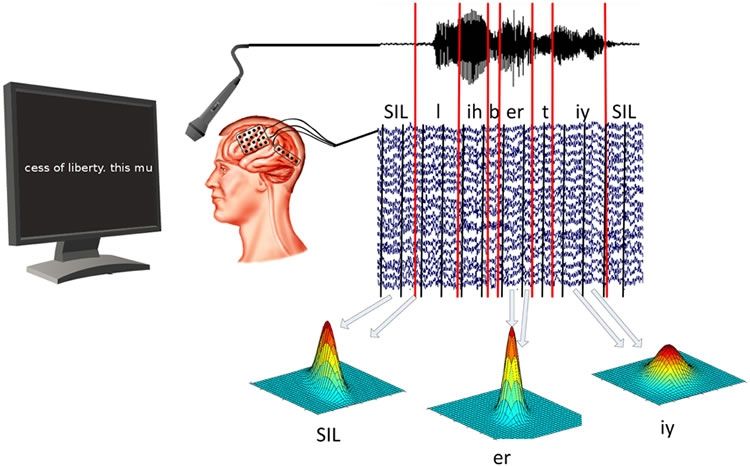
April 5, 2016, New York — People are using brain-machine interfaces to restore motor function in ways never before possible — through limb prosthetics and exoskletons. But technologies to repair and improve cognition have been more elusive. That is rapidly changing with new tools — from fully implantable brain devices to neuron-eavesdropping grids atop the brain — to directly probe the mind.

These new technologies, being presented today at the Cognitive Neuroscience Society (CNS) annual conference in New York City, are mapping new understandings of cognition and advancing efforts to improve memory and learning in patients with cognitive deficits.

Eavesdropping on neurons

“A new era” of electrophysiology is now upon us, says Josef Parvizi of Stanford University who is chairing the CNS symposium on the topic. “We have gotten a much sharper view of the brain’s electrophysiological activity” using techniques once relegated to science fiction.

Scientists identify neurons that help you process emotions

Scientists just got one step closer to understanding the nuts and bolts of how your mind handles emotions. An MIT team has identified two neural connections in the brain’s amygdala regions that process positive and negative emotional events. By tagging neuron groups with a light-sensitive protein, they discovered that the neurons form parallel but complex channels that respond differently to given situations. Some neurons within one of those connection will be excited by a feeling, while others will be inhibited — the combination of those reactions in a given channel may determine the emotion you experience.

It’s still early days. The researchers need to explore specific neuron populations in-depth to see how they’re connected, and they have to clearly define the larger neural circuits. If they succeed, though, they might help explain how mental health issues operate. Anxiety and depression might not fire the neurons that normally go off when you’re happy, for instance. The discoveries could lead to more effective treatments that restore your natural reactions.

/* */