“But as a neuroscientist and psychologist, I have no use for the soul. On the contrary, all functions attributable to this kind of soul can be explained by the workings of the brain.”
In an astonishing breakthrough, patients left paralysed by severe spinal cord injuries have recovered the ability to move their legs after training with an exoskeleton linked to their brain – with one even able to walk using two crutches.
Scientists developed the Walk Again Project, based in Sao Paulo, Brazil, thinking that they could enable paraplegics to move about using the exoskeleton controlled by their thoughts. But they were surprised to discover that during the training, the eight patients all started to regain the sense of touch and movement below the injury to their spine. It was previously thought that the nerves in seven of the patients’ spines had been completely severed.
But the researchers now believe that a few nerves survived and these were reactivated by the training, which may have rewired circuits in the brain. Writing in the journal Scientific Reports, they said: “While patient one was initially not even able to stand using braces when placed in an orthostatic posture, after 10 months of training the same patient became capable of walking using a walker, braces and the assistance of one therapist. “At this stage, this patient became capable of producing voluntary leg movements mimicking walking, while suspended overground.
Think of a situation where you had bulletproof facts, reason, and logic on your side, and believed there was absolutely no way the other person could say no to your perfectly constructed argument and proposal. To do so would be impossible, you figured, because there was no other logical solution or answer.
And then the other person dug in his heels and refused to budge. He wasn’t swayed by your logic. Were you flabbergasted?
This is similar to what many negotiators do when they sit down at the table to hammer out a deal. They come armed with facts, and they attempt to use logic to sway the other party. They figure that by piling on the data and using reason to explain their side of the situation, they can construct a solution that is simply irrefutable—and get the other party to say yes.
The U.S. Department of State’s Office of the Science and Technology Adviser to the Secretary of State along with the Kavli Foundation; the U.S. National Science Foundation and the Global Partnerships Forum hosted the event that launched the brain initiative during the 71st Session of the UN General Assembly to elevate brain science as a foreign policy priority.
The International Brain Initiative aims to foster coordination of large-scale brain projects around the world in partnership with governments, research institutions, private sector, foundations, advocacy groups, and social innovators.
Toward this end, the United States with Japan, Germany, Argentina and the UN Conference on Trade and Development announced the launch of the International Brain Initiative, part of which is a virtual International Brain Station to enhance and facilitate global collaboration on both basic and disease-focused brain science research.
A brief introduction about brain research.
The human brain is more complex and has far more capacity than a billion dollar computer. So far the research done on the brain is still in its nascent stages. What mysteries and secrets it holds for humanity in the future remains one of the big questions.
The 21st century has been called the “Century of the Mind”. Research into the functions and capabilities of the wonderful organ that is the human brain will skyrocket with duration as mankind enters a new era in discovery and invention.
Microsoft has announced to solve’ cancer within the next decade by ‘reprogramming’ diseased cells like computer virus.
Researchers were able to prevent the death of neurons that causes ALS by introducing a genetic mutation to prevent the SOD1 protein from clumping.
The growing resistance of Gonorrhea, alarmed the researchers.
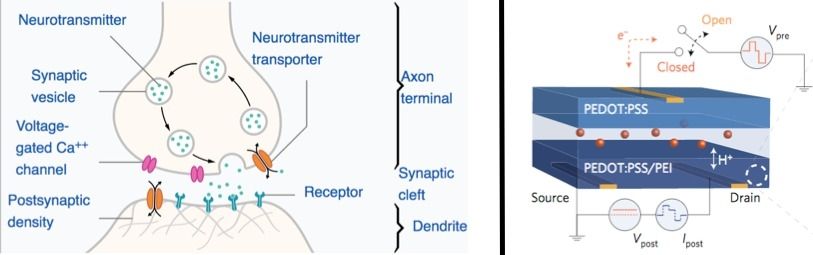
Scientists at IBM have claimed a computational breakthrough after imitating large populations of neurons for the first time.
Neurons are electrically excitable cells that process and transmit information in our brains through electrical and chemical signals. These signals are passed over synapses, specialised connections with other cells.
It’s this set-up that inspired scientists at IBM to try and mirror the way the biological brain functions using phase-change materials for memory applications.
Just hearing two languages helps babies develop cognitive skills before they even speak. Here’s how — and how you can help them develop those skills.
Alan gatherer, editor in chief, comsoc technology news
After their article a couple of months ago, I asked the good folks at BWRC to expand on the work they are doing in implantable electronics, as well as its potential health implications. BWRC’s approach focuses not only on functionality but on battery-free, extreme miniaturization and wireless access for very specific quantification of the host health. They also point us toward a future where such devices might link up and literally talk about you behind (as well as under and inside) your back. Hope you enjoy, and comments as always are welcome.
Jan M. Rabaey and Rikky Muller, BWRC.