Toggle light / dark theme

How Technology Changes the Way We Diagnose and Treat Mental Illness

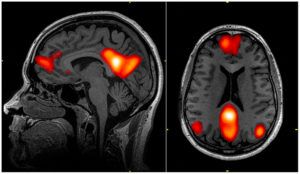
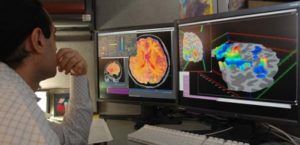
As recently as 50 years ago, psychiatry lacked a scientific foundation, the medical community considered mental illness a disorder of the mind, and mental patients were literally written off as “sick in the head.” A fortunate turn in progress has yielded today’s modern imaging devices, which allow neuroscientists and psychiatrists to examine the brain of an individual suffering from a mental disorder and provide the best treatment options. In a recent interview, Columbia University Psychiatry Chair Dr. Jeffrey Lieberman stated that new research into understanding the mind is growing at an accelerated pace.

(iStock)

Lieberman noted that, just as Galileo couldn’t prove heliocentrism until he had a telescope, psychiatry lacked the technological sophistication, tools, and instruments necessary to get an understanding of the brain until the 1950s. It wasn’t until the advent of psychopharmacology and neuroimaging, he said, that researchers could look inside the so-called black box that is the brain.

“(It began with) the CAT scan, magnetic resonance imaging (MRI) systems, positron emission tomography (PET scans) and then molecular genetics. Most recently, the burgeoning discipline of neuroscience and all of the methods within, beginning with molecular biology and progressing to optogenetics, this capacity has given researchers the ability to deconstruct the brain, understand its integral components, its mechanisms of action and how they underpin mental function and behavior,” Lieberman said. “The momentum that has built is almost like Moore’s law with computer chips, (and) you see this increasing power occurring with exponential sort of growth.”

Specifically, the use of MRIs and PET scans has allowed researchers to study the actual functional activity of different circuits and regions of the brain, Lieberman noted. Further, PET scans provided a look at the chemistry of the brain, which has allowed for the development of more sophisticated pathological theories. These measures, he said, were used to develop treatments while also allowing measurement of the effectiveness of both medication-based therapies and psychotherapies.

As an example, Lieberman cited the use of imaging in the treatment of post-traumatic stress disorder (PTSD). The disorder, a hyperarousal that chronically persists even in the absence of threatening stimulation, is treated through a method called desensitization. Over time, researchers have been able to fine-tune the desensitization therapies and treatments by accessing electronic images of the brain, which can show if there’s been a reduction in the activation of the affected amygdala.

Lieberman noted that despite progress in this area, technology has not replaced interaction with the individual patient; however, as technology continues to evolve, he expects the diagnoses of mental disorders to be refined.

“By the use of different technologies including genetics (and) imaging, including electrophysiological assessments, which are kind of EEG based, what we’ll have is one test that can confirm conditions that were previously defined by clinical description of systems,” Lieberman said. “I think, of all the disciplines that will do this, genetics will be the most informative.”

Just as genetics is currently used to diagnose cancer using anatomy and histology, Lieberman said the expanding field is helping researchers distinguish mental illness in individuals with certain genetic mutations. He expects that in the future, doctors will use “biochips” to routinely screen patients and provide a targeted therapy against the gene or gene product. These chips will have panels of genes known to be potentially associated with the risk for mental illness.

“Someone used the analogy of saying the way we treat depression now is as if you needed to put coolant into your car. Instead of putting it into the radiator, you just dump it on the engine,” he said. “So genetics will probably be the most powerful method to really tailor to the individual and use this technique of precision and personalized medicine.”

Lieberman also sees additional promise in magnetic stimulation, deep brain stimulation through the surgical implanting of electrodes, and optogenetics. Though he has plenty of optimism for these treatments and other potential treatments for mental illness, much of their continued growth may hinge on government policy and budgets. Recent coverage of gun violence in the United States, and a public call for better means by which to screen individuals for mental health inflictions, may be an unfortunate catalyst in moving funding forward in this research arena. A recent article from the UK’s Telegraph discusses Google’s newfound interest in this research, with former US Head of the National Institute of Mental Health now in a position at Google Life Sciences.

“Science, technology and healthcare are doing very well, but when it comes to the governmental process, I think we’re in trouble,” he said. “A welcome development in this regard is President Obama’s Human Brain Initiative, which if you look at the description of it, (is) basically to develop new tools in neurotechnology that can really move forward in a powerful way of being able to measure the function of the brain. Not by single cells or single circuits, but by thousands or tens of thousands of cells and multiple circuits simultaneously. That’s what we need.”

Big Data And Quantum Computers

Luv the whole beautiful picture of a Big Data Quantum Computing Cloud. And, we’re definitely going to need it for all of our data demands and performance demands when you layer in the future of AI (including robotics), wearables, our ongoing convergence to singularity with nanobots and other BMI technologies. Why we could easily exceed $4.6 bil by 2021.


From gene mapping to space exploration, humanity continues to generate ever-larger sets of data—far more information than people can actually process, manage, or understand.

Machine learning systems can help researchers deal with this ever-growing flood of information. Some of the most powerful of these analytical tools are based on a strange branch of geometry called topology, which deals with properties that stay the same even when something is bent and stretched every which way.

Such topological systems are especially useful for analyzing the connections in complex networks, such as the internal wiring of the brain, the U.S. power grid, or the global interconnections of the Internet. But even with the most powerful modern supercomputers, such problems remain daunting and impractical to solve. Now, a new approach that would use quantum computers to streamline these problems has been developed by researchers at MIT, the University of Waterloo, and the University of Southern California…

Read more

[1601.02970] Deep Neural Networks predict Hierarchical Spatio-temporal Cortical Dynamics of Human Visual Object Recognition

More insights for AI research.


The complex multi-stage architecture of cortical visual pathways provides the neural basis for efficient visual object recognition in humans. However, the stage-wise computations therein remain poorly understood. Here, we compared temporal (magnetoencephalography) and spatial (functional MRI) visual brain representations with representations in an artificial deep neural network (DNN) tuned to the statistics of real-world visual recognition. We showed that the DNN captured the stages of human visual processing in both time and space from early visual areas towards the dorsal and ventral streams. Further investigation of crucial DNN parameters revealed that while model architecture was important, training on real-world categorization was necessary to enforce spatio-temporal hierarchical relationships with the brain. Together our results provide an algorithmically informed view on the spatio-temporal dynamics of visual object recognition in the human visual brain.

Read more

A tiny device inside of mice sends light to nerves

Interesting


Scientists have implanted a wireless device the size of a peppercorn inside mice to stimulate nerves.

The technique combines optogenetics—using light to control the activity of the brain—with a newly developed method for wirelessly powering implanted devices. It’s described in a paper published in Nature Methods.

“This is a new way of delivering wireless power for optogenetics,” says Ada Poon, an assistant professor of electrical engineering at Stanford University. “It’s much smaller and the mouse can move around during an experiment.”

Read more

‘The Terminator Conundrum’: Pentagon Weighs Ethics of Pairing Deadly Force, AI

DoD spending $12 to $15 billion of its FY17 budget on small bets that includes NextGen tech improvements — WOW. Given the DARPA new Neural Engineering System Design (NESD); guessing we may finally have a Brain Mind Interface (BMI) soldier in the future.


The Defense Department will invest the $12 billion to $15 billion from its Fiscal Year 2017 budget slotted for developing a Third Offset Strategy on several relatively small bets, hoping to produce game-changing technology, the vice chairman of the Joint Chiefs of Staff said.

Read more

Ray Kurzweil keynote and panel at Nobel Week Dialog from the Nobel Prize

Dear readers,

I had the honor of speaking on the future of technology at the Nobel Prize gatherings in Gothenburg, Sweden. Every year, the Nobel Prize picks a theme of interest to the world on the state of sciences in different arenas. This year’s theme was the future of intelligence, with a focus on different technologies that are changing our ability to see and understand large sets of information and create computer systems that might reach human level thinking — I believe that progress is accelerating.

I enjoyed giving the keynote and participating in panel discussions with interesting colleagues during the day long event called Nobel Week Dialog, which takes place the week of the Nobel Prize awards. The day is open to the public and hosts top scientific thinkers presenting on the future of innovation and knowledge. I also attended the gala and awards ceremony — a spectacular display of the power of ideas and research helping the world to progress and solve serious challenges.

Read more

Why Morphological Freedom Is a Fantasy: Your Body Isn’t Just Your Own

I must admit some of the information in this article is making me scratch my head a lttle. However, I do believe that many of us who wish to remain relevant in the future (especially in industry and government) will find ourselves requiring a Brain Mind Interface (BMI) of some sort whether it’s an implant or nanobot; folks will find that they have to have one in order to work or function in society.


Transhumanists claim complete freedom to modify their bodies, but that absolutist stance could endanger future generations.

Read more

Brain tumor removed without surgery at Apollo hospital

Can you say “amazing” — brain tumor removed without surgery.


The Neurosurgery wing of the Local Apollo hospital here successfully conducted a rare, modern at the same time sensitive method of removal of a brain tumor tissue for diagnosis sending a small needle deep in to the brain without opening the skull and anesthesia. This sophisticated and critical process known as ‘Stereotactic Biopsy was conducted on a 50 year old woman Thalari Chinnammayi, without any complications and with hardly two days of hospitalization. Claiming such Biopsy application as the first of its kind in Coastal Andhra region, Dr M V Kiran Kumar senior consultant Neuro surgeon of Apollo hospital, said it would involve less expenditure and almost risk free and not warrant a repeated biopsy. Presenting the patient before the press persons here today, he said, she was suffering from chronic headache for the past one month and during clinical examination it was found she was having small tumor in the brain that too in a very deep lesion.‘ The tumor in size of 1.5x 2cms was located in the left side of the brain at a place called as Caudate Nucleus. A small piece of brain tissue was removed by performing stereotactic biopsy and during examination it was diagnosed as grade-3 Anaplastic Astrocytoma (cancerous growth). She was referred to Oncologist for treatment either by chemo therapy or Radiation he added. Dr C Suryaprakasarao Medical director of the hospital said that the Neurology department was strengthened by acquiring modern sophisticated equipment besides appointing Dr Kamaraju as a Neuro physician. I. V.V Ramana hospital chief administrator said that they were going to introduce the ‘Deep brain stimulation therapy utilising the expertise of Dr Kiran Kumar. UNI XR/DP KVV AK1935.

– (UNI) — C-1–1-DL0415-554045.Xml.

Read more

Robots ‘will be able to read your thoughts within a generation’ — and hackers could steal your innermost secrets

This all sounds extremely familiar to me for some reason. And, really ties in well with my recent articles on “AI holding your data hostage” and “Quantum Computing — things that need to be considered” — glad more folks are speaking up.


Speaking at the World Economic Forum in the Swiss Alps, Nita Farahany, a professor of law and philosophy, said the device reading brain activity could be accessed by ‘not good Samaritans’.

Read more

Brain implant will connect a million neurons with superfast bandwidth

A neural interface being created by the United States military aims to greatly improve the resolution and connection speed between biological and non-biological matter.

brain technology implant future timeline 2016

The Defence Advanced Research Projects Agency (DARPA) — a branch of the U.S. military — has announced a new research and development program known as Neural Engineering System Design (NESD). This aims to create a fully implantable neural interface able to provide unprecedented signal resolution and data-transfer bandwidth between the human brain and the digital world.

Read more

/* */