Too many people have forgotten what it’s like to live in a time where everyone got the measles. The vaccine was invented in 1963, and by 1968 cases in the U.S. had already dropped. By the ’70s it was downright rare to get measles as a child, when just a decade or so earlier it had been uncommon not to get it. By 2000, the U.S. declared the disease eliminated—rare cases always came from outside the country. But 2019 has begun with some of the worst outbreaks we’ve seen in recent years, and it’s crystal clear to researchers why the measles is coming back: we got lax about vaccines.
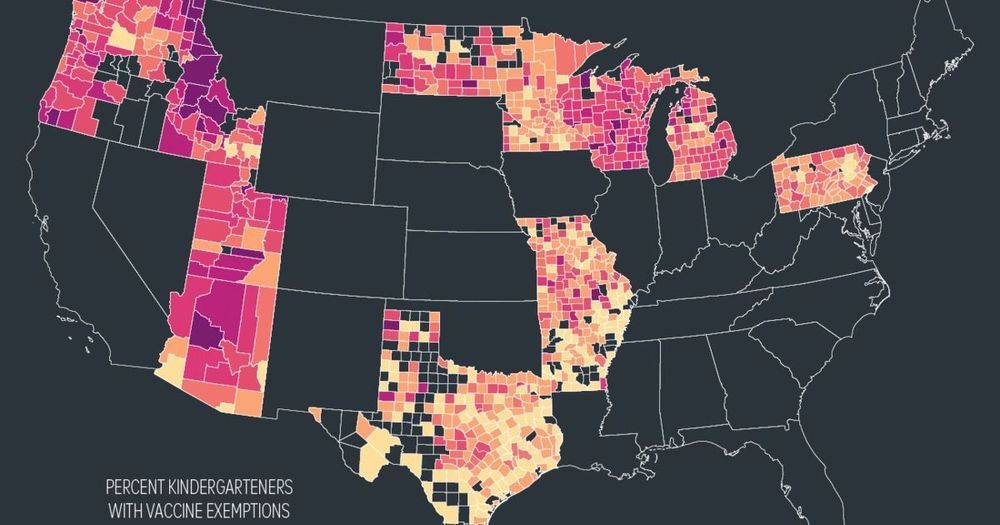
Thanks in part to a famous, fraudulent study claiming to link the MMR vaccine (that’s for measles, mumps, and rubella) to autism, parents across the country have been dissuaded from fully vaccinating their children. The measles virus infects nearly everyone it comes in contact with, so our main protection from it comes from herd immunity—you need upwards of 95 percent of a population to be vaccinated against it to avoid harboring pockets of the virus.
But in recent years, thanks to state laws that allow parents religious and/or philosophical belief exemptions, those rates have been dropping. It’s only by a few percentage points, but remember: we need to stay above 95 percent. The same thing is happening in Europe, where several countries have dipped below that mark or even lower, into the high 80’s. Even a few percentage points can make a difference—Europe saw one of its worst years for measles cases on record, with tens of thousands falling ill from a completely preventable disease.