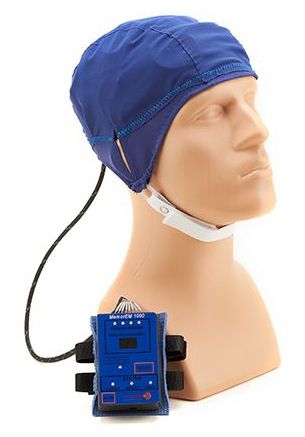
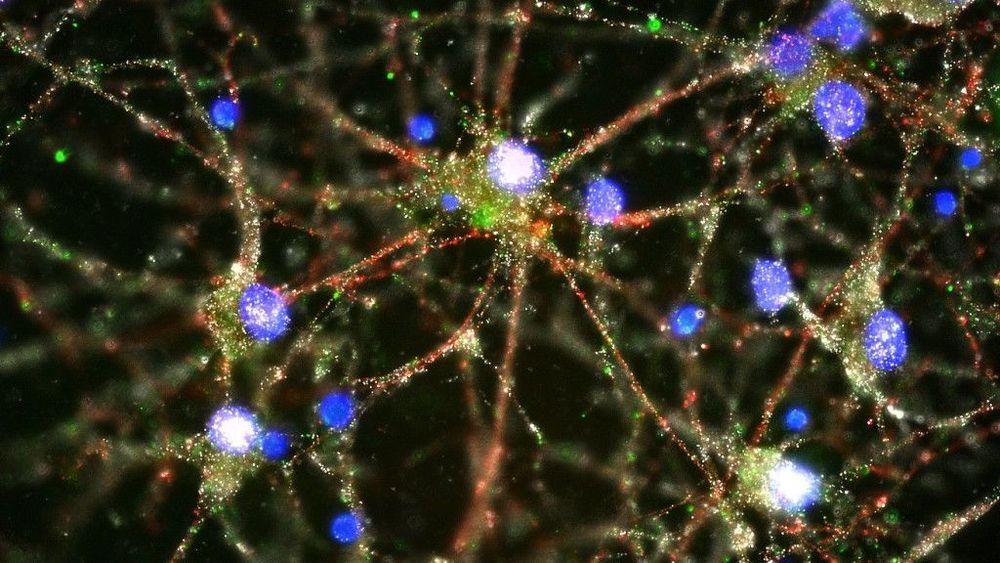
A small clinical trial, announced by U.S. company NeuroEM Therapeutics, shows reversal of cognitive impairment in Alzheimer’s disease patients after just two months of treatment using a wearable head device. Electromagnetic waves emitted by the device appear to penetrate the brain to break up amyloid-beta and tau deposits.
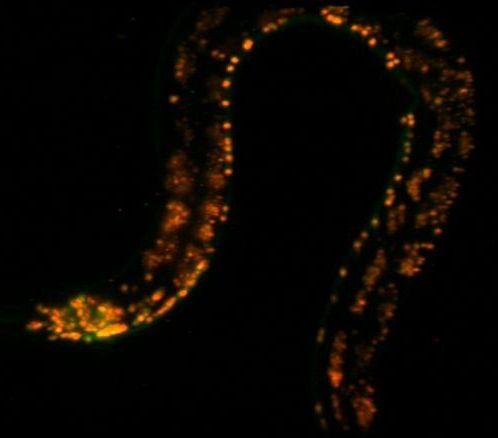
The Columbia team behind the revolutionary 3D SCAPE microscope announces today a new version of this high-speed imaging technology. In collaboration with scientists from around the world, they used SCAPE 2.0 to reveal previously unseen details of living creatures—from neurons firing inside a wriggling worm to the 3D dynamics of the beating heart of a fish embryo, with far superior resolution and at speeds up to 30 times faster than their original demonstration.
These improvements to SCAPE, published today in Nature Methods, promise to impact fields as wide ranging as genetics, cardiology and neuroscience.
Why is having faster, 3D imaging so valuable? “The processes that drive living things are dynamic and ever-changing, from the way an animal’s cells communicate with one another, to how a creature moves and changes shape,” said Elizabeth Hillman, Ph.D., a principal investigator at Columbia’s Mortimer B. Zuckerman Mind Brain Behavior Institute and the paper’s senior author. “The faster we can image, the more of these processes we can see—and imaging fast in 3D lets us see the whole biological system, rather than just a single plane, offering a clear advantage over traditional microscopes.”
This three-part documentary tells Bill Gates’ life story, in-depth and unfiltered, as he pursues unique solutions to some of the world’s most complex problems. From Academy Award-winning director Davis Guggenheim (An Inconvenient Truth, He Named Me Malala).
About Netflix: Netflix is the world’s leading internet entertainment service with over 151 million paid memberships in over 190 countries enjoying TV series, documentaries and feature films across a wide variety of genres and languages. Members can watch as much as they want, anytime, anywhere, on any internet-connected screen. Members can play, pause and resume watching, all without commercials or commitments.
Some of the most important tools in the toolbox of modern cell biologists are special chunks of DNA that act like spies, reporting on the cell’s function. The markers, known as reporter genes, allow researchers to get a sense for what cells are doing by watching genetic programs embedded in their DNA turn on and off.
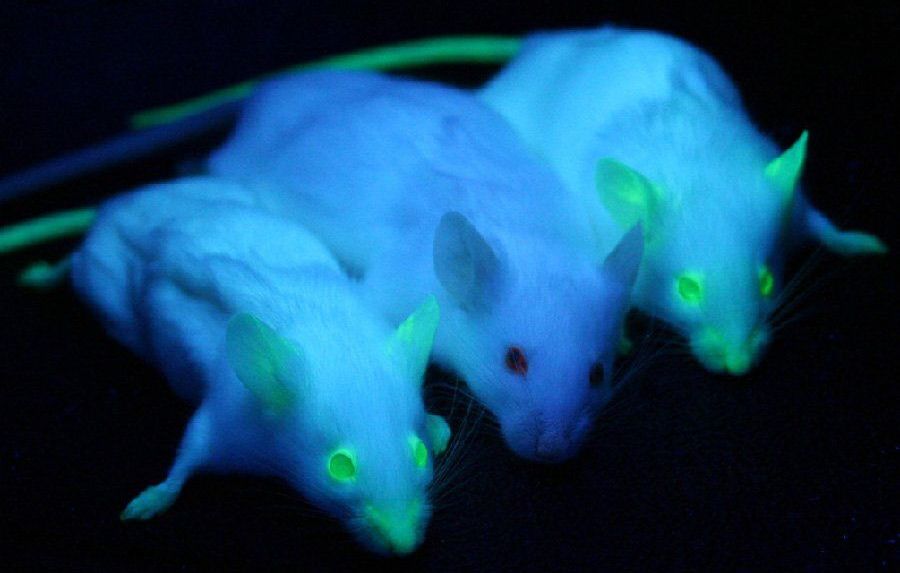
Reporter genes work by encoding proteins that can be seen from outside the cell. One particularly popular reporter gene encodes something called the green fluorescent protein (GFP), which, true to its name, is a protein that glows bright green. So, if a researcher wants to learn more about how cells become neurons, they can insert the GFP gene alongside a neuronal gene into an embryo’s DNA. When the embryo’s cells turn on the neuron gene, they will also express the GFP gene, and the cells will glow green, making it easy for the researcher to see that the genetic program that encodes neuron formation is active.
As useful as this technique has been, it has a big limitation: Because light does not penetrate well through most living tissue, the GFP gene cannot be used for monitoring the activity of cells deep inside an organism. But now, Caltech’s Mikhail Shapiro has a solution. A team consisting of Shapiro, professor of chemical engineering and investigator with the Heritage Medical Research Institute, graduate student Arash Farhadi, and their colleagues, has developed a reporter gene that allows them to see genetic activity using ultrasound, which can penetrate deeply through tissue, instead of light.
When the structure of DNA was elucidated in 1953, an unimaginable world of possibilities was opened. But we couldn’t even begin to dream about how we would go about using such powerful knowledge. Thirty years later, PCR — the process to replicate DNA in the lab — was developed, and innovation exploded. In 2001 — nearly twenty years ago — the first full human genome was sequenced and published.
The information we’ve uncovered through DNA is enabling us to explore and develop solutions for a variety of problems, from how to mimic human disease in animal models to finding new treatments and cures for devastating diseases such as cancer and Alzheimer’s.
Our ability to engineer biology is making DNA even more powerful. We are building upon the blueprint that was already there, strengthening it, giving it new and improved functions, and leveraging its characteristics to do useful things for us. Perfect examples include engineering the genomes of T cells to turn them into highly specific cancer fighters or modifying bacteria to produce useful products like insulin, food ingredients, or bioplastics. We are even beginning to use DNA to store information, perhaps one day replacing the physical hard drive.
THE MIND, EXPLAINED takes a five-episode deep dive into how our brains handle memory, anxiety, psychedelics and dreams. Narrated by Emma Stone.
After nearly a year of labor behind the scenes, we have an announcement for you: Explained is finally back! And during this year, we’ve turned our attention to a crucial question: Why can’t we remember what is in the fridge?
Or more importantly, why can’t we remember most of the details of our own lives? Why do an estimated 1 in 3 people suffer from an anxiety disorder at some point? And why, when we go to bed at night, are we overcome with strange visions? Do our dreams actually mean anything, or serve any purpose?
Our minds often feel like a black box. And the stakes of these questions go far beyond the fridge – to our fundamental sense of reality, and what it means to be human. How can we help ourselves, and each other, when our minds betray us? What can we do to take back some control?
Scientists have figured out so much more than you might realize – and today, we’re diving deep, with 5 brand new episodes narrated by Emma Stone taking you on an adventure through the mind, available today.
Our weekly episodes return, as well, on September 26th. They’ll be right here – http://www.netflix.com/explained where Season 1 also awaits any of you who haven’t seen it yet.
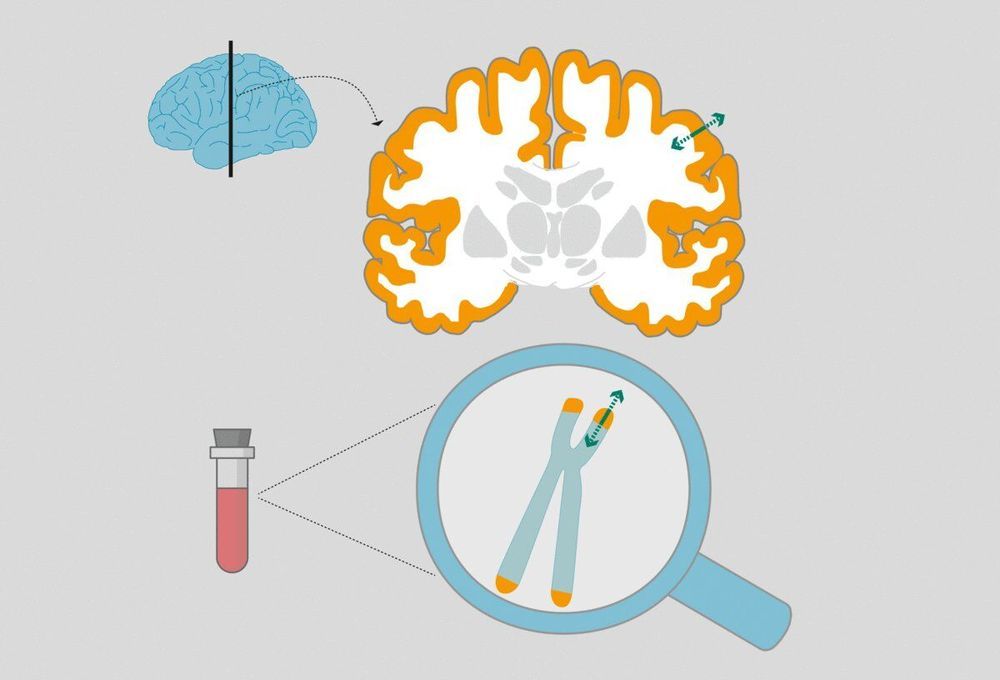
Telomeres are the protective caps of our chromosomes and play a central role in the aging process. Shorter telomeres are associated with chronic diseases and high stress levels can contribute to their shortening. A new study now shows that if telomeres change in their length, that change is also reflected in our brain structure. This association was identified by a team of scientists including Lara Puhlmann and Pascal Vrtička from the Max Planck Institute for Cognitive Brain Sciences in Leipzig together with Elissa Epel from the University of California and Tania Singer from the Social Neuroscience Lab in Berlin as part of Singer’s ReSource Project.
Telomeres are protective caps at the ends of chromosomes that become shorter with each cell division. If they become so short that the genes they protect could be damaged, the cell stops dividing and renewing. Consequently, the cell is increasingly unable to perform its functions. This mechanism is one of the ways in which we age.
Telomere length is therefore regarded as a marker for the biological age of a person—in contrast to their chronological age. For two people of the same chronological age, the person with shorter telomeres has an increased risk of developing age-related diseases such as Alzheimer’s or cancer, and even a shorter life expectancy.
By this time, we can all conclude that Facebook is really ambitious when it comes to the production of high-end gadgets. This when you consider the Oculus line of devices, a VR wristband and RayBan AR glasses. And if that wasn’t enough, a new device is up for development.
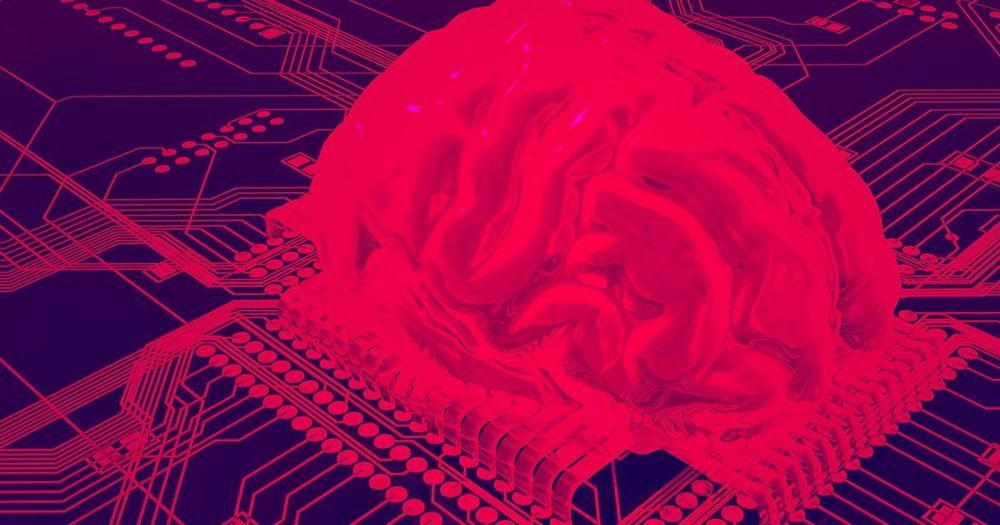
The company has now revealed plans to build a mind-reading wristband letting people control devices without touching them. This is after the company finally acquired CTRL-Labs, a startup that is currently venturing into brain-computer interfaces. The deal has been reported to value at $1 billion.
The deal was then announced by Andrew Bosworth, Vice President of AR and VR at Facebook. “We spend a lot of time trying to get our technology to do what we want rather than enjoying the people around us,” he said.
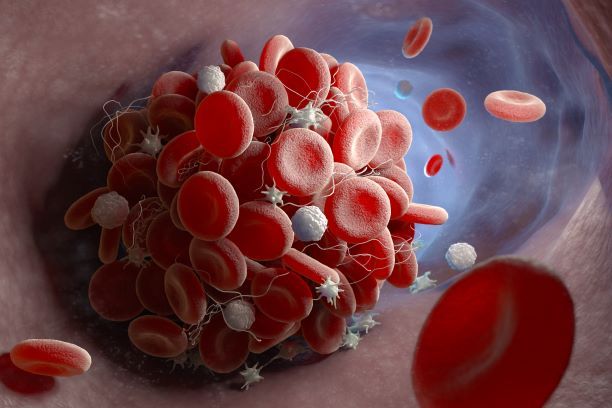
Cells that become senescent irrevocably stop dividing under stress, spewing out a mix of inflammatory proteins that lead to chronic inflammation as more and more of the cells accumulate over time. Publishing in the September 24 edition ofCell Reports, researchers at the Buck Institute identified 44 specific senescence-associated proteins that are involved in blood clotting, marking the first time that cellular senescence has been associated with age-related blood clots.
“The incidence of venous thrombosis, which includes deep vein thrombosis and pulmonary embolism is extremely low until the age of 45, when it begins to rise rapidly. Over time it becomes a major risk factor for death. By 80, the condition affects five to six people per thousand individuals,” said Judith Campisi, PhD, Buck professor and senior co-author of the study. “Blood clots are also a serious side effect of chemotherapy, which sets off a cascade of senescence in those undergoing treatment. That’s why blood thinners, which carry their own risks, are often included in treatment protocols.”
Scientists in the Campisi lab and other labs around the world are working to develop senolytics, drugs which would clear senescent cells from the body, potentially providing treatment options for many age-related diseases that are either caused or linked to senescence. They include Alzheimer’s and Parkinson’s diseases, cardiovascular disease, osteoarthritis, macular degeneration, age-related cancers and sarcopenia, among others.