Toggle light / dark theme

Ultrasonic wireless ‘neural dust’ sensors monitor nerves, muscles in real time

Prototype wireless battery-less “neural dust” mote (3 × 1 x 1 millimeters) with electrodes attached to a nerve fiber in a rat. The mote contains a piezoelectric crystal (silver cube) that converts ultrasonic signals to electrical current, powering a simple electronic circuit containing a transistor (black square) that responds to the voltage generated by a nerve firing and triggers the piezoelectric crystal to create ultrasonic backscatter, which indicates detection of a neural signal. (photo credit: Ryan Neely/UC Berkeley)

University of California, Berkeley engineers have designed and built millimeter-scale device wireless, batteryless “neural dust” sensors and implanted them in muscles and peripheral nerves of rats to make in vivo electrophysiological recordings.

The new technology opens the door to “electroceuticals” — bioelectronic methods to monitor and record wireless electromyogram (EMG) signals from muscle membranes and electroneurogram (ENG) signals from local neuron electrical activity, and to stimulate the immune system, reduce inflammation, and treat disorders such as epilepsy.

Hackers could get inside your brain, warns experts

I have reported on this threat for a very long time as we see more BMI technology advance. However, one are where things could drastically reduce hacking and breeches is the migration to a Quantum based net and infrastructure.


Cyberthieves might be mining personal information from your brainwaves at this very moment.

And although this may sound like a plot from a science fiction film, it is a growing concern among researchers who have demanded officials implement a privacy and security framework to block hackers from reading our neural signals.

Experts at the University of Washington have revealed how hackerscould inserting images into dodgy apps and recording our brain’s unintentional reaction using brain-computer interfaces.

New microfluidic chip replicates muscle-nerve connection

MIT engineers have developed a microfluidic device that replicates the neuromuscular junction—the vital connection where nerve meets muscle. The device, about the size of a U.S. quarter, contains a single muscle strip and a small set of motor neurons. Researchers can influence and observe the interactions between the two, within a realistic, three-dimensional matrix.

The researchers genetically modified the neurons in the device to respond to light. By shining light directly on the neurons, they can precisely stimulate these cells, which in turn send signals to excite the muscle fiber. The researchers also measured the force the muscle exerts within the device as it twitches or contracts in response.

The team’s results, published online today in Science Advances, may help scientists understand and identify drugs to treat amyotrophic lateral sclerosis (ALS), more commonly known as Lou Gehrig’s disease, as well as other neuromuscular-related conditions.

A.D. 2035: Rich people will be thousands of times smarter than poor people

When not all men and women are created equal.


If futurist, inventor, and Google executive Ray Kurzweil is right about the future, we’ll all be augmenting our brains with extra capacity in the cloud at some point in the future.

Which sounds exciting, even if a little frightening.

But this very advance could also pave the way for the rich to become thousands of times smarter than poor people, which would likely permanently solidify and even exacerbate current socioeconomic stratifications. I asked Kurzweil if he saw that consequence as a possibility, and he strongly disagreed.

Would it be immoral to send out a generation starship?

If human beings are ever to colonise other planets – which might become necessary for the survival of the species, given how far we have degraded this one – they will almost certainly have to use generation ships: spaceships that will support not just those who set out on them, but also their descendants. The vast distances between Earth and the nearest habitable planets, combined with the fact that we are unlikely ever to invent a way of travelling that exceeds the speed of light, ensures that many generations will be born, raised and die on board such a ship before it arrives at its destination.

A generation ship would have to be a whole society in microcosm, with hospitals and schools, living quarters and perhaps entertainment districts, a security force, maybe even a judiciary. It would need to be able to provide food for its crew, and that might require agriculture or aquaculture, perhaps even domestic animals (which might also be needed for the colonisation effort). Its design therefore presents a major challenge: not just to engineers but also to social scientists. How should the crew be selected and the environment structured to minimise interpersonal conflict? What size of population is optimal for it to remain committed to the single overarching project of colonising a new planet without too much of a risk of self-destructive boredom or excessive narrowing of the gene pool? Does mental health require that a quasi-natural environment be recreated within the ship (with trees, grass and perhaps undomesticated birds and small animals)?

As well as the technological and social challenges confronting the designers of such ships, there are fascinating philosophical and ethical issues that arise. The issue I want to focus on concerns the ethics of a project that locks the next generation into a form of living, the inauguration of which they had no say over, and that ensures their options are extremely limited.

A team of ex-fighter pilots have invented a new way for surgeons look inside brains

Fighter pilots and brain surgeons have a lot in common. With limited time and a high degree of risk, they must zero in on a dangerous target with the intent to destroy, making sure to minimise any collateral damage.

Perhaps no one understands that relationship better than Alon Geri and Moty Avisar, veterans of the Israeli Air Force and co-founders of Surgical Theatre, an Ohio-based company that brings state-of-the-art virtual reality to brain surgeons.

Physicians in thick black goggles can step inside a patient’s skull, explore the malformed region, craft a strategy for entry, elimination, and exit, and even do dry runs of the surgery itself. When it comes time to make the first incision, there are fewer surprises.

Brain scan during stress may predict memory loss

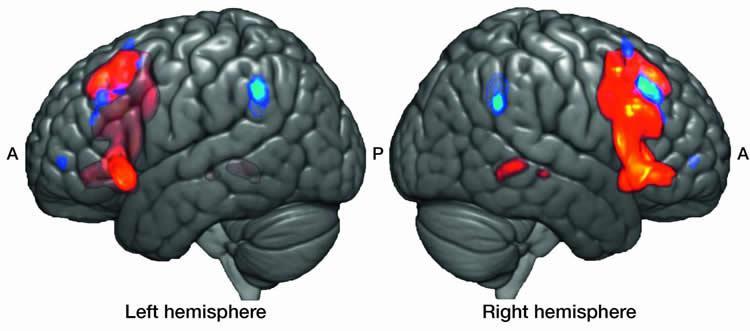
The findings showed that the shrinking of the hippocampus — brain region associated with learning and memory — actually precedes the onset of a change in behaviour — namely the loss of memory. “Until now, no one knew the evolution of these changes. Does the hippocampus shrink before or after memory loss? Or do the two happen handin- hand,” said Sumantra Chattarji, Professor at National Centre for Biological Sciences in Bengaluru, Karnataka, in a statement.

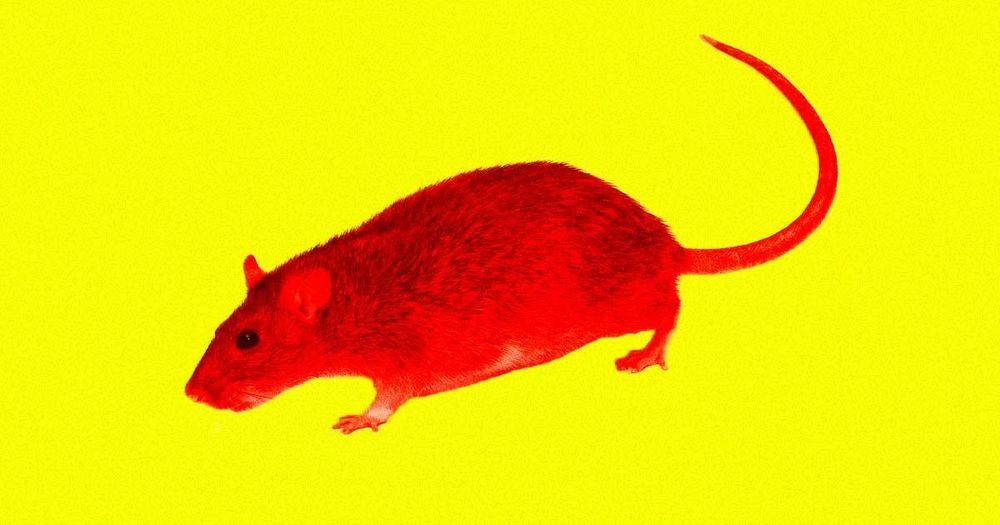
Using rats as a model system which reacts to stress much as humans do, the team studied how the brain changes in structure during stress. The results showed that when under stress, rats develop anxiety-related behaviours and their ability to form memories are affected. In the study, rats were subjected to stress for two hours every day over 10 days. The brains were examined with MRI scans on several days over the course of the study, and their ability to form memories were assessed repeatedly.

After just three days of stress, the hippocampus of every stressed rat had shrunk. “Normally structural changes are seen in the brain after a long time — say 10 to 20 days. Three days doesn’t even count as chronic stress,” Chattarji added. Five days after stress exposure, the rats’ hippocampus-based ability to make memories was tested again. The stressed rats were found to perform almost as well as unstressed rats, the researchers said. “Volume loss and shrinkage has happened, yet spatial memory is still holding up,” Chattarji said.

/* */