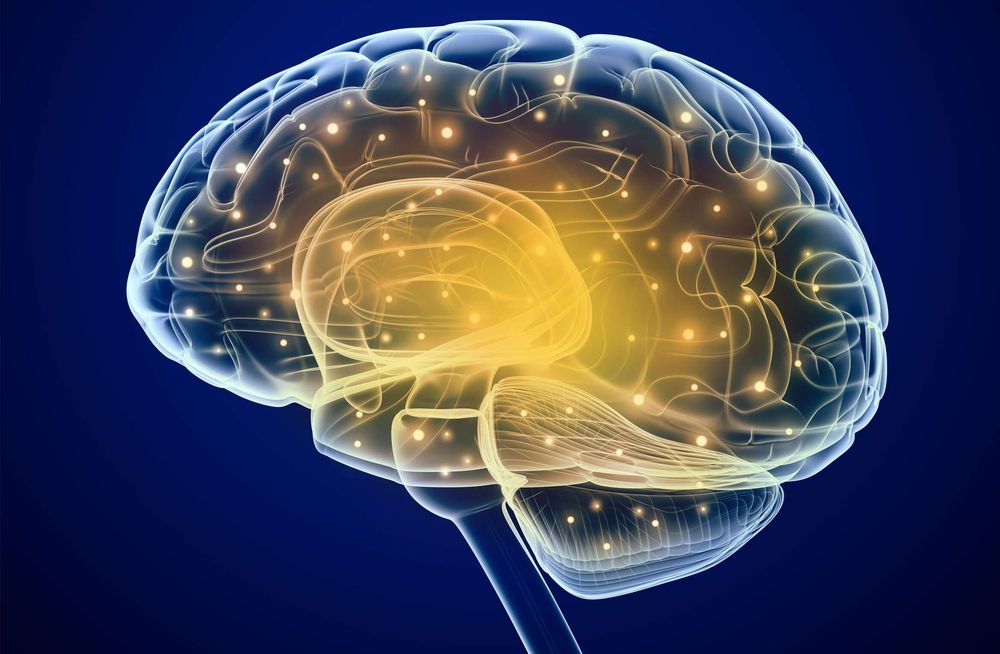
Summary: Non-invasive brain stimulation technology may enhance the human system’s ability for rapid and adaptive decision making.
Source: US Army Research Laboratory
Future technology may be able to monitor and modify the brain to produce enhanced team performance, while increasing the efficiency and accuracy of decisions.
In 16 subsequent trials, Ebisu accurately copied her owner more than 81% of the time, the team reports this month in (see video, above). The fact that the cat used her paw and face to touch the box when her owner used her hand and face, respectively, indicates she was able to “map” her owner’s body parts onto her own anatomy, the team says.
Fugazza says only dolphins, parrots, apes, and killer whales have so far been shown to imitate people. Cats having the same ability, she says, suggests it may be widespread in the animal kingdom, evolving early in animal evolution. And even though the study was conducted on a single cat, Fugazza thinks it’s likely that most cats can imitate people. “I don’t think Ebisu was a genius.”
But Claudio Tennie, an ethologist at the University of Tübingen who has studied cognition in dogs and primates, is not impressed. He says it’s impossible to tell from the study whether cats have an innate ability to imitate humans, or whether the intensive “Do as I do” training gave them the skill. “We can train bears to ride motorcycles,” he says. “That doesn’t mean bears ride motorcycles.”
A recent international scientific study published in the journal PLOS ONE has shown that the way the brain stores temporary information is different depending on the use one might give to that information in the future.
The research analysed the brain activity of 14 participants through functional magnetic resonance imaging while they were performing simple visual memory tasks on a computer screen. Differences in their brain activity patterns were found between participants who had to answer by communicating verbally or by pressing a button.
The memory that is under study is designated “working memory” and is used at all times. It is the type of memory that allows us to memorise a phone number or a license plate and use that information after (or not). This information is used and processed and, if it proves to be important, stored in the long-term memory.
WEDNESDAY, Sept. 23, 2020 (HealthDay News) — A common type 2 diabetes drug called metformin may have an unexpected, but positive, side effect: New research suggests that people taking the drug appear to have significantly slower declines in thinking and memory as they age.
“Our six-year study of older Australians with type 2 diabetes has uncovered a link between metformin use and slower cognitive [mental] decline and lower dementia rates,” said study author Dr. Katherine Samaras. She’s the leader of the healthy aging research theme at the Garvan Institute of Medical Research in New South Wales, Australia.
“The findings provide new hope for a means of reducing the risk of dementia in individuals with type 2 diabetes, and potentially those without diabetes,” Samaras said.
Targeting Mechanisms of Aging Across Species — I am joined on this episode of ideaXme by Dr. Matt Kaeberlein, Professor of Pathology, Adjunct Professor of Genome Sciences, and Adjunct Professor of Oral Health Sciences, University of Washington, to discuss his research focus on cross-species mechanisms of aging, in order to facilitate interventions that extend healthspan and improve quality of life — #Ideaxme #Health #Wellness #Longevity #Aging #LifeExtension #Rapamycin #MTor #CElegans #ExtracellularVesicles #Geroscience #GenomicInstability #AlzheimersDisease #Neurodegeneration #Parkinsons #MitochondrialDysfunction #OralHealth #SystemsBiology #DogAgingProject #Science #Transhumanism #Innovation #Immortality #IraPastor #Bioquark #Regenerage The Dog Aging Project.
Ira Pastor, idea me life sciences ambassador and founder of Bioquark, interviews Dr. Matt Kaeberlein, Professor of Pathology, Adjunct Professor of Genome Sciences, and Adjunct Professor of Oral Health Sciences at the University of Washington.
Dr. matt kaeberlein researchers aging across species:
Dr. Matt Kaeberlein, is Professor of Pathology, Adjunct Professor of Genome Sciences, and Adjunct Professor of Oral Health Sciences at the University of Washington. With a PhD from MIT in Biology, and post-doctoral work in the Department of Genome Sciences, University of Washington, his research interests are focused on basic mechanisms of aging in order to facilitate translational interventions that promote healthspan and improve quality of life.
Dr. Kaeberlein has published nearly 200 papers in top scientific journals and has been recognized by several prestigious awards, including a Breakthroughs in Gerontology Award, an Alzheimer’s Association Young Investigator Award, an Ellison Medical Foundation New Scholar in Aging Award, a Murdock Trust Award, a Pioneer in Aging Award, and the Vincent Cristofalo Rising Star in Aging Research.
Does human consciousness exist separate from matter, or is it embodied in the body –a critical player in anything that has to do with mind? “We are not thinking machines that feel; rather, we are feeling machines that think.” answers neuroscientist Antonio Damasio, who pioneered the field of embodied consciousness –the bodily origins of our sense of self. “We may smile and the dog may wag the tail, but in essence,” he says. “we have a set program and those programs are similar across individuals in the species. There is no such thing as a disembodied mind.”
Consciousness is considered by leading scientists as the central unsolved mystery of the 21st Century: “I have a much easier time imagining how we understand the Big Bang than I have imagining how we can understand consciousness,” says Edward Witten, theoretical physicist at the Institute for Advanced Study in Princeton, New Jersey who has been compared to Isaac Newton and Einstein about the phenomena that has been described as assuming the role spacetime did before Einstein invented his theory of relativity.
Some scientists have asked how can we be sure that the source of consciousness lies within our bodies at all? One popular, if mystical, idea, writes astrophysicist Paul Davies in The Demon in the Machine, “is that flashes of mathematical inspiration can occur by the mathematician’s mind somehow ‘breaking through’ into a Platonic realm of mathematical forms and relationships that not only lies beyond the brain but beyond space and time altogether.”
Summary: Metformin, a drug commonly used to treat diabetes, slows cognitive decline and reduces dementia risk in older people with diabetes.
Source: garvan institute of medical research.
Metformin is the first-line treatment for most cases of type 2 diabetes and one of the most commonly prescribed medications worldwide, with millions of individuals using it to optimise their blood glucose levels.
Before #COVID19, we like to imagine a #future where we can get and do anything from home, including working, with the help of novel #technologies such as #VR and #AR.
However, the #COVID19 pandemic shows us the human nature, that is, “going out” is one of the basic needs for human being!
One revelation here is that: When speaking of how #technology can change our lives, we often neglect the humane factors and focus only on the technical ones. Take #VR as an example. Yes, it does allow you to have a shopping experience similar to (or even better than) shop outside. However, do you really want to stay at home 24/7 and complete everything online?
How much control do you have over your thoughts? What if you were specifically told not to think of something—like a pink elephant?
A recent study led by UNSW psychologists has mapped what happens in the brain when a person tries to suppress a thought. The neuroscientists managed to ‘decode’ the complex brain activity using functional brain imaging (called fMRI) and an imaging algorithm.
The findings suggest that even when a person succeeds in ignoring a thought, like the pink elephant, it can still exist in another part of the brain—without them being aware of it.