Debate needed over research with ‘potential for something to suffer’, neuroscientists say.
Assumptions: The Case Against Reality
When it comes to scientific theory, (or your personal life) be sure to question everything.
- The theories we build to navigate the world, both scientifically and in our personal lives, all contain assumptions. They’re a critical part of scientific theory.
- Cognitive psychologist Donald Hoffman urges us to always question those assumptions. In this way, by challenging ourselves, we come to a deeper understanding of the task at hand.
- Historically, humans have come to some of our greatest discoveries by simply questioning assumed information.
Within a cell system structure dictates function. Any interaction between cells, or a cell and its environment, has the potential to have long term implications on the function of a given cell and emerging cell aggregates. The structure and function of cells are continuously subjected to modification by electrical and chemical stimuli. However, biological systems are also subjected to an ever-present influence: the electromagnetic (EM) environment. Biological systems have the potential to be influenced by subtle energies which are exchanged at atomic and subatomic scales as EM phenomena. These energy exchanges have the potential to manifest at higher orders of discourse and affect the output (behavior) of a biological system. Here we describe theoretical and experimental evidence of EM influence on cells and the integration of whole systems. Even weak interactions between EM energies and biological systems display the potential to affect a developing system. We suggest the growing literature of EM effects on biological systems has significant implications to the cell and its functional aggregates.
Keywords: electromagnetic fields, consciousness, structure-function, cell aggregation, environmental influences.
A biological system is dependent upon inter- and intra-cellular communication for its development, maintenance, and proliferation. This communication allows an individual cell to interact with neighboring cell systems as well as its environment. The literature concerning intra- and inter-cellular communication is rapidly growing, focusing on electrical and chemical mechanisms (Qian, 2007; Nielsen et al., 2012; Venturi and Fugua, 2013). However the means by which a biological system can communicate, or interact, through a non-chemical non-electrical medium have yet to be extensively examined. There have been initial studies on the possible contributions of the electromagnetic (EM) spectrum (non-chemical non-electrical) to biological systems (Gurwitsch, 1926; van Wijk et al., 1993; Cifra et al., 2011). These studies have demonstrated that there is, at the very biological systems and the EM spectrum.
If you’ve ever worked with a virtualized computer, or played a video game ROM from a long-defunct console on your new PC, you understand the concept already: a mind is simply software, and the brain, the hardware it runs on. Imagine a day when your neurons, the matter that forms your mind, are transferred to a machine and their counterparts in your skull are disabled.
Are you still you? Imagine a future of mind uploading, whole-brain emulation, and the full understanding of the connectome. Now, imagine neuroscientists even discover a way to resurrect the dead, to upload the mind of those who have gone before, our ancestors, Socrates, Einstein?
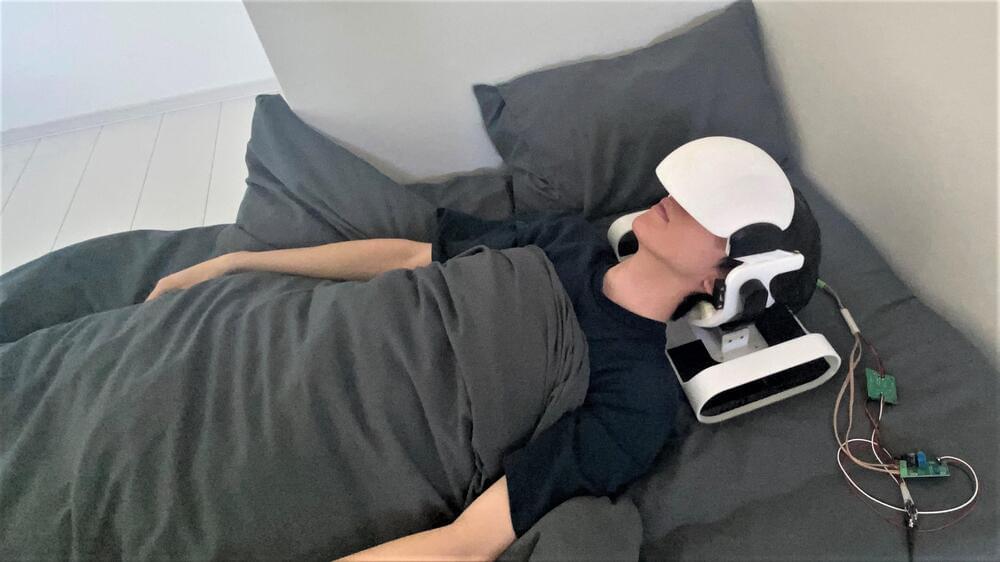
In a paper published in Plos One in early December, scientists detailed how they were able to elicit a pattern similar to the living condition of the brain when exposing dead brain tissue to chemical and electrical probes. Authors Nicolas Rouleau, Nirosha J. Murugan, Lucas W. E. Tessaro, Justin N. Costa, and Michael A. Persinger (the same Persinger of the God-Helmet studies) wrote about this breakthrough.
Squids, octopuses, cuttlefish, amphibians, and chameleon lizards are among the animals that can change the color of their skin in a blink of an eye. They have photoreceptors in their skin that operate independently of their brain. The photoreceptors are part of a family of proteins known as opsins.
Mammals have opsins, too. They are the most abundant proteins in the retina. These light-sensing photopigments are responsible for color vision (cone opsins) and vision in dim light (rhodopsin). While previous studies have suggested that mammals might express opsin proteins outside the eye, there was little information on what functions they might influence.
A study published Oct. 10 in Current Biology has now found that a type of opsin known as neuropsin is expressed in the hair follicles of mice and synchronize the skin’s circadian clock to the light-dark cycle, independent of the eyes or brain.