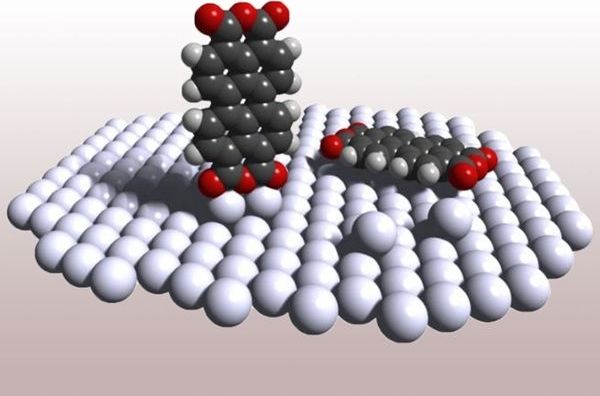
Scientists have been able to move atoms around for 30 years, but moving molecules has proven much more difficult.
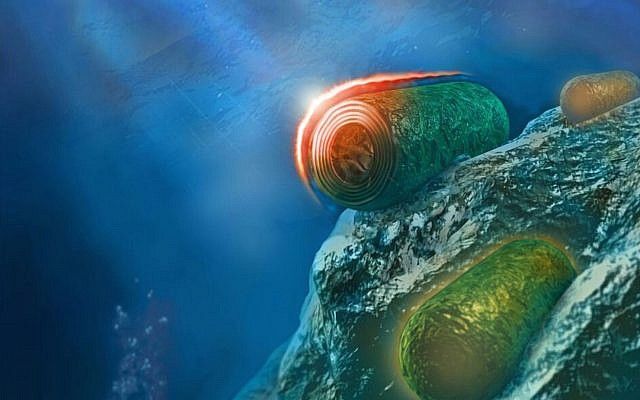
You can generate electricity from oil, you can produce it from natural gas, you can make it from nuclear energy, and you can channel it from the sun, via solar energy conversion systems. You can even generate electricity from photosynthetic bacteria, also known as cyanobacteria, based on a new innovation developed at the Technion. As published in a study in the journal, Nature Communications, the Technion researchers have developed an energy-producing system that exploits both the photosynthesis and respiratory processes that cyanobacteria undergo, with the harvested energy leveraged to generate electricity based on hydrogen.
The study was conducted by three Technion faculty members: Professor Noam Adir from the Schulich Faculty of Chemistry, Professor Gadi Schuster from the Faculty of Biology, and Professor Avner Rothschild, from the Faculty of Materials Science and Engineering. The work involved collaboration between Dr. Gadiel Saper and Dr. Dan Kallmann, as well as colleagues from Bochum, Germany and the Weizmann Institute of Science. It was supported by various bodies, including the Nancy and Stephen Grand Technion Energy Program (GTEP), the Russell Berrie Nanotechnology Institute (RBNI), the Technion Hydrogen Technologies Research Lab (HTRL), the Adelis Foundation, the Planning and Budgeting Committee’s I-CORE program, the Israel Science Foundation, the USA-Israel Binational Science Fund (BSF) and the German research fund (DFG-DIP).
Scientists have long considered cyanobacteria a possible energy source. Cyanobacteria belong to a family of bacteria common to lakes, seas, and many other habitats. The bacteria use photosynthetic mechanisms that enable them to generate energy from sunlight. They also generate energy in the dark, via respiratory mechanisms based on digestion and degradation of sugar.
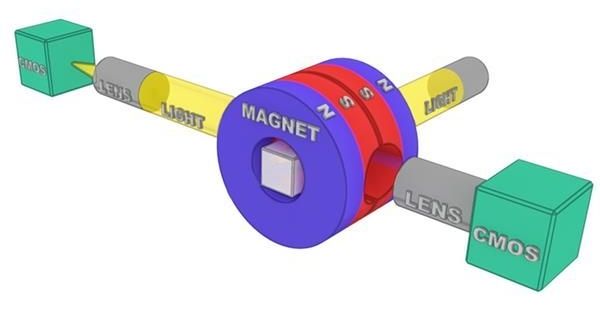
3D bioprinting is a process for patterning and assembling complex functional living architectures in a gradient fashion. Generally, 3D bioprinting utilizes the layer-by-layer method to deposit materials known as bioinks to create tissue-like structures. Several 3D bioprinting techniques have been developed over the last decade, for example, magnetic bioprinting, a method that employs biocompatible magnetic nanoparticles to print cells into 3D structures.
But now a Russian research team has developed a new method of bioprinting that allows to create 3D biological objects without the use of layer-by-layer approach and magnetic labels. The new method, which involves magnetic levitation research in conditions of microgravity, was conducted by the 3D Bioprinting Solutions company in collaboration with other Russian and foreign scientists, including the Joint Institute for High Temperatures of the Russian Academy of Sciences (JIHT RAS).
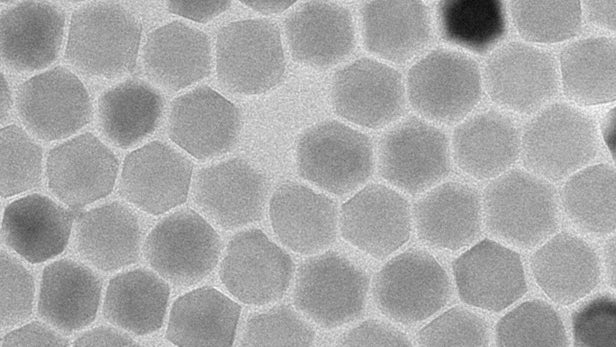
Cancer is one of humanity’s biggest killers, but scientists are coming up with some creative ways to fight back. Researchers at the University at Buffalo have developed new kinds of nanoparticles that can infiltrate, heat up and kill cancer cells more effectively and efficiently than similar methods.
Using nanoparticles to fight cancer has become a growing area of research in recent years. The general concept is to get the particles into tumors, before activating them with radiation to trigger a reaction that destroys the cancer cells without harming healthy tissue. What kind of nanoparticle and radiation are used can vary, as can the type of reaction that’s triggered.
Previous work has killed tumors by activating CeF3 nanoparticles with X-rays to create toxic singlet oxygen, used infrared light to ramp up cancer’s pH balance, used laser pulses to heat up gold nanoparticles, or a combination of several of these.
The smallest Imperial Walker to ever attack the rebel alliance.
When it comes to matching simplicity with staggering creative potential, DNA may hold the prize. Built from an alphabet of just four nucleic acids, DNA provides the floorplan from which all earthly life is constructed.
But DNA’s remarkable versatility doesn’t end there. Researchers have managed to coax segments of DNA into performing a host of useful tricks. DNA sequences can form logical circuits for nanoelectronic applications. They have been used to perform sophisticated mathematical computations, like finding the optimal path between multiple cities. And DNA is the basis for a new breed of tiny robots and nanomachines. Measuring thousands of times smaller than a bacterium, such devices can carry out a multitude of tasks.
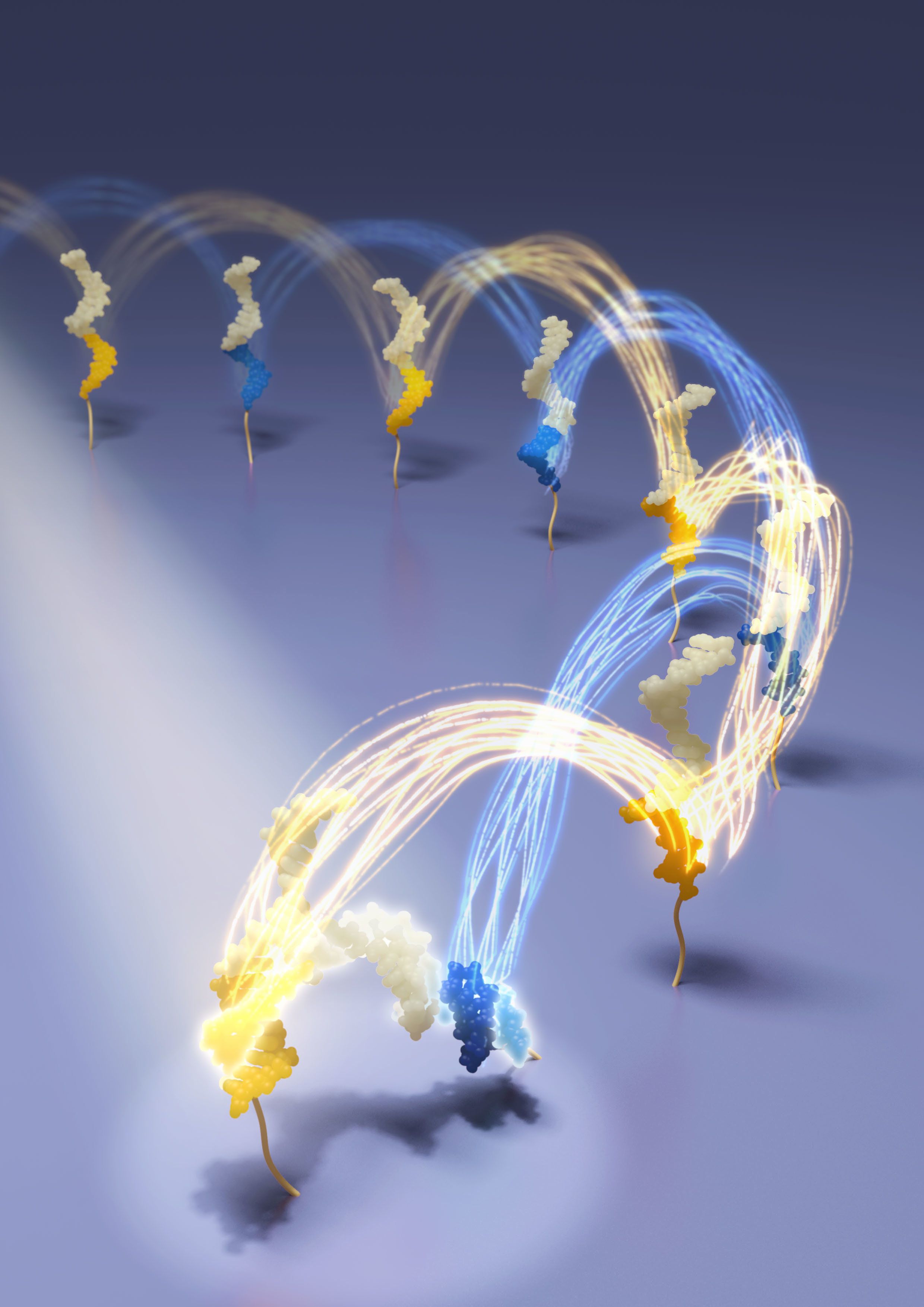
In new research, Hao Yan of Arizona State University and his colleagues describe an innovative DNA walker, capable of rapidly traversing a prepared track. Rather than slow, tentative steps across a surface, the DNA acrobat cartwheels head over heels, covering ground 10- to 100-fold faster than previous devices.
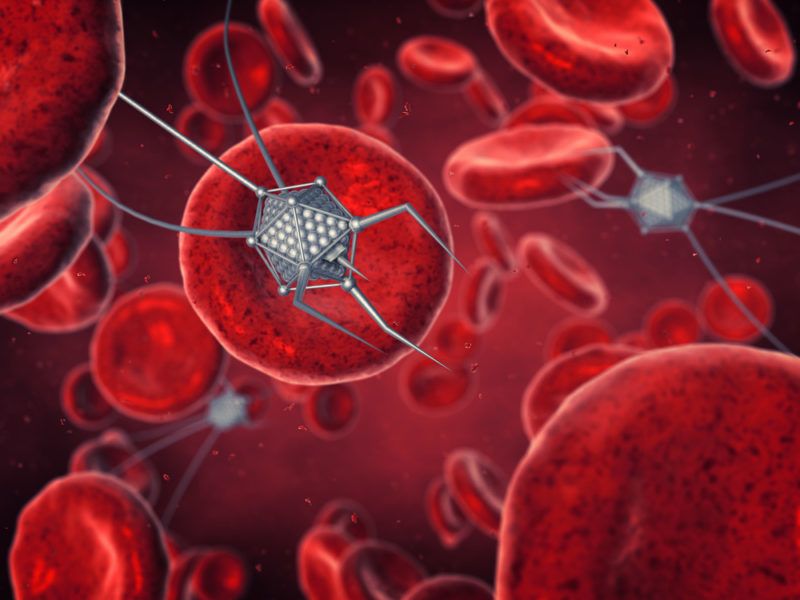
At least in the developed world, cancer, heart diseases, and neurodegenerative diseases are among the greatest causes of mortality. One emerging and very promising way to prevent or cure these diseases is through bio-nanotechnology.
Nanotechnology is the design, synthesis and application of materials or devices that are on the nanometer scale (one billionth of a meter). Due to the small scale of these devices, they can have many beneficial applications, both in industry and medicine. The use of nanodevices in medicine is called nanomedicine. Here, we will look at some applications of nanomedicine in curing or preventing the diseases that are most likely to kill us.
Get the best of Smithsonian.com by email. Keep up-to-date on:

A new technique developed by MIT physicists could someday provide a way to custom-design multilayered nanoparticles with desired properties, potentially for use in displays, cloaking systems, or biomedical devices. It may also help physicists tackle a variety of thorny research problems, in ways that could in some cases be orders of magnitude faster than existing methods.
The innovation uses computational neural networks, a form of artificial intelligence, to “learn” how a nanoparticle’s structure affects its behavior, in this case the way it scatters different colors of light, based on thousands of training examples. Then, having learned the relationship, the program can essentially be run backward to design a particle with a desired set of light-scattering properties—a process called inverse design.
The findings are being reported in the journal Science Advances, in a paper by MIT senior John Peurifoy, research affiliate Yichen Shen, graduate student Li Jing, professor of physics Marin Soljacic, and five others.

“This, of course, will deepen scientific and technological cooperation at the experts’ level in many areas, including but not limited to, advanced material sources. We are talking here of biotechnology, nanotechnology, data analysis, artificial intelligence, space technology, innovation policy,” Hernandez said.
By Genalyn Kabiling and Argyll Cyrus Geducos
Seoul, South Korea — The country’s vibrant relations with South Korea are expected to be strengthened with the planned cooperation accords on transportation safety, technological development, port expansion, and revitalized trade during President Duterte’s official visit.