Toggle light / dark theme

A Real World ‘Star Trek’ Replicator Is Now Possible Thanks To New Breakthrough

A startup with alumni from MIT and Yale says it’s made a breakthrough in creating a next-generation material that should make it possible to 3D print literally anything out of thin air.

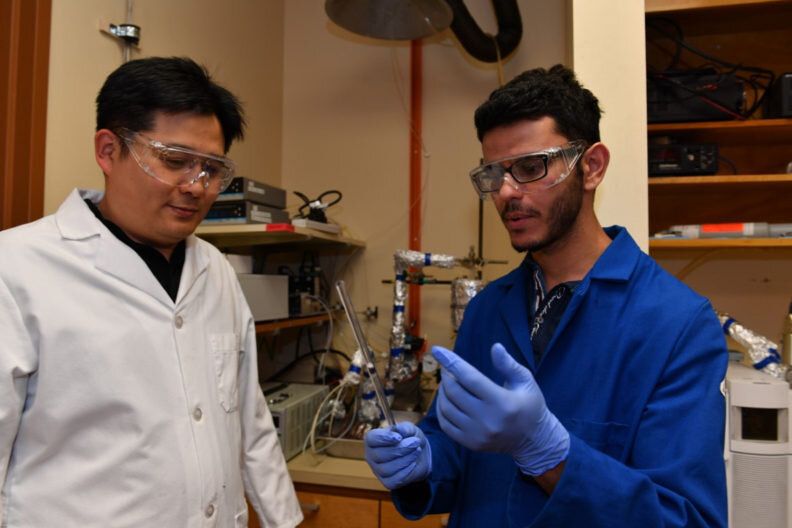
New York-based Mattershift has managed to create large-scale carbon nanotube (CNT) membranes that are able to combine and separate individual molecules.

“This technology gives us a level of control over the material world that we’ve never had before,” said Mattershift Founder and CEO Dr. Rob McGinnis in a release. “For example, right now we’re working to remove CO2 from the air and turn it into fuels. This has already been done using conventional technology, but it’s been too expensive to be practical. Using our tech, I think we’ll be able to produce carbon-zero gasoline, diesel, and jet fuels that are cheaper than fossil fuels.”


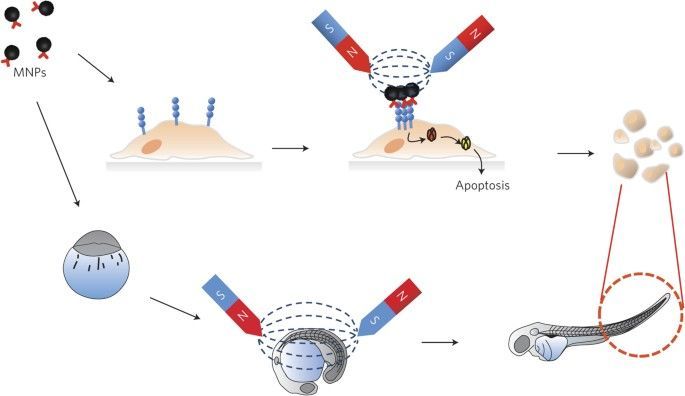
Magnetic nano-probe explores individual cells from the inside

There’s a good chance that in the future, microscopic robots could be swimming and crawling their way through our bodies to deliver drugs or fight infections. While some of these have been capable of manipulating individual cells, researchers at the University of Toronto have developed a new way to get nano-scale probes inside cells, and precisely control them once they’re in there.

These injectable nanobots can walk around inside a human body

Researchers have developed nanobots that can be injected using an ordinary hypodermic syringe, according to a new release. The nanobots are microscopic functioning robots with the ability to walk and withstand harsh environments. Each robot has a 70-micron length, which is about the width of a thin human hair, and a million can be produced from a single 4-inch silicon composite wafer.

Graphene Shows Promise for Repairing Broken Bones

When you were a kid, did you ever sign a classmate’s cast after they broke an arm or a leg? Your name would be on display there for the rest of the semester. Broken bones are one of the worst trade-offs in childhood—a few seconds of calamity followed by months of boring rest and recovery. But children in the future may have a different story to tell as emerging tech overhauls how we fix broken bones.

Carbon nanomaterials may have the power to heal bones faster than a Harry Potter fan can say ‘Brackium Emendo!’ Researchers from Stefanie A. Sydlik’s team at Carnegie Mellon University have tested a new formulation of graphene that is biodegradable, mimics bone, attracts stem cells, and ultimately improves how animals can repair damage to their skeletons.

As reported in PNAS, this phosphate graphene serves as a scaffold, allowing the body’s own cells to more rapidly reform the missing or damaged bone. The technique has already shown success in mice. As this technology matures it could become a vital part of orthopedic medicine, helping us recover faster with stronger, healthier bones.

Prospects for Bioinspired Single-Photon Detection Using Nanotube-Chromophore Hybrids

The human eye is an exquisite photodetection system with the ability to detect single photons. The process of vision is initiated by single-photon absorption in the molecule retinal, triggering a cascade of complex chemical processes that eventually lead to the generation of an electrical impulse. Here, we analyze the single-photon detection prospects for an architecture inspired by the human eye: field-effect transistors employing carbon nanotubes functionalized with chromophores. We employ non-equilibrium quantum transport simulations of realistic devices to reveal device response upon absorption of a single photon. We establish the parameters that determine the strength of the response such as the magnitude and orientation of molecular dipole(s), as well as the arrangements of chromophores on carbon nanotubes. Moreover, we show that functionalization of a single nanotube with multiple chromophores allows for number resolution, whereby the number of photons in an incoming light packet can be determined. Finally, we assess the performance prospects by calculating the dark count rate, and we identify the most promising architectures and regimes of operation.

Scientists Just Took a Major Step Towards Injecting Eyes With Night Vision

How badly do we want this?


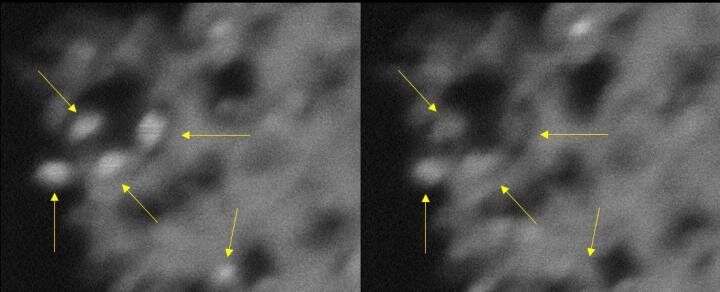
An incredible new nanotechnology could one day enable us to see in the dark. It works on mice, and there’s little to say it wouldn’t be equally effective on other mammals. The only drawback — how are you with needles to the eyeball?

Research led by the University of Science and Technology of China produced particles that adhere to light-detecting cells in the retina and help them respond to near-infrared (NIR) wavelengths.

The back of our eye, which is where the retina is, acts like a television screen in reverse. As the full spectrum of light falls on its cells, some wavelengths trigger chemical reactions we perceive as either colour or intensity.

Cooperativity and entanglement pave way for ground-state cooling using nitrogen vacancy centers

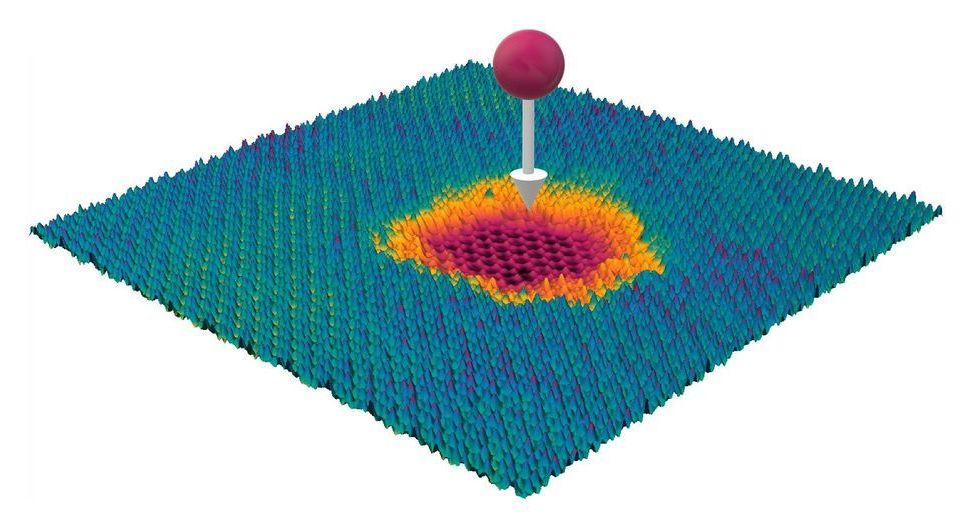
Center for Nanoscale Materials researchers present a quantum model for achieving ground-state cooling in low frequency mechanical resonators and show how cooperativity and entanglement are key factors to enhance the cooling figure of merit.

A resonator with near-zero thermal noise has better performance characteristics in nanoscale sensing, quantum memories, and quantum information processing applications. Passive cryogenic cooling techniques, such as dilution refrigerators, have successfully cooled high-frequency resonators but are not sufficient for lower frequency systems. The optomechanical effect has been applied successfully to cool low-frequency systems after an initial cooling stage. This method parametrically couples a mechanical resonator to a driven optical cavity, and, through careful tuning of the drive frequency, achieves the desired cooling effect. The optomechanical effect is expanded to an alternative approach for ground-state cooling based on embedded solid-state defects. Engineering the atom-resonator coupling parameters is proposed, using the strain profile of the mechanical resonator allowing cooling to proceed through the dark entangled states of the two-level system ensemble.

Nanotechnology makes it possible for mice to see in infrared

My superpowers are coming.

“Mice with vision enhanced by nanotechnology were able to see infrared light as well as visible light, reports a new study. A single injection of nanoparticles in the mice’s eyes bestowed infrared vision for up to 10 weeks with minimal side effects, allowing them to see infrared light even during the day and with enough specificity to distinguish between different shapes. ”.

/* */