Toggle light / dark theme

Why precision medicine is important for our future

We definitely need precision medicine. If you don’t believe it is worth that; then I have a few widows & widowers who you should speak to; I have parents that you should speak with; I have a list of sisters & brothers that you should speak with; and I have many many friends (including me) that you should speak with about how we miss those we love because things like precision medicine wasn’t available and could have saved their lives.


Precision medicine is the theme for the 10th annual symposium of the Johns Hopkins Institute for Nano Biotechnology, Friday, April 29, 2016 at 9 a.m. in the Owens Auditorium at the School of Medicine. This year’s event is cohosted by Johns Hopkins Individualized Health Initiative (also known as Hopkins in Health) and features several in Health affiliated speakers.

By developing treatments that overcome the limitations of the one-size-fits-all mindset, precision medicine will more effectively prevent and thwart disease. Driven by data provided from sources such as electronic medical records, public health investigations, clinical studies, and from patients themselves through new point-of-care assays, wearable sensors and smartphone apps, precision medicine will become the gold standard of care in the not-so-distant future. Before long, we will be able to treat and also prevent diseases such as diabetes, Alzheimer’s disease, heart disease, and cancer with regimes that are tailor-made for the individual.

Hopkins in Health is a signature initiative of Johns Hopkins University’s $4.5 billion Rising to the Challenge campaign is a collaboration among three institutions: the University, the Johns Hopkins Health System, and the Applied Physics Laboratory. These in Health researchers combine clinical, genetic, lifestyle, and other data sources to create innovative tools intended to improve decision-making in the prevention and treatment of a range of conditions, including cancer, cardiovascular disease, autoimmune disorders, and infectious disease. The goal is to “provide the right care to the right person at the right time.”

Global Wearable Technologies: Devices, Applications, And Services Market 2016 — 2021

We’re in an exploding evolution state for technology across all industry sectors and consumer markets.

3 to next 5 years — we see IoT, Smartphones, Wearables, AI (bots, drones, smart devices and machines), 3D printing, commercialization of space, CRISPR, Liq Biopsies, and VR & AR tech.

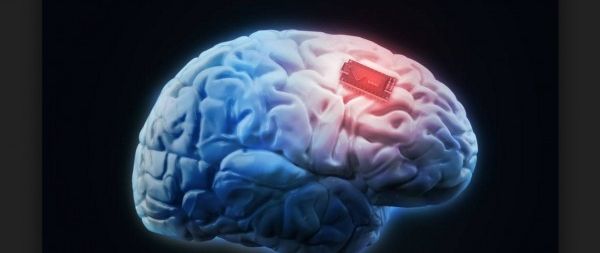
5 to next 8 years — we will see more BMI technology, smart body parts, QC & other Quantum Tech, Humanoid AI tech, bio-computing, early stage space colonization and mining expansion in space, smart medical tech., and an early convergence of human & animals with technology. 1st expansion of EPA in space exploration due to mining and over mining risks as well as space colonization. New laws around Humanoids and other technologies. Smartphones no longer is mass use due to AR and BMI technology and communications.

Beyond 10 years, Singularity (all things connected) and immortality is offered.

Implanted Medical Devices Save Our Lives And Tempt Computer Hackers

All true and good points. Until the under pinning technology and net infrastructures are update; all things connected will mean all things hackable.


Medical devices like pacemakers and insulin pumps will save many lives, but they also represent an opportunity to computer hackers who would use the Internet to cause havoc. Former futurist-in-residence at the FBI, Marc Goodman says it is easy to take for granted how connected we’ve already become to the Internet. Most American adults keep their phones within arm’s reach all day, and keep their devices on their nightstand while they sleep — and forget about actually remembering people’s phone numbers. That is a job we have outsourced to machines.

In this sense, says Goodman, we are already cyborgs. But digital devices connected to the Internet will continue to move inside our bodies, just as pacemakers and insulin pumps have. In his interview, Goodman discusses cases of computer hackers taking advantage of these devices’ connectivity to show how vulnerable we could soon become to their potentially destructive wishes. In one case, a hacker demonstrated he could release several weeks of insulin into a diabetic’s body, certain to cause a diabetic coma and death. In another, hackers induced epileptic seizures by hacking the Epilepsy Foundation’s webpage.

At bottom is the Internet of Things, a increasingly connected web of devices that will make our lives simpler and more efficient, but this network will also make us vulnerable in ways that are difficult to detect, let alone prevent. Goodman’s message is not that we need to constantly fear a new world of better health and convenience, but that we need to be aware of technology’s pitfalls in life.

Micro spaceships powered by lasers to search for alien life

Microscopic spaceships powered by Earth-based lasers are being developed to hunt for extra-terrestrial life in Alpha Centauri, the closest star system to ours.

The £70m Breakthrough Starshot concept involves creating a tiny robotic spacecraft, no larger than a mobile phone chip, which would carry cameras, thrusters, a power supply and navigation and communication equipment.

Physicist Stephen Hawking, Facebook founder Mark Zuckerberg and Russian internet billionaire Yuri Milner have all joined the project’s board giving it major backing.

WiFi capacity doubled at less than half the size

“This technology could revolutionize the field of telecommunications,” says Krishnaswamy, director of the Columbia High-Speed and Mm-wave IC (CoSMIC) Lab. “Our circulator is the first to be put on a silicon chip, and we get literally orders of magnitude better performance than prior work. Full-duplex communications, where the transmitter and the receiver operate at the same time and at the same frequency, has become a critical research area and now we’ve shown that WiFi capacity can be doubled on a nanoscale silicon chip with a single antenna. This has enormous implications for devices like smartphones and tablets.”

Krishnaswamy’s group has been working on silicon radio chips for full duplex communications for several years and became particularly interested in the role of the circulator, a component that enables full-duplex communications where the transmitter and the receiver share the same antenna. In order to do this, the circulator has to “break” Lorentz Reciprocity, a fundamental physical characteristic of most electronic structures that requires electromagnetic waves travel in the same manner in forward and reverse directions.

“Reciprocal circuits and systems are quite restrictive because you can’t control the signal freely,” says PhD student Negar Reiskarimian, who developed the circulator and is lead author of the Nature Communications paper. “We wanted to create a simple and efficient way, using conventional materials, to break Lorentz Reciprocity and build a low-cost nanoscale circulator that would fit on a chip. This could open up the door to all kinds of exciting new applications.”

Clothes that Transmit Digital Data Are Coming

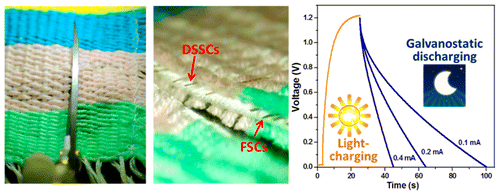
Imagine shirts that act as antennas for smartphones or tablets, workout clothes that monitor fitness level or even a flexible fabric cap that senses activity in the brain!

All this will soon be possible as the researchers working on wearable electronics have been able to embroider circuits into fabric with super precision — a key step toward the design of clothes that gather, store or transmit digital information.

“A revolution is happening in the textile industry. We believe that functional textiles are an enabling technology for communications and sensing and one day, even for medical applications like imaging and health monitoring,” said lead researcher John Volakis from Ohio State University.

Sharp’s ultra-cute RoboHon robot phone goes on sale next month for $1,800

RoboHon, Sharp’s dubiously useful but definitely adorable phone that walks around on two legs and projects you happy images when you’re sad and alone in your bedroom, is actually making its way to market. Sharp announced today that the phone/robot/thing will see release on May 26th in Japan, with preorders now open. It has a 2-inch screen on its back and runs Android 5.0.

The last time I wrote about RoboHon I expressed hope that Sharp can “get this weird little guy onto the market for a reasonable price.” That, uh, appears to have been difficult; RoboHon is selling for 198,000 yen, or about $1,800, before you get into service fees. But hey, you can’t put a price on true friendship — I hope to evaluate RoboHon’s conversational skills, punctuality, and Myers-Briggs personality type in the near future.

/* */